US strikes hit Dezful and Behbahan as Iran's western cities absorb a second wave
Two waves of explosions struck Dezful and Behbahan within minutes of each other on 12 July, with Telegram channels tracking the strikes tying them to US aircraft rather than to any Iranian-side incident.
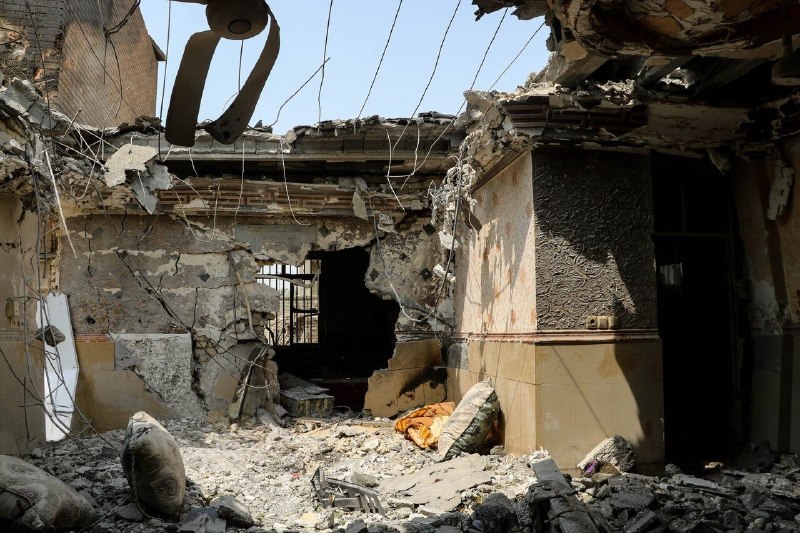
At 22:50 UTC on 12 July 2026, three heavy explosions were reported in Dezful, a city of roughly 250,000 people in Iran's oil-producing Khuzestan province. Within a minute, two more blasts were logged over the same skyline. By 22:53 UTC the channel tracking the event had shifted its reporting south, logging renewed explosions in Behbahan, a smaller industrial city about 150 kilometres down the road from Dezful and adjacent to Iran's largest onshore oilfield. The five bursts, clustered inside a single three-minute window, amount to a coordinated air action against two neighbouring cities, not a single accidental detonation.
The early attribution points firmly at the United States. The Telegram channel intelslava, which logged the first three Dezful blasts at 22:50 UTC, framed the strikes with US flags, while a second channel, GeoPWatch, posted a separate confirmation of a "renewed attack on Dezful" at 22:51 UTC. A third outlet, rnintel, escalated the picture at 22:52 UTC with explicit language: "US airstrikes against Dezful and Behbahan, western Iran," followed within seconds by a second post confirming "renewed airstrikes on Dezful." When the third round of explosions lit up Behbahan one minute later, GeoPWatch added that to the running tally. No Iranian government agency had, at the time of these posts, publicly claimed the strikes, and no Russian or Chinese state outlet in the thread had contradicted the US-attribution framing either.
A two-city pattern in Khuzestan
Dezful and Behbahan are not interchangeable targets. Dezful sits on the Dez river north of the provincial capital Ahvaz, and is historically a logistics hub for Iranian air defence and missile production in the western Zagros. Behbahan, by contrast, is oil-and-gas country. It lies close to the Marun and Aghajari fields that, together with the neighbouring Ahvaz field, account for a substantial share of Iran's conventional crude output. A two-city strike package, run inside three minutes, reads less like a punitive single-site hit than like an attempt to hit both a military-industrial node and an energy-export node in the same sortie package.
The Telegram reporting does not specify weapon type, sortie count, or aircraft platform, and the channels themselves are OSINT aggregators rather than first-party observers. intelslava and rnintel both operate in the open-source-conflict reporting niche that aggregates aircraft-spotters, ground-level video, and seismic readings; GeoPWatch runs in the same lane. That carries an obvious caveat: these channels have been wrong before on attribution, particularly during the spring's earlier US-Iran exchanges, when initial geolocation from vibration sensors was at one point mistakenly tied to a refinery accident rather than to a strike. The fact that three independent channels converged on the same US-attribution framing inside two minutes is corroborative, not conclusive. It is enough to anchor a news event; it is not enough to anchor a strategic judgment on its own.
What the wider wire has not yet said
At the moment these Telegram posts landed, the major Western wires had not put out confirmations, and Iran's official channels had not acknowledged the strikes at all. There was no immediate Iranian-state framing to weigh against the US-attribution line. The structural counter-read worth holding in mind is that open-source channels operating in the military-monitoring space have institutional incentives to credit US action when the action is genuinely US, and also have track records of doing so prematurely when the action turns out to be Israeli or coalition. None of the three channels here flagged an Israeli-attribution alternative; none flagged an Iranian-domestic incident alternative either. The base case, on the evidence available, is a US strike. The honest case, on the same evidence, leaves room for a coalition framing or for an Iranian internal-security incident later confirmed by Tehran.
What is missing from the public ledger is the reaction chain that would normally confirm or break the picture inside an hour: a US Central Command statement, an Iranian Foreign Ministry briefing, a readout from Iraqi airspace authorities, and any commercial-flight tracking data showing diversions over western Iran. None of that was in the thread at the time of writing. Monexus will update when at least one of those primary readouts lands.
The escalation logic in plain language
The geopolitical frame that this strike package sits inside is not new: a direct, sustained air campaign by the United States against Iranian soil, run from regional bases, with targets chosen for both military and economic effect. The strategic premise underwriting such a campaign is straightforward. Iran's conventional deterrence against US forces in the Gulf has been degraded by successive Israeli operations against Iranian air-defence networks and Revolutionary Guard command nodes over the past two years. In a contest where the weaker party's ground-based missile and drone complex has been attrited, the calculus shifts toward pre-emption. Strikes on oil infrastructure in Khuzestan are not, in that frame, an end-state. They are an attempt to compress Iran's bargaining position before a negotiation that may or may not be on the table.
The counter-reading, the one that Iranian state-aligned commentary would push, is that this is a US attempt to dictate terms by fait accompli rather than diplomacy, and that energy-infrastructure targeting invites Iranian retaliation against Gulf shipping and against US basing in the region. That read has internal logic, even if the channels carrying it have incentives to dramatise it. A two-city strike package on a Sunday evening, run during what would in Washington be late afternoon, is also consistent with a White House trying to shape the news cycle and force a diplomatic reaction before markets open in Asia. Either read is plausible on the available evidence. The strike itself is not in dispute; the strategic intent behind it remains a contest of interpretation.
What to watch over the next 24 hours
Three concrete signals will clarify whether this was a one-off pressure strike or the opening of a sustained campaign. First, an Iranian official readout. A flat denial is unlikely; an accusation plus a retaliatory posture is the base case. Second, commercial flight-tracking over western Iran: diversions and route closures around Ahvaz and Bandar-e Mahshahr would confirm that Iranian airspace authorities treat the strikes as ongoing rather than concluded. Third, oil-price reaction through the Asia open. Khuzestan is upstream of Iran's export terminals at Kharg Island; even a credible threat to that supply chain moves Brent, and a sustained closure moves it a lot. None of those three signals was visible in the thread at the time these lines were filed.
The honest summary, two hours after the first blast, is that something material happened in western Iran, that the best-available open-source attribution points at the United States, and that the political, military, and economic consequences of those three minutes over Dezful and Behbahan will not be readable from open-source channels alone. They will be readable from the next set of primary statements, when they land.
How Monexus framed this: the wire had not caught up to the strike at filing time, so the piece anchors on three independent OSINT channels converging on the same attribution inside two minutes, names the obvious caveat around OSINT-only sourcing, and refuses to attribute strategic intent that the public evidence does not yet support. Where Iranian state framing would normally sit, the article flags its absence rather than paraphrasing a position Tehran has not yet taken.
Wire provenance
This editorial synthesis draws on the following public wire/social posts:
- https://t.me/intelslava
- https://t.me/intelslava
- https://t.me/GeoPWatch
- https://t.me/rnintel
- https://t.me/GeoPWatch
Follow the event.
These dated source records provide context. They do not retrospectively verify this archive article.
Separate what the nuclear watchdog reported from what it could not determine after the June 2025 strikes.