China's export engine runs on foreign chips and cars, raising the question Beijing would rather not answer
June customs data show China's export surge is now carried by AI chips and automobiles rather than traditional heavy industry. The dependence on overseas buyers has deepened just as Beijing struggles to convert that external demand into domestic consumption.
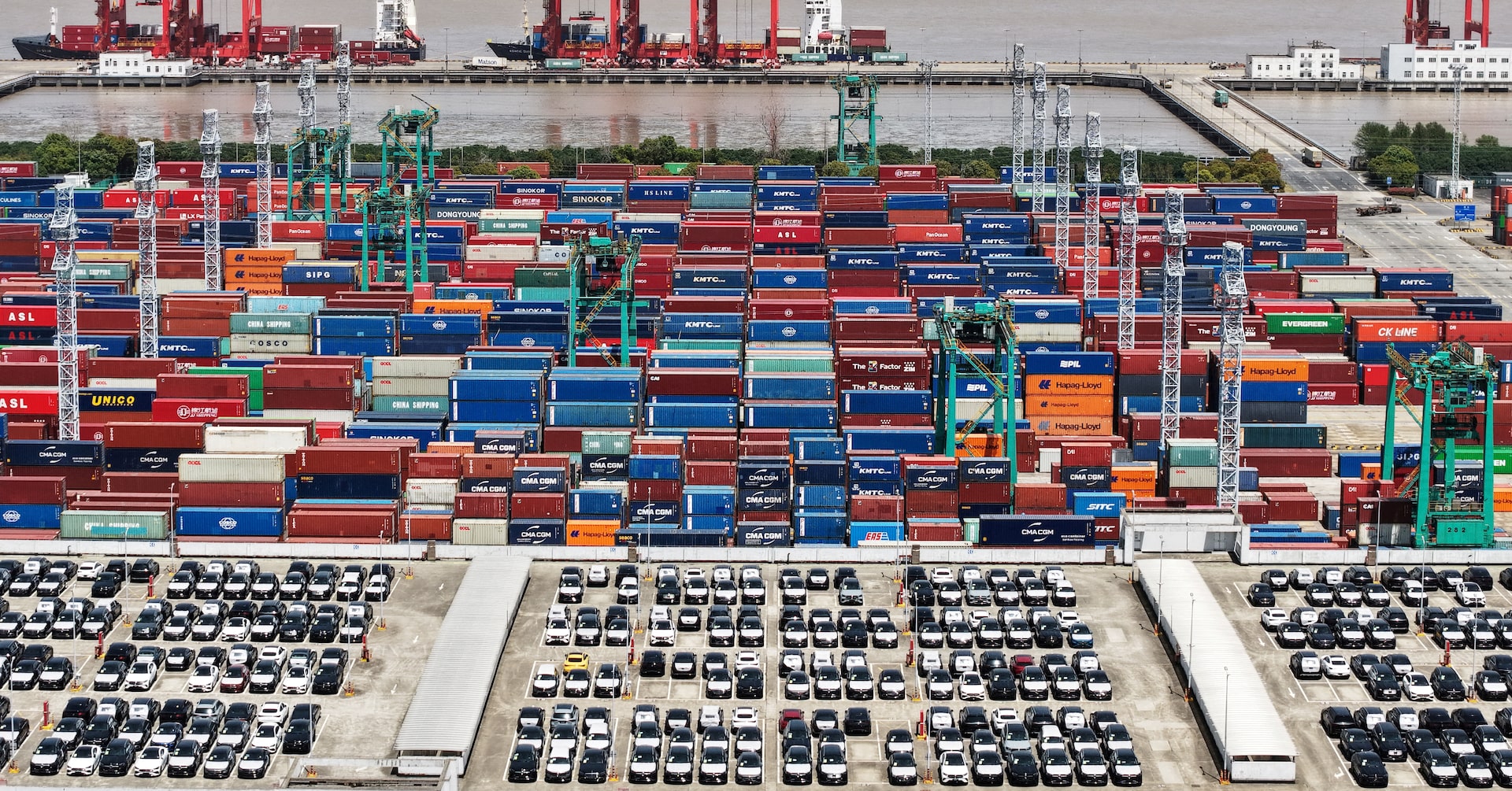
China's export machine is hitting new highs, but the mix has tilted. Customs data released on 14 July 2026 show June shipments surged on the back of two product lines that did not exist as export categories a decade ago: semiconductors feeding the global artificial-intelligence build-out, and motor vehicles. The pattern, reported by Reuters wire monitoring, leaves producers more dependent on overseas buyers at the very moment Beijing is wrestling with how to translate that external momentum into domestic demand.
That is the structural tension the headline number conceals. Export growth is not, on its own, a sign of economic strength; it is a sign of where growth is coming from. When a country sells more abroad than it consumes at home, the next shock is rarely external. It is the trade balance's mirror image: weak household spending, weak property, weak consumer confidence. The June print makes the dependency harder to ignore.
What actually moved the print
Two lines carried the surge. The first is integrated circuits, particularly the high-bandwidth memory and AI accelerator packages that hyperscalers in the United States, Europe and the Gulf are buying in volume as they stand up training clusters. Reuters monitoring of the customs release pointed to chips as one of the leading contributors to the headline beat. China is not the only supplier of those chips, but it is a meaningful node in the assembly and packaging chain, and demand is now running ahead of what Chinese fabs can profitably serve at home.
The second line is automobiles, where Chinese automakers have spent the past five years converting domestic overcapacity into overseas market share. The vehicles leaving Chinese ports now include a heavy weighting of new-energy models, the country's domestic category for battery electrics and plug-in hybrids, exported under both Chinese brands and joint-venture marques. The same customs beat confirms automobiles as a primary contributor, with the category running well above the prior year.
The two lines together are not a coincidence. AI data-centre build-outs and electric vehicles are the two industries in which Chinese firms have spent the past decade building component supply chains, processing capacity, and export channels at scale. They are also the two industries in which the rest of the world is most willing to buy.
What Beijing wants you to read
The official framing, carried by state outlets including CGTN and Xinhua, leans on the headline beat: record exports, resilience in the face of tariffs, and a demonstration that the "dual circulation" strategy is delivering. Officials have framed the export strength as proof that Chinese manufacturing can absorb tariff pressure from Washington and Brussels while continuing to win share in third markets.
There is a structural point on Beijing's side that is worth taking seriously. Export-led growth, whatever its vulnerabilities, has been the single most consistent driver of industrial employment in coastal provinces for two decades. Chinese planners have repeatedly pointed out that the United States, Germany, Japan and Korea all built their early industrial bases on precisely this kind of external demand. The argument is that China's current external surplus is the same economic logic at a different scale, and that the development model should be evaluated on outcomes, including infrastructure delivery, poverty reduction, and the speed at which an EV industry has been brought from research lab to global top-tier exporter.
It is also true that export performance has bought Beijing fiscal headroom that would not otherwise exist, given the prolonged property-sector adjustment.
The other side of the same number
The problem is not the export. It is what the export implies about the rest of the economy. If Chinese factories can only clear capacity by shipping to foreign buyers, that is information about Chinese households, not about foreign demand. The June release confirms the imbalance that has been widening since 2023: producers are flush with orders from abroad while domestic consumption indicators, retail sales, services inflation, household credit growth, remain sluggish.
That gap has a name in Chinese policy debates: the imbalance between investment and consumption. Beijing has acknowledged it in successive communiqués. It has not closed it. The reliance on chip and vehicle exports does not make the imbalance worse on its own. It makes it more visible, because the export lines are growing so quickly that the relative weight of consumption inside gross domestic product shrinks every quarter they outrun it.
Tariff escalation in Washington and Brussels has, if anything, pushed Chinese exporters harder into third markets: ASEAN, the Gulf, Latin America, Africa. That diversifies the customer base and reduces single-market risk. It does not solve the imbalance, and it deepens the geopolitical exposure of Chinese firms to jurisdictions that are themselves hosts to significant Chinese infrastructure, lending and equity footprints.
What to watch next
The numbers that matter over the rest of 2026 will not be the export headline. They will be the household side: retail sales for July and August, the urban unemployment series, the new-home sales print, and credit growth to households rather than to state-owned enterprises. If those turn, the export dependence becomes less of a vulnerability. If they do not, the country is running an economy in which the strongest growth comes from the customers Beijing does not control.
Three dates anchor the near-term outlook. Customs releases for July trade land in mid-August. The Politburo's end-of-July read-out will set the rhetorical frame for the second half of the year. And the third-quarter GDP print in October will tell readers, with a one-quarter lag, whether the surplus months translated into anything on the demand side at home. Until then, the June print is best read as a number that confirms both China's industrial reach and its domestic shortfall, in equal measure.
Desk note: Monexus treats the June export surge as a story about composition rather than aggregate growth. State media framing emphasises resilience; this publication notes that resilience is concentrated in two product lines, both of which depend on global demand patterns that Beijing cannot fully steer.
Wire provenance
This editorial synthesis draws on the following public wire/social posts:
- https://x.com/reuters/status/2077041421643890690
- https://x.com/cgtnofficial/status/2077007372170706944