Two unrelated papers land on the same week: a sugar in interstellar space, and a thermostat on the seafloor
A sugar molecule detected between the stars and a long-suspected carbon-climate feedback finally traced to seafloor chemistry arrived within hours of each other this week, framing two ends of the same question: how chemistry becomes biology, and how a planet stays habitable.
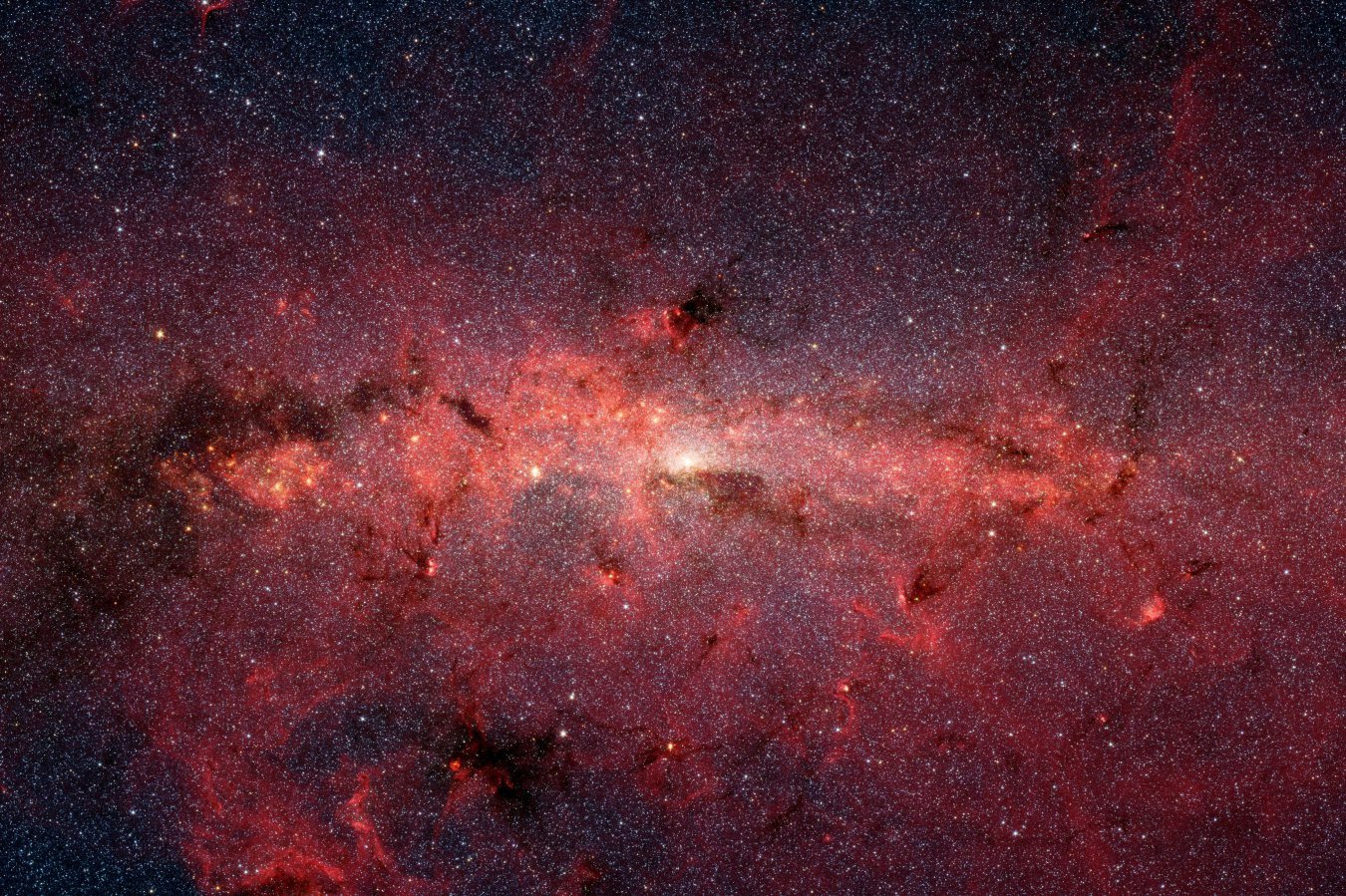
A team of radio astronomers has reported the first unambiguous detection of a sugar molecule in interstellar space, the kind of small carbohydrate that, on Earth, sits at the bottom of the chemistry that builds DNA, RNA and the metabolic machinery of every living cell. The detection, announced on 13 July 2026 at 15:00 UTC by Phys.org, lands less than three hours after a separate paper linking sea-level change to a long-suspected planetary thermostat, raising a question that connects the two findings more than the calendar suggests: how does a chemistry set turn into a biosphere, and what keeps the second one going once it gets started?
The pairing is not editorial contrivance. Sugars are the molecular scaffolding of the nucleic acids that carry genetic information, and the metabolic cycles that move energy through a cell. Finding them in the cold, irradiated dark between the stars narrows the field of plausible places where the raw material for life might first have been assembled. The seafloor thermostat paper, by contrast, asks how a planet that already hosts life holds its climate inside a habitable band for hundreds of millions of years. Read together, they bracket the same problem from opposite ends: where the building blocks come from, and why the building they end up in stays standing.
A sugar in the dark
The interstellar-sugar result is a detection rather than a discovery of life. A sugar molecule has been identified in the gas phase around a star-forming region, using radio telescopes tuned to the specific frequencies at which its bonds rotate and emit. The molecule belongs to the same family of small carbohydrates that on Earth feed directly into ribose, the sugar that forms the backbone of RNA. Its presence in an interstellar cloud does not mean biology has happened there. It means the chemistry that has to precede biology is not unique to planets.
That distinction matters for the broader argument about origins. For decades, the dominant framing held that the small molecules needed for life were assembled in planetary atmospheres or in liquid water after delivery by comets and asteroids. The detection adds to a growing list of biologically relevant species, including amino acids and certain precursors of lipids, that have now been catalogued in interstellar ices and gases. The pattern is consistent with a much older picture: the chemistry is largely made before a planet forms, and the planet inherits a pre-built kit.
The detection also reframes the question of where to look next. If the sugars are present in the gas phase in star-forming regions, they are likely present in the protoplanetary disks that condense out of those regions, and in the comets and asteroids that seed young planets with water and organics. That has practical implications for missions that sample cometary comae and for the design of instruments aboard the next generation of space telescopes.
The missing link on the seafloor
The climate paper, reported by Phys.org on 13 July 2026 at 12:40 UTC, takes a different cut at the same underlying problem: persistence. Earth has not frozen over or boiled off for more than 100 million years, despite a slowly brightening sun and a continent cycle that has repeatedly rearranged the weather. A planetary thermostat of some kind is doing the work. Scientists have struggled to fully explain how it works, and the new research claims to identify a missing link between sea-level change and the long-term carbon cycle.
The mechanism is straightforward in outline. When sea level rises, the surface area of shallow continental shelves shrinks; when it falls, the shelves expand. Those shelves host extensive carbonate sedimentation, the long-term sink that locks carbon out of the atmosphere as limestone. The paper argues that this shelf area is a more significant control on atmospheric carbon dioxide than earlier models assumed, which means the familiar seesaw between ice ages and warm periods is also, on geological time, a feedback on the composition of the air.
The implication is uncomfortable for some climate models. If the sensitivity of atmospheric carbon dioxide to shelf area has been underestimated, the geological record may be easier to explain with a smaller amplification of carbon-driven warming than some recent reconstructions have required. That does not let present-day emissions off the hook: the shelf feedback operates over millions of years, not decades, and the modern rate of carbon release is far outside any analogue in the deep record. It does, however, change the diagnosis of what is unusual about the present.
Two ends of the same question
Read separately, the two papers sit on different shelves of the science library. Read together, they describe a single object from opposite directions. The interstellar sugar paper asks where the parts come from. The seafloor thermostat paper asks why the assembled machine keeps running. Both arguments share a methodological move worth naming: they treat the chemistry and the climate of a planet as continuous with the chemistry and the geology of the space it forms inside, rather than as a closed local system that begins at the planet's surface.
That continuity is not new, but it is becoming harder to ignore. The interstellar detections have shifted the burden of explanation from "how did the molecules get here" to "how were the molecules organised once they arrived". The climate result shifts the burden from "what turned the thermostat on" to "what set its sensitivity". In both cases, the answer is being pushed outward into a larger system.
What remains genuinely uncertain
The interstellar sugar result is a single detection at a single set of frequencies. Independent confirmation by other telescopes, and ideally by laboratory spectroscopy of the candidate molecule under interstellar ice conditions, is the next step. The chemistry is also silent on chirality: the handedness of the sugar, whether it matches the biology on Earth, is not addressed by the gas-phase work, and the question of how a single handedness might arise in the first place remains open.
The climate result, similarly, is a model and a geological correlation, not a direct measurement of carbon flux at modern shelves. The size of the feedback depends on parameters that vary regionally and over time, and competing explanations for the same long-term carbon record have not been ruled out. The paper's contribution is to make the missing link more visible and to give the field a sharper target; it does not close the question.
What both papers do, taken together, is reset the scale at which the question of habitability is asked. The raw material is older than planets. The thermostat is older than civilisations. The brief window in between is the only one where the question is in any meaningful sense urgent.
This piece treats two independent scientific findings from the same reporting day as connected by the editorial question they share, not by a claimed causal link between them.