Tehran moves to legislate Hormuz security as Indian diplomat is summoned over a citizen's death
Iran's parliament takes up a dedicated Strait of Hormuz security bill hours after New Delhi summoned Tehran's deputy ambassador over the killing of an Indian national in the waterway.
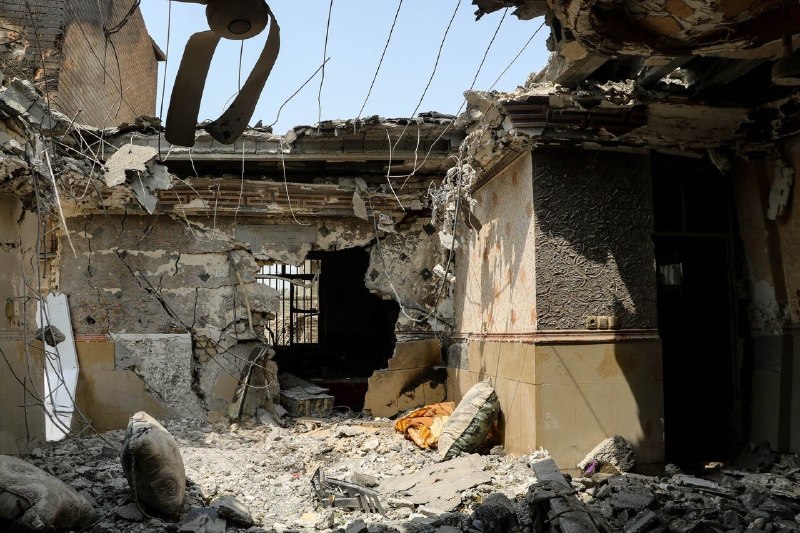
On 14 July 2026, with a US–Iran peace accord reportedly due for signature in Geneva on Friday, two parallel developments pushed the Strait of Hormuz back to the centre of regional diplomacy. In Tehran, the head of parliament's National Security Committee said a bill aimed at guaranteeing security in the strait had been formally tabled. Hours earlier, India's foreign ministry had summoned Iran's deputy ambassador over the killing of an Indian citizen in the same stretch of water, according to live-wire reporting carried by Middle East Eye on 14 July 2026.
The timing is not incidental. Lawmakers in Tehran are moving to write a domestic legal framework for a waterway that handles a substantial share of seaborne oil flows at the same moment that an external incident has put a friendly government's diplomatic weight behind a single citizen's death. Together they signal that Hormuz is being treated less as a transit corridor and more as a sovereignty question, one that Iran intends to legislate rather than merely police.
A parliament takes ownership of the strait
The Hormuz bill, as described in Middle East Eye's 14 July 2026 live coverage citing the chair of the National Security Committee, is framed around ensuring security in the strait. Reporting on the live blog at 06:51 UTC on 14 July 2026 indicates the measure has been formally introduced in parliament, a procedural step that gives Tehran a domestic-statutory anchor for operations that until now have rested on maritime patrol, naval presence, and episodic seizures. A parliament-owned bill does not by itself change the map, but it changes the legal vocabulary in which future confrontations will be argued, in Tehran, in Geneva, and in the foreign ministries of every flag-state carrier that uses the strait.
For Iran, the political logic is straightforward. A codified Hormuz framework gives the Islamic Republic a domestic instrument it can wave when challenged by Western governments over boarding incidents, tanker seizures, or rules-of-navigation disputes. It also pre-empts any future agreement in which Hormuz governance might be carved out as a multilateral concession. By moving the bill now, ahead of the reported Friday signing in Geneva, Tehran enlarges the catalogue of issues that any deal will have to absorb.
New Delhi draws a line at one citizen
The Indian response is the more telling diplomatic signal. Middle East Eye's live coverage at 06:16 UTC on 14 July 2026 reports that India summoned Iran's deputy ambassador following the killing of an Indian citizen in the Strait of Hormuz. The summons is the kind of low-key but pointed move that South Asian diplomacy deploys when it wants to register a grievance without breaking the working relationship. India buys Iranian crude, runs a sizeable tanker fleet through Hormuz, and is in the middle of recalibrating its energy import mix after a turbulent year for Russian and Gulf supplies. None of that stops New Delhi from treating the death of a national as a discrete offence requiring an explanation.
For shipping ministries and insurance underwriters, the message is sharper still. Hormuz is not a zone where the worst that can happen is a flagged vessel being diverted; it is now a zone where a single crew member's death produces a summoning of diplomats in two capitals before noon. Read against the bill moving through parliament, the incident hints at a near-future in which Iran's security framework and the flags of foreign crews are operating on different rule-books.
The strategic backdrop
The bill is landing in the same week as a US–Iran peace accord confirmed for signing in Geneva on Friday, again per Middle East Eye's 14 July 2026 live thread. The juxtaposition is uncomfortable for both negotiating parties. Washington wants a document that stabilises the strait on terms friendly to Gulf allies and to global oil markets. Tehran wants a document that recognises its security role in the waterway. A domestic parliament bill pulls in the opposite direction: it narrows the scope of what Iranian negotiators can concede without referring back to the Majles, and it gives hardliners a statutory artefact to defend if the Geneva text goes soft on Hormuz.
This is the corridor-politics dynamic that has defined the Gulf since at least the 1980s tankers war, playing out in real time. A chokepoint that the world treats as a shared commons, Iran treats as a sovereign maritime extension, and the Gulf monarchies treat as a security perimeter. A bill, a summons, a Friday ceremony in Geneva: the same stretch of water, three jurisdictions, no shared referee.
What to watch from here
Three dates will define whether 14 July 2026 turns into a footnote or a pivot. First, the Majles's committee schedule: how quickly the bill moves to a vote, and whether it carries enforcement language aimed at foreign-flagged vessels or at Iran's own naval posture. Second, the Friday signing in Geneva, and whether the published text references Hormuz governance explicitly or relegates it to a side arrangement. Third, New Delhi's follow-through: whether the summons produces a written Iranian explanation, a compensation track, or simply a quiet return to business-as-usual after the Geneva ceremony.
The plausible counter-reading is that both moves are theatre. A bill can sit in committee for years; a summons can be a closed-door courtesy call. If Friday produces a tight deal and the Majles bill quietly stalls, the 14 July wire cycle becomes atmosphere rather than substance. The dominant read, however, is that Tehran is building a legal architecture for Hormuz at the exact moment an external incident shows the limits of treating the strait as an open transit route. Architecture, once built, is harder to dismantle than a single seizure at sea.
What the sources do not specify is the operational content of the bill, the identity or nationality of the Indian citizen killed, or whether Tehran has publicly responded to the summons. The live blog reports the procedural facts but not the underlying evidence on either incident. Until those gaps are closed, the picture is one of legal scaffolding rising and diplomatic friction mounting in parallel, with the Geneva signing acting as the first real test of which signal prevails.
Desk note: Middle East Eye, reporting on a 14 July 2026 live wire, carries both items in a single thread, and Monexus has framed them together as a single Hormuz story rather than two unrelated Iran items. The Western wire line on Geneva has not yet published a signed text, and our source list reflects only the thread inputs available at press time.