Trump's 20% Hormuz toll: a toll booth on the world's oil chokepoint
A third night of US strikes on Iran accompanies a presidential proposal to collect a 20% fee on cargo transiting the Strait of Hormuz. Tehran calls the idea an insult to its sovereignty.
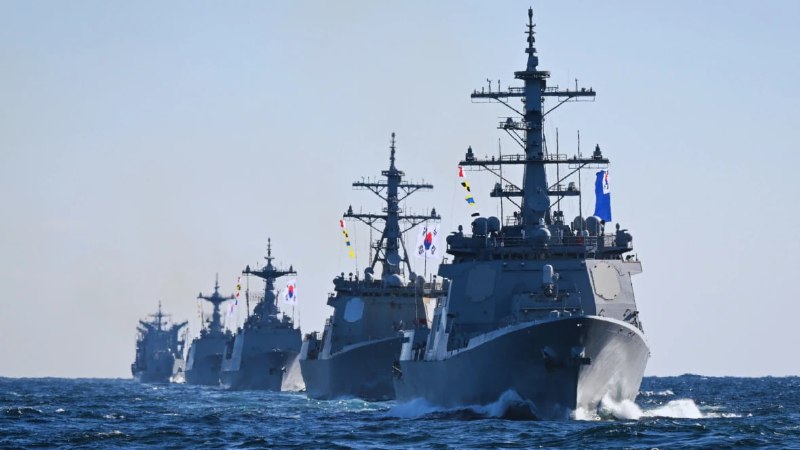
US forces struck Iranian targets for a third consecutive night on 14 July 2026, while President Donald Trump moved to convert the blockade of Iranian shipping into an explicit revenue stream: a 20% fee on cargo carried through the Strait of Hormuz (per Reuters, 14 July 2026, 09:20 UTC). Tehran's response was instantaneous. Iran's government said it would remain "the sole guardian of the strategic waterway," framing the proposed toll as a violation of its sovereignty. The market read the escalation in real time. US technology shares pulled lower on the announcement and crude prices jumped, with traders pricing a wider risk premium for any vessel whose insurance underwriter can still bind cover through the Persian Gulf (per Reuters, 14 July 2026, 00:40 UTC).
The episode is the sharpest illustration yet that the United States is no longer content to police the world's busiest oil chokepoint for free. Trump is reinventing a Cold-War-era security guarantee into a transactional commodity: safe passage on application, billed by the cargo manifest. That pivot, layered on top of three nights of bombing, has changed the geometry of the confrontation.
The arithmetic of a toll booth
The Strait of Hormuz carries roughly a fifth of global oil and a comparable share of liquified natural gas shipments. Applying a 20% levy to cargo is, on its face, a commercial instrument masquerading as a naval order. The president has framed the fee as payment for US protection; Iran has framed it as piracy in reverse, a superpower taxing water Iran considers its own backyard (per Reuters, 14 July 2026, 09:20 UTC; FRANCE 24, 14 July 2026, 08:26 UTC).
Either reading carries costs. For shippers, a 20% surcharge on the value of a cargo manifest is not abstract. A single VLCC carrying two million barrels at $80 would now write a $32m check before it cleared the Gulf of Oman. Underwriters, already pulling war-risk premiums higher after the latest strikes, would have to decide whether to insure the fee or the cargo, and at what price. The administration's pitch is that the fee replaces the cost of risk; the shippers' likely response is to refuse the arrangement and reroute, where they can. Iran sits on the alternative routes through the northern Gulf.
A blockade that has not actually stopped traffic
It is worth sitting with what the announcement does and does not do. Reinstituting a blockade, in naval terms, requires the physical capacity to inspect, divert or turn back merchant shipping. The US Fifth Fleet and its task forces can do portions of that work. They cannot, on any honest assessment, choke every coastwise movement inside the Gulf the way Iran can, because Iran's navy and the IRGC's fast-boat fleet operate from the very shoreline the Strait borders.
That is why Iran's rhetorical position is not as weak as Western wire copy tends to suggest. Sovereignty over a chokepoint held by a hostile naval power is not the same as sovereignty over open ocean. Tehran can credibly argue that the United States is now taxing Iran's own territorial sea, with the US Navy as the bill collector. The sources do not record a direct Iranian counter-proposal. They do record Iranian insistence on remaining "the sole guardian" of the waterway, a phrasing with both a legal and an operational subtext.
Markets as the third belligerent
What makes this episode qualitatively different from the prior Hormuz flare-ups of 2019 and 2024 is the speed at which equity and energy markets repriced it. By 14 July 2026, 00:40 UTC, US tech stocks were already leading indexes lower on the headline; oil had moved in the opposite direction. The mechanism is familiar. Algorithmic books interpret any new frictions on Persian Gulf throughput as a supply shock and lift front-month crude; macro books interpret the same signal as an inflation shock and lift long-duration discount rates; growth-sensitive equities are collateral damage.
There is also a quieter read. A presidential proposal to monetize naval escorts is, in effect, a partial privatisation of dollar-denominated security. A state that charges for protection is no longer running a public good; it is running a service. Allies who relied on the implicit subsidy now have to ask whether they will be billed next, and whether the bill will be settled in fees, in base access, or in arms purchases. The sources do not yet record allied comment on the specific 20% figure, but a precedent of this kind tends to migrate quickly into other US force-posture arrangements.
The fragmenting US-Iran script
What is uncertain, even after three nights of strikes and a public toll proposal, is whether any of this produces an off-ramp. The administration's framing leans on pressure: strikes degrade Iranian proxy capacity; the fee strains Iran's revenue; both push Tehran back to the table. Iran's framing leans on legitimacy: strikes are aggression; the fee is extortion; the table is not a table but a surrender document. The sources do not specify what conditions either side would accept, or which intermediaries, if any, are moving in the background.
For now, the more honest description is that the two governments are communicating through separate mediums, with the chokepoint, and the cargo on it, as the undecided audience. A satirical protest installation, a 10-foot "participation trophy" erected in a US city to mark the president's "enthusiastic involvement in the Iran war," gestures at the same dislocation from a different angle (per Reuters, 14 July 2026, 06:40 UTC). The point of the piece, evidently, is that a war being waged without a declared objective is also a war the public can be invited to mock. That is not policy. But it tells you the room is no longer quiet.
What to watch, on the merits of the source record: a fourth night of strikes; Iran's response to a specific toll-collection mechanism rather than the abstract idea of one; and whether allied governments issue formal protests before any ship is actually billed. Until then, the fee exists the way a notice of eviction exists, as a piece of paper whose consequences arrive only when someone tries to act on it.
This article was filed by Monexus staff under the MENA desk. Monexus framed the Hormuz episode as a financial-architecture story as much as a military one, foregrounding the toll mechanism ahead of the body-count framing that has dominated wire copy.
Follow the event.
These dated source records provide context. They do not retrospectively verify this archive article.
Separate what the nuclear watchdog reported from what it could not determine after the June 2025 strikes.