CENTCOM widens Iran strikes as Tehran claims retaliation and London moves to brand the IRGC
US Central Command announced a fresh wave of strikes on Iran on 15 July as Iranian state media released footage it said showed retaliation, and Iran's army publicly rallied behind the IRGC against a UK move to redesignate it as a terrorist organisation.
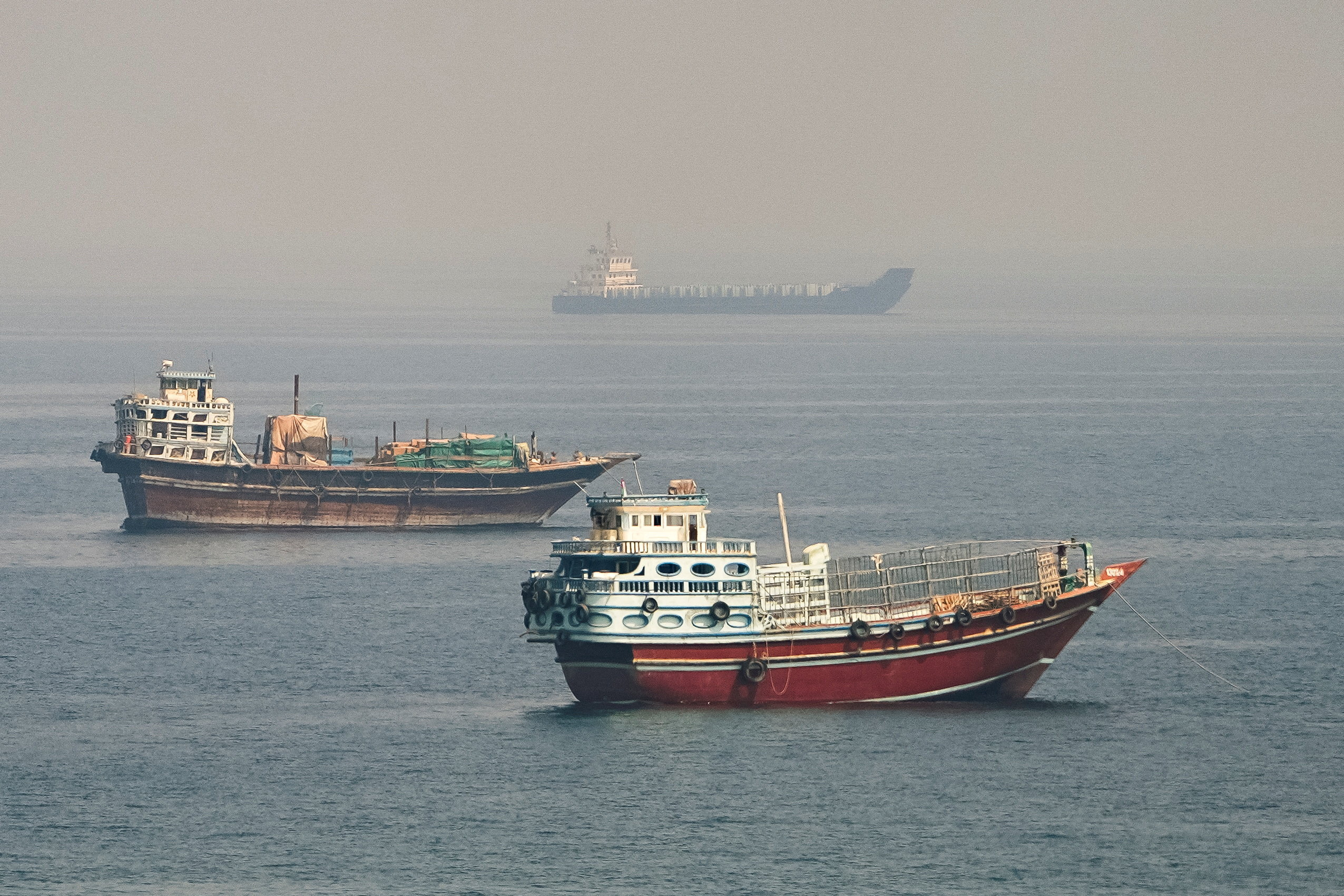
At 10:45 UTC on 15 July 2026, two channels aligned with the Tehran-led axis carried the same single-line alert: US Central Command had announced a new wave of strikes against Iran. Within minutes, the messaging split. Iran's army publicly rallied behind the Islamic Revolutionary Guard Corps against the British parliament's move to redesignate the Corps as a terrorist organisation, calling it "malicious." The body of footage circulating on Iranian state television purported to show retaliation against US assets in the region. By mid-morning London time, a confrontation that had been simmering in the Persian Gulf for months had hardened into open, declared combat on two tracks: a kinetic track run from the Pentagon's Tampa headquarters, and a legal-political track run from Westminster.
The pattern is familiar. When Washington and Tehran move from coercion to open fire, the architecture around them catches up only afterwards. What is unusual this week is the speed and the simultaneity: a strike package, a retaliatory broadcast, a domestic Iranian message of unity, and a parliamentary act in London all landing inside roughly eighteen hours. The UK's move, in particular, narrows the diplomatic space for any back-channel the Gulf states, Oman, and Qatar have spent two years trying to preserve.
What CENTCOM actually announced
The first public signal came on the morning of 14 July, when CENTCOM publicly disclosed that a force of more than twenty US warships and hundreds of aircraft was backing a renewed maritime blockade of Iran, a fact picked up by an account reporting from prediction markets and rapidly replicated by regional channels. The 15 July strike announcement, carried identically by PressTV and The Cradle at 10:45 UTC and elaborated by PressTV at 10:52 UTC, frames the blockade as a precondition rather than a substitute for direct action.
The exact target set has not been disclosed in the channels available to Monexus. Iranian state media at 09:50 UTC on 15 July released footage it described as retaliatory strikes on US targets in the region, but the underlying claims of damage, location, and weapon system are not corroborated by independent reporting in this wire set. What is on the public ledger is the sequencing: blockade posture hardened in public over the weekend, strike wave declared on Tuesday morning, Iranian counter-claim broadcast inside the same news cycle. That is the operational signature of an escalation managed for narrative as much as for effect.
Tehran's two-track response
The Iranian response is being run on two parallel tracks. The first is military-visual: state television footage purporting to show strikes on US positions. The footage functions both as a domestic rallying device and as a signal to the wider axis that Iran retains a second-strike capability. In past rounds, similar releases have been followed within hours by denials from the Pentagon that any US asset was hit, and the credibility gap between Iranian releases and US readouts has become its own kind of armour for Tehran: the ambiguity forces allies in Baghdad, Beirut, and Sanaa to hedge.
The second track is political-internal. The Iranian army's statement on 15 July, carried by PressTV at 11:01 UTC, formally endorses the IRGC against the UK move to redesignate the Corps as a terrorist organisation. The language is worth more than the politics: it publicly closes the historical fault line between the regular army (Artesh) and the IRGC, a divide Western analysts have long treated as a potential pressure point. That the statement was issued in response to an external threat, rather than in response to any domestic political friction, suggests the regime is choosing unity over its habitual factional bargaining at exactly the moment Western sanctions and military pressure are peaking.
The UK move and what it changes
The British parliamentary move to designate the IRGC as a terrorist organisation is the legal-political centre of gravity in this episode, even though the strikes dominate the visual news. The UK proscription, if enacted, would treat IRGC members and IRGC-tied commercial entities the way the domestic security state already treats proscribed organisations: assets freezable, travel barred, hosting services criminalised, contact a criminal offence. For a Corps that operates commercial arms across shipping, construction, and energy, the practical bite is not in the criminal-justice system but in the banking system.
The politics in London are not straightforward. The parliamentary vote follows a US push to broaden the proscription internationally and comes against the backdrop of deepening European energy exposure to the Gulf. Whether the UK proceeds to full statutory designation or pauses for a wider diplomatic alignment will be the most consequential procedural question of the next two weeks. Tehran's preemptive framing of the move as "hostility" is calibrated to bind any future UK-Iran de-escalation to a domestic political cost in Iran.
Stakes and what to watch
The conventional reading is that the US is escalating because diplomacy has failed and the UK is escalating because a successful blockade requires the financial system to be aligned behind it. The less conventional, but plausible, reading is the inverse: that the strikes and the proscription are being sequenced to make a face-saving off-ramp easier to construct. A demonstrable use of force gives Washington a political return on its military commitment; a hard legal designation in London gives Iran a domestic enemy to rally against; both parties then have cover for a negotiation that resumes under slightly altered terms.
Three concrete markers will tell which reading is right. First, whether the Strait of Hormuz remains physically navigable to non-flagged commercial traffic through the end of July: any sustained disruption to commercial shipping transforms this from a war of posture into a global oil-shock event. Second, whether the UK statutory designation is enacted on the timetable the parliamentary vote implies, or whether it is held back pending a wider European alignment. Third, whether the Artesh-IRGC unity statement issued on 15 July holds through the next round of strikes; visible internal dissent in Iran would change the calculus in Washington more than any single target selection.
What remains genuinely uncertain, on the evidence available to Monexus, is the operational scope of the CENTCOM strike wave. Iranian state media has published footage it describes as retaliatory; the targets struck, the systems used, and the damage assessments are not independently verified in the wire set at the time of writing. The political alignment in Tehran and London is on the public record. The military facts are not yet.
How Monexus framed this versus the wire: the major Western wires have led on the kinetic event and treated the UK proscription as a secondary political story. This piece reverses that weighting: the political-legal track is where the longer-term consequences will land, and the strike footage is the headline-grabbing layer on top of it.
Wire provenance
This editorial synthesis draws on the following public wire/social posts:
- https://t.me/s/presstv
- https://t.me/s/presstv
- https://t.me/s/thecradlemedia
- https://t.me/s/presstv
Follow the event.
These dated source records provide context. They do not retrospectively verify this archive article.
Separate what the nuclear watchdog reported from what it could not determine after the June 2025 strikes.