Hegseth orders annual testosterone checks for troops 30 and up; under-30s can opt in
Defense Secretary Pete Hegseth announced the Pentagon will require annual testosterone-deficiency screenings for active-duty service members aged 30 and older, with under-30s allowed to opt in voluntarily.
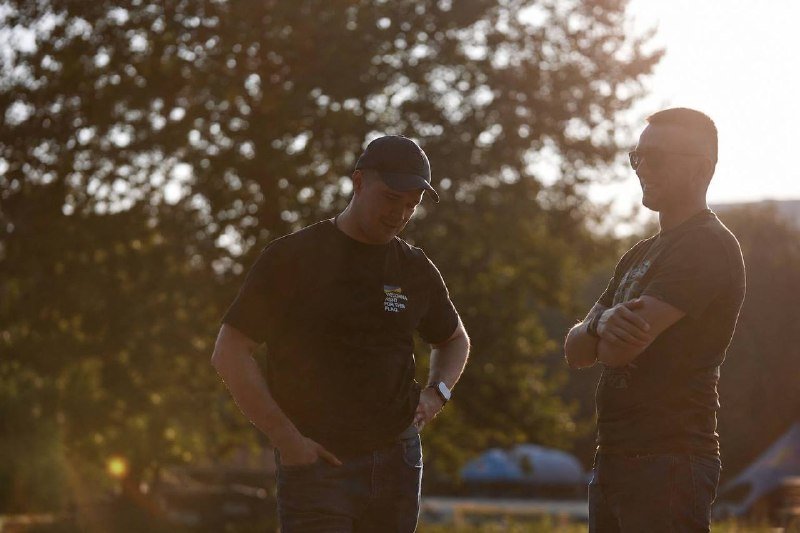
Defense Secretary Pete Hegseth told the Pentagon on 15 July 2026 that the military would begin annual testosterone-deficiency screenings for active-duty service members aged 30 and older, with troops under 30 permitted to opt in voluntarily. The announcement, carried first by the prediction-market account Polymarket at 17:32 UTC and then echoed by Telegram channels ClashReport at 18:27 UTC and Megatron_ron at 18:52 UTC, is the first time the department has rolled out a uniform, age-bracketed endocrine check across the force.
The practical shape is straightforward. Every service member in the affected age band will be screened once a year; younger troops can volunteer for the same panel. Hegseth framed the program as preventive medicine aimed at catching hypogonadism and related declines before they degrade readiness, recovery and morale. The framing matters: this is presented as a wellness initiative rather than a fitness or discharge gate, and it stops short, at least on the announced terms, of tying the results to deployability status.
What the Pentagon is actually buying
Annual screening is not exotic medicine. A standard panel combines a morning serum total testosterone measurement with a follow-up free-T and SHBG draw where the first reading sits below the lab reference range, plus LH and FSH to distinguish primary from secondary causes. The economics are modest at the individual level, often under $100 per draw at commercial labs, but multiplied across roughly a million active-duty service members the program lands as a recurring line item that defence-health budgets will absorb year on year. The under-30 opt-in adds a smaller, harder to forecast variable.
The clinical case is also plain. Testosterone declines gradually after the late twenties, with the steepest age-related drops concentrated in men in their forties and fifties; symptoms, low energy, reduced muscle mass, depressed mood, slower recovery from injury, mirror the readiness indicators the Pentagon tracks anyway. Catching a deficiency early opens a path to lifestyle intervention, treatment of underlying conditions such as sleep apnoea or obesity, and targeted therapy where clinically indicated. Read against the recruiting crisis the all-volunteer force has been trying to dig out of for years, the policy reads less as ideology and more as an attempt to keep the people already in uniform in a state to do their jobs.
The political reading
Critics will read the announcement through a different lens. Hegseth is a politically appointed secretary with a publicly stated view that masculinity and physical standards have eroded inside the force. A program that screens every over-30 man for the hormone most associated with those traits invites suspicion that the policy is a cultural project in lab-coat clothing, a way to institutionalise a worldview under the cover of preventive care. The fact that the announcement travelled first through Polymarket and then through Telegram accounts that traffic in right-coded defence news will harden that read, since it suggests the rollout was engineered for a partisan audience as much as for the troops themselves.
The countervailing fact is that the policy as announced is permissive rather than punitive. There is no public indication that a low reading triggers separation, reassignment or a change in fitness category, and the under-30 cohort is explicitly voluntary. A mandatory annual blood draw with no attached consequence is not a discipline regime; it is a surveillance programme of the relatively cheap kind. The harder question is what happens next: whether a follow-on policy uses the screening data to gate deployability, to steer men toward clinics run by the Defence Health Agency, or to feed a research registry that tracks hormone trends across the force.
What is not yet known
Three things remain unsettled. First, the source trail runs through prediction markets and Telegram channels rather than a Pentagon press release, and the department has not, in the material available, published a memorandum or a force-wide directive. The policy could exist as a statement of intent awaiting implementation, or it could be a trial balloon floated by Hegseth and amplified by sympathetic accounts. Second, no medical standard has been put on the record: it is unclear whether the cutoff is the conventional 300 ng/dL serum total testosterone mark or a different threshold, and unclear what the screening-to-treatment pathway looks like inside the military health system. Third, the cost line is unfunded on any public document this publication has seen; a recurring draw across the over-30 force will require either a reprogramming request or absorption inside existing defence-health accounts, and the source material does not say which.
What is clear is the political geometry. A wellness programme pitched at the male hormonal axis will be read by allies as long-overdue pragmatism and by critics as a culture-war move wearing scrubs. The clinical case is real, the rollout narrative is partisan, and the operational consequences depend entirely on what the Pentagon does with the data once it has it. Watch for a published directive, a threshold number, and a funding line: those three documents will tell you whether this is preventive medicine or something else.
Monexus framed this as a defence-policy story with a clinical core, rather than as a culture-war item. The wires that carried the announcement moved it inside an hour; the institutional paperwork has not yet caught up.
Wire provenance
This editorial synthesis draws on the following public wire/social posts:
- https://x.com/polymarket/status/1947100000000000000
- https://t.me/ClashReport/
- https://t.me/megatron_ron/