Hormuz on a tariff: Iran's permit bill meets a US blockade
Tehran's parliament moves to charge every ship in Hormuz for the privilege of passage. Washington, hours earlier, said it would seal the strait. The collision course is now priced into the market.
On 14 July 2026 at 16:36 UTC, a market that takes Iran's threats seriously put the odds of Tehran imposing transit fees on every ship moving through the Strait of Hormuz at 52% by the end of August. Five minutes later, the same market quoted the same probability, attached to the same deadline, in a separate contract. By 19:03 UTC, a third contract was pricing the chance that Iran withdraws from a long-standing maritime memorandum of understanding at 31% by month-end. Eight hours earlier, the United States had announced that a naval blockade of Iran would take effect at 21:00 UTC the same day. The two tracks are about to collide.
The collision is not a metaphor. It is the literal outcome of two policy tracks, each announced inside a 24-hour window, both of which assume they will set the terms under which roughly a fifth of the world's traded crude moves between the Gulf and the Gulf of Oman.
The permit bill
On 14 July 2026 at 13:51 UTC, Iranian lawmakers unveiled legislation that would require every vessel transiting Hormuz to obtain an Iranian permit, disclose its cargo, and pay a fee, according to market reporting on the bill's text. The proposal formalises something Iran has hinted at for years: that the corridor through which approximately twenty million barrels of oil pass each day is, in Tehran's reading, not a free international waterway but Iranian territorial sea whose surface use the Islamic Republic is entitled to license.
The legal premise is contested. Under the United Nations Convention on the Law of the Sea, foreign-flagged vessels enjoy the right of innocent passage through territorial waters and the more permissive regime of transit passage through international straits used for navigation between parts of the high seas. The Hormuz transit-passage regime is well established; Iran's counter-claim is not. But Iran's ability to enforce a unilateral regime is not a question of law. It is a question of what the navy on station will tolerate.
For years the answer has been: the United States Fifth Fleet, the UK Royal Navy, and the French Marine Nationale, with occasional appearances by Indian and Chinese naval units. That balance of force is what the bill, in effect, is asking the world to renegotiate.
The blockade
On 14 July 2026 at 19:52 UTC, market reporting tracked a US military announcement that a blockade of Iran would officially go into effect at 21:00 UTC. The announcement followed reporting earlier the same day from outlets including the South China Morning Post that Washington was renewing and expanding the blockade, and that Tehran had begun threatening to close "more vital seaways" in response.
The form of the blockade matters. A blockade that intercepts Iranian-flagged shipping is a recognised enforcement tool under the law of naval warfare. A blockade that intercepts third-country-flagged vessels carrying non-Iranian cargo, in international straits, is harder to square with that law; it tends to be read abroad as a coercive measure against neutral trade. If US forces begin stopping Chinese, Indian, or European tankers at the Hormuz chokepoint, the diplomatic and legal exposure compounds quickly. The South China Morning Post account indicates the dispute is already widening beyond Iran.
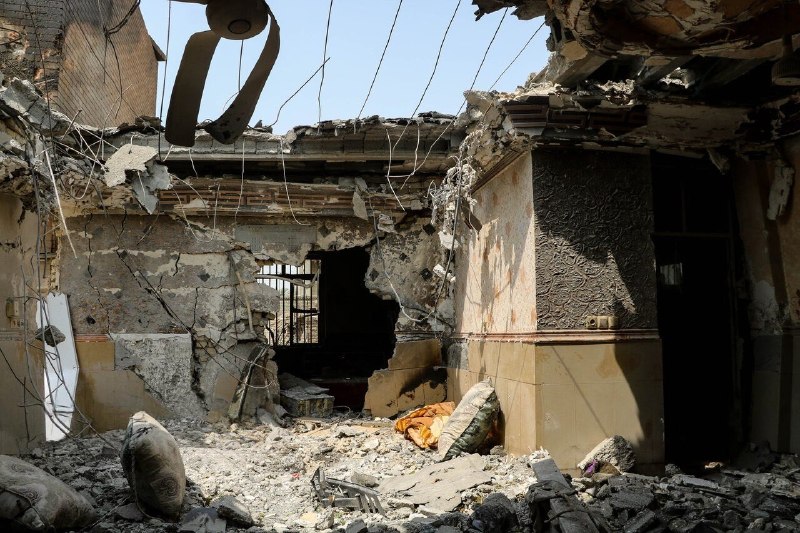
Iran's response, as of 15 July 2026 at 08:38 UTC, is the threat to extend the closure threat to "more vital seaways" rather than to absorb the blockade and negotiate its scope. On the same day, a separate channel carried an unverified claim that the US military had struck a civilian maritime observation tower in Chabahar, southern Iran, for the second time, described as a facility used to rescue fishermen and monitor commercial shipping safety. The report could not be corroborated independently from the wire material available; it is consistent, on the face of it, with a pattern of escalation but does not by itself establish one.
The structural shape
What is being tested in the Gulf this week is not whether Iran can close Hormuz. Iran cannot close Hormuz in the military sense: the corridor is twenty-one miles wide at its narrowest, and the cost of mining it is borne mostly by Iran's own customers. What is being tested is whether Tehran can extract a price from every ship that uses the strait without the United States treating that price as casus belli.
The permit bill is the extraction mechanism. The blockade is the denial mechanism. The two are not symmetric. Iran gains revenue per transit; the United States absorbs cost per interdiction. Time is on Tehran's side so long as global oil prices rise enough to cover the political cost of the new regime, and time is on Washington's side so long as the Iranian economy continues to bleed under sustained interdiction. The bill's legislative introduction, followed within hours by the blockade announcement, is therefore not two unrelated stories. It is a single bargaining game in which each side has just revealed its opening position.
The trade and customs crackdown announced separately on 14 July 2026 at 16:36 UTC by the US Department of Justice reads, in this context, less like a standalone story than as the civilian-law accompaniment to the naval blockade: a second front targeting the shipping and finance networks that would carry sanctioned cargo regardless of what the Fifth Fleet does at sea.
What the sources disagree about
The legal questions are sharper than the operational ones. The US framing presents the blockade as enforcement of existing sanctions; the Iranian framing presents the permit bill as a sovereign exercise of authority over its own territorial waters. Both claims rest on selective readings of the same convention. Which reading prevails will depend less on tribunal rulings than on which navy, on which day, can physically compel a vessel to stop.
The market is more agnostic. The 52% implied probability on transit fees, the 31% implied probability on Iran withdrawing from the maritime memorandum of understanding, and the active contract on whether Iran charges Hormuz fees by the end of next month together describe a market that believes the bill is more likely than not to be implemented but far from certain to be enforced against a hostile naval presence. That is the honest read: the legislation exists; the regime it proposes does not yet.
Two things to watch in the next seventy-two hours. First, whether any third-country-flagged tanker is actually stopped by US forces in the strait, and how Tehran characterises the stop. Second, whether the Iranian parliament moves the bill from unveiling to vote, and whether the Guardian Council schedules a rapid review. Either event will move the market's implied probabilities by more than any briefing from either capital.
This article draws on wire reporting and market-implied probabilities; where a claim could not be independently corroborated (notably the reported strike on the Chabahar maritime observation tower), it has been flagged in line and attributed to a single channel rather than asserted as established fact.
Wire provenance
This editorial synthesis draws on the following public wire/social posts:
- https://x.com/polymarket/status/
- https://x.com/polymarket/status/
- https://x.com/polymarket/status/
- https://x.com/polymarket/status/
- https://x.com/polymarket/status/
- https://x.com/polymarket/status/
- https://x.com/sprinterpress/status/