Wire
00:39ZWFWITNESSDefense Secretary Heg00:39ZIRNAENIranian, Greek foreign ministers discuss regional developments in phone call00:33ZTHEJERUSALUS Treasury Secretary Bessent announces unprecedented economic measures against Iran00:32ZOANNTVUSS George Washington to replace USS Abraham Lincoln in Middle East00:32ZEPOCHTIMESAuthorities seize 2,500 weapons, confiscate 7,260 pounds of cocaine in operation00:27ZFRANCE24ENTrump imposes tariffs of up to 100% on imported drones00:22ZOSINTLIVEPoland foiled assassination plot targeting US citizen of Ukrainian origin00:16ZALALAMARABCENTCOM denied reports of 7 sailor deaths, suicides aboard USS Lincoln
  • S&P 500 ETF 0.04%
  • Nasdaq 0.81%
  • Nasdaq 100 1.15%
  • Dow ETF 0.04%
Terminal ↗
← The MonexusBusiness · Economy

Iran strikes hit Kuwait and Bahrain as US ramps a seven-hour retaliatory wave

Iranian drones and missiles struck targets inside Kuwait and Bahrain overnight, prompting US Central Command to release footage of a seven-hour strike tranche against Iranian missile, drone and naval sites.
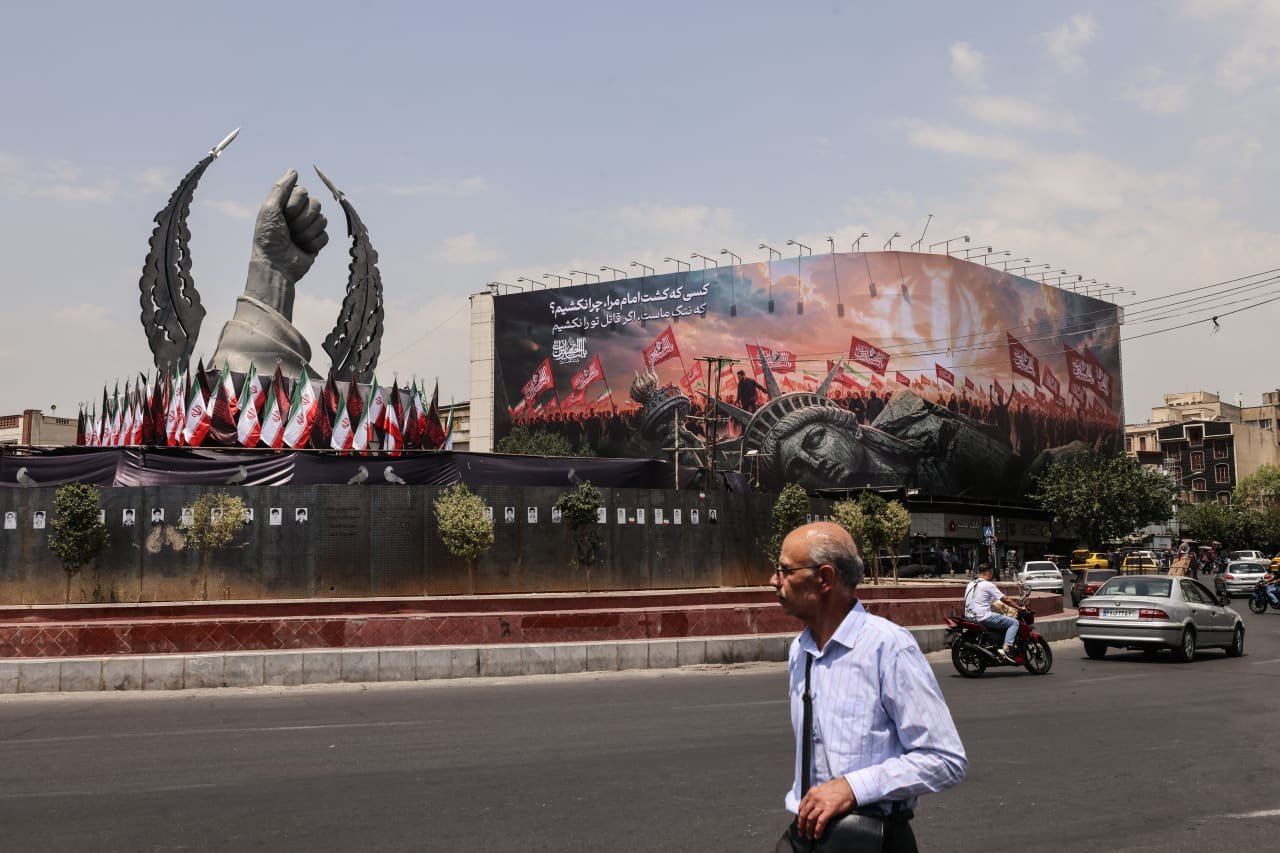
Iranian drones and missiles struck targets inside Kuwait and Bahrain overnight, prompting US Central Command to release footage of a seven-hour strike tranche against Iranian missile, drone and naval sites.
Iranian drones and missiles struck targets inside Kuwait and Bahrain overnight, prompting US Central Command to release footage of a seven-hour strike tranche against Iranian missile, drone and naval sites. @FarsNewsInt · Telegram

Footage circulated on Telegram shortly after midnight UTC on 15 July 2026, showing the moment a Shahed-136 loitering munition slammed into a warehouse inside Kuwait, with secondary imagery purporting to show additional impacts in Bahrain. The clips, posted by OSINTlive, OSINTdefender and OSINTtechnical between 01:02 and 01:33 UTC, frame a single operational picture: Iranian one-way attack drones and at least one salvo of missiles crossing the Gulf, and detonating on sovereign territory of two US-aligned Gulf states that had not, until this week, been listed as strike targets.

What began as discrete waves of tit-for-tat strikes between Iran and US Central Command has, by the early hours of Wednesday UTC, hardened into a steady drumbeat. CENTCOM has released its own footage describing a seven-hour tranche of airstrikes against dozens of Iranian missile and drone sites, naval infrastructure and coastal defence systems, posted by AMK_Mapping at 02:17 UTC. The escalation now spans three countries, two missile families, and at least one warehouse strike documented on video, an empirical floor below which neither side's read of the night can fall.

The Iran that hit Kuwait

The strikes on Gulf state territory are the operationally significant development of the night. OSINTlive's 01:02 UTC post cites footage of a Shahed-136 strike on Kuwait; a follow-up from OSINTtechnical at 01:33 UTC zeroes in on a warehouse impact inside Kuwait. By 02:33 UTC, OSINTdefender was characterising the exchange as a "drumbeat of attack" rather than discrete waves, with footage shared from the same Bahrain target set earlier referenced in OSINTlive's first post of the morning. The geographic spread matters: Kuwait and Bahrain host the US Navy's Fifth Fleet headquarters and significant afloat logistics, respectively, two of the most consequential Western forward bases inside the Gulf.

Iran has not, in the material available to this publication, publicly claimed either strike set. The clips circulate without official Iranian attribution, which leaves a careful reader three plausible readings. The most obvious is that Tehran, having absorbed a night of US strikes on its own missile and drone sites, retaliated asymmetrically by extending the target list to include Gulf hosts of US power projection. A second reading is that Iranian-aligned proxies, rather than the Islamic Republic's regular forces, conducted the launches, leaving Tehran deniability but little operational ambiguity. A third, less likely but not implausible, is that the footage is mislabeled; the war-monitoring ecosystem has an incentive toward amplification, and WarMonitorRT's preview at 01:03 UTC mocked CENTCOM for issuing "no injuries, no damage, everything was intercepted" lines that read as rehearsed rather than verified.

What CENTCOM is showing, and what it isn't

CENTCOM's overnight release, as captured by AMK_Mapping at 02:17 UTC, advertises a seven-hour tranche of strikes on dozens of Iranian targets: missile and drone launch sites, naval facilities, and coastal defence systems. The footage is published; the targets are categorised; the duration is quantified. What the release does not address, and what the Telegram monitoring ecosystem is pressing on, is the simultaneity problem. Iranian strikes on Kuwait and Bahrain began, by the timestamps of the circulated footage, before the CENTCOM statement was published.

That sequencing implies either that US strikes preceded Iranian strikes on Gulf allies, with Tehran's response still being absorbed at the time of CENTCOM's release, or that the Iranian launches and the US strikes ran in overlapping tranches within the same seven-hour window. Either reading is awkward for CENTCOM's communications posture. The "no damage" line mocked by WarMonitorRT at 01:03 UTC does not survive contact with the warehouse footage circulated thirty minutes later.

The structural floor under the headlines

The pattern on display is not novel, but it is hardening. A US campaign aimed at degrading Iranian missile, drone and naval capabilities meets an Iranian doctrine that has, for years, prepared to answer such a campaign by widening the target set rather than matching force-on-force. Hitting Kuwait and Bahrain targets is the doctrinal answer to being hit at home: it forces the United States to weigh the cost of protecting forward bases against the cost of continuing the strike campaign, and it does so cheaply, using $20,000 to $50,000-class one-way attack drones rather than the interceptors that Gulf states buy from US and European primes at multiples the unit cost.

The Iran-Israel exchange earlier in the year already established that Iranian-style retaliatory doctrine is built to absorb the first strike and survive. What the Gulf targets add is a third front, geographically distant from both the Levant and the Iranian heartland, and politically awkward for the Gulf Cooperation Council states whose public posture is de-escalation but whose territory is now a battlefield. Defence planning inside the Gulf has long assumed an Iranian threat, but it has typically priced it as an Iranian threat to commercial shipping and Gulf oil infrastructure, not as an Iranian strike campaign against warehouses inside Kuwait.

What to watch by Friday

The next 72 hours will be defined by three discrete observables. First, whether Iran formally claims the Kuwait and Bahrain strikes or maintains the kind of deniable posture that lets Gulf states avoid a formal attribution debate. Second, whether CENTCOM publishes target-by-target strike assessment footage; the seven-hour tranche is currently described categorically, and strikes of that duration against dozens of sites will produce battle damage assessment imagery if the campaign continues. Third, whether the Gulf states themselves speak. Kuwait's and Bahrain's silences over the first three hours of their own bombardment are themselves a data point, and they will not hold past the working day in Manama and Kuwait City.

The truce architecture that has held, however imperfectly, since the spring is now functionally untenable for the duration of this strike tranche. That does not mean a wider war is inevitable. It means the diplomatic off-ramp, where it existed at dawn, has by 03:00 UTC shifted from a negotiating table to a release schedule.


Desk note: Monexus is writing to the available Telegram-distributed footage and CENTCOM's own release because no Western wire has yet published a corroborated strike assessment for the overnight Gulf targets. Where an Iranian or Gulf-state official attribution has not surfaced, the framing keeps Iran as the most plausible but not exclusive candidate behind the launches.

Wire provenance

This editorial synthesis draws on the following public wire/social posts:

  • https://t.me/s/osintlive/120102
  • https://t.me/s/osintlive/120103
  • https://t.me/s/osintlive/120133
  • https://t.me/s/AMK_Mapping/120217
  • https://t.me/s/osintlive/120233
© 2026 Monexus Media · AI-native reporting from public-source material