Scheffler walks into The Open with a rare weekend behind him, and no interest in legacy
The world No 1 missed his first cut in 79 starts at the Scottish Open. His response, by his own account: a perspective check.
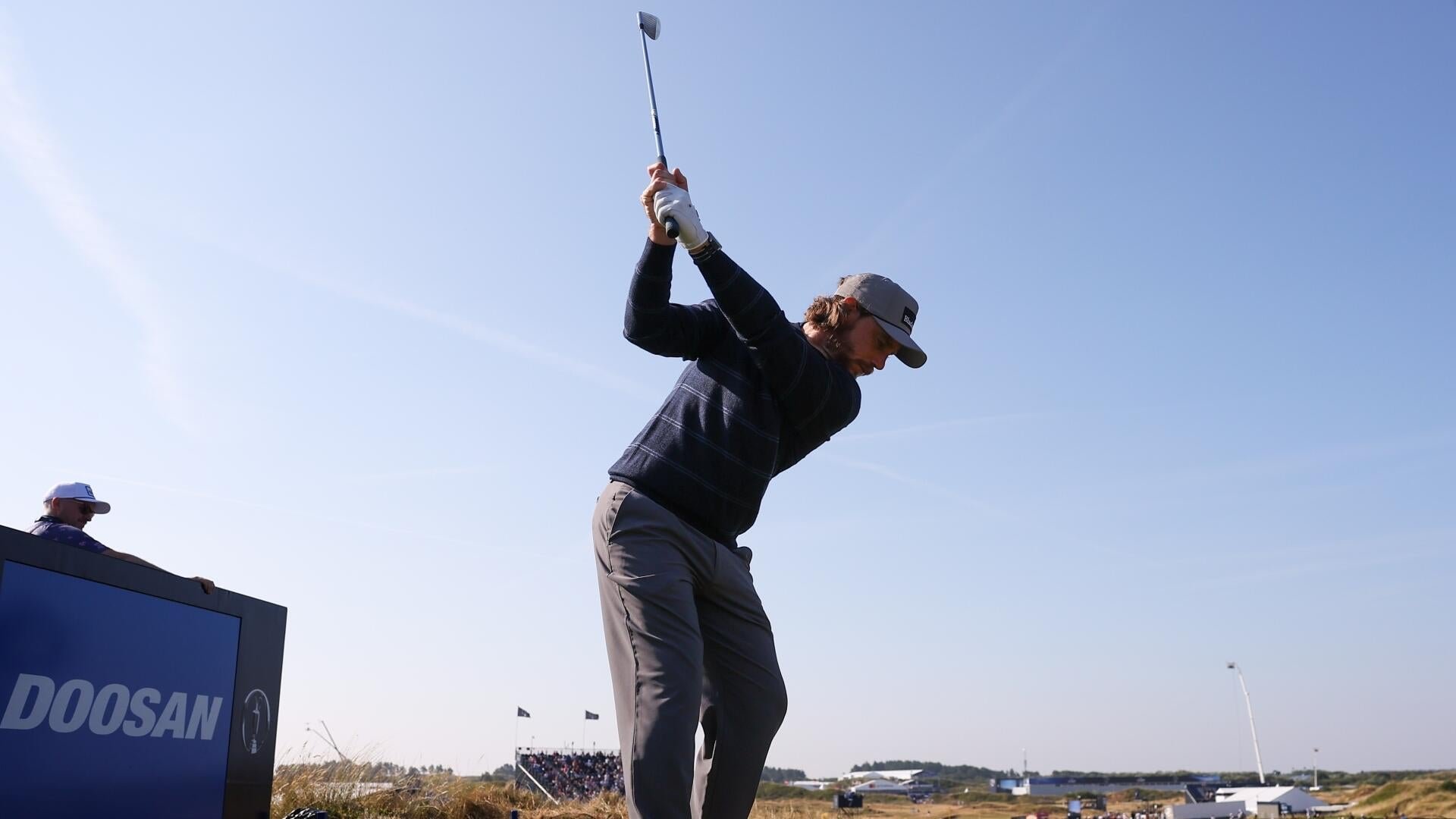
Scottie Scheffler ended a streak of 78 consecutive made cuts on the PGA Tour at last week's Scottish Open, the world No 1's first weekend off since a routine cut miss in mid-2024. He is now preparing for the 154th Open Championship at Royal Troon, and treating the gap as perspective, not as crisis. "We're all going to die," Scheffler said in his pre-tournament press conference on 14 July 2026, by way of explaining why he is not interested in his legacy. The line landed. It is also, on the evidence of his own remarks, a sincere view rather than a soundbite. (The Guardian, 14 July 2026, 18:21 UTC.)
The Open is the tournament the man himself keeps framing in existential terms. What the majors circuit is doing, increasingly, is producing a winner's circle in which the same handful of names cycle through the top of the leaderboard, and then a defending champion who arrives with an unusual question: what does any of this matter.
A weekend off, on purpose or otherwise
Missing the cut at the Renaissance Club was not a collapse. Scheffler opened with a 71 and closed with a second-round round that left him outside the line by the time the late groups finished on Friday. The streak had been running since 2024 and was, by tour counting, his first weekend off in 79 starts. Most players in the field this week at Royal Troon will tell you a missed cut is more useful than a T-12. Scheffler's framing goes further. He told reporters that finishing second hurts more than going home early, because the runner-up finish leaves him thinking about what he almost had for days, whereas the missed cut is, in his words, "fine" (ESPN, 14 July 2026, 17:44 UTC). That is not how the rest of the locker room tends to describe it.
The second-related honesty is worth marking. Modern tour golf is engineered around a thin layer of separation at the top. Difference between winner and runner-up is, in most weeks, a single shot on the 72nd hole. A defending major champion who tells the room that the loser feels worse than the guy catching a flight home is reporting something most players will admit privately and never say on camera.
What the press conference actually said
Scheffler has, across the last two majors, begun answering questions the way he plays: deliberately, without flourish, and with the quiet effect of making the rehearsed question look small. Pressers at The Open in 2026 have so far featured: a long reflection on mortality, a refusal to engage with the question of legacy, and an admission that the streak mattered less than the people around him noticed. There is no hidden rivalry narrative. No "message to the field." No demand for respect. The man is trying to win the golf tournament and would like, very much, to do so without the apparatus that follows him conflating the result with meaning.
The Open's coverage machine will, regardless. Royal Troon will host on a coastal links that punishes the wayward and rewards the patient; the leaderboard will, in all likelihood, be a list of names most readers recognise; and the post-round interviews will be parsed for the same clues. None of that is Scheffler's point.
The structural frame: a tour without separation
A central feature of elite men's professional golf in 2026 is the absence of daylight between the top of the world ranking and the next ten names. Scheffler, Xander Schauffele, Bryson DeChambeau, Rory McIlroy, Jon Rahm, and a rotating cast of LIV and PGA Tour professionals occupy a compressed band of form. Scheffler's lead in the world ranking is real, but the margin from him to fifth or sixth is the kind of difference a single Sunday session wipes out. That structural fact explains a piece of what he is saying: the dominant player knows that the dominant player's lead is mostly noise, and acts accordingly.
It also explains why a weekend off is news. When the same handful of names absorb the top 20 of every leaderboard, a single missed cut by the world No 1 reads as data rather than a result. It registers, briefly, because it is rare.
What to watch at Royal Troon
The Open at Royal Troon has, in its modern history, rewarded patience over power. The par-4s at the Ayrshire coast give back what the player leaves on the right side of the fairway and keep what he leaves on the wrong side. The test this week, by reputation and by the early-week forecasts, is going to be wind and positioning rather than distance. Scheffler plays a controlled cut and reads wind well. He has, by his own accounting, the lowest centre-of-gravity shot pattern in the field and the least volatility in his proximity numbers from 175 yards and in. None of that wins a tournament on Tuesday. On Sunday, it usually does.
The thing to watch is not whether Scheffler wins. It is whether he plays four rounds. The streak that ended at the Scottish Open was the measure of how often he shows up on Saturday and Sunday. A new streak begins at the first tee on Thursday. The defending champion has, by his own statement this week, every intention of starting it cleanly. The rest of the field has, as ever, its own view of the matter.
This piece focused on Scheffler's remarks and his form; the broader Royal Troon course profile and field draw are reported in the preview coverage linked below.