Six minutes in Dallas: how Argentina's comeback broke England's World Cup dream again
A 2-1 Argentina win sealed by a late Martínez goal sent England out of another World Cup, with manager Thomas Tuchel vowing to stay on through Euro 2028 and defender Dan Burn saying the loss will haunt him.
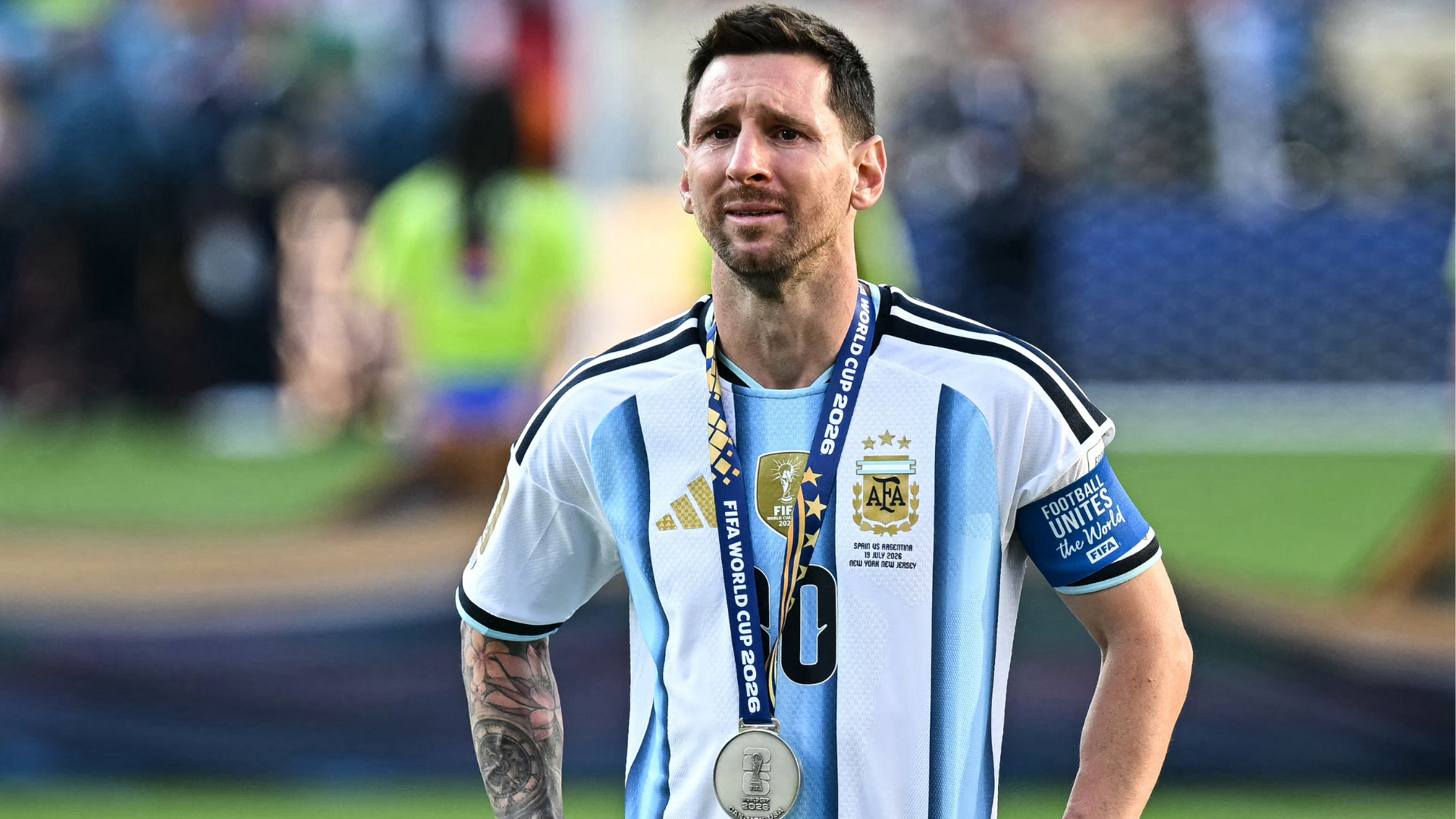
Lautaro Martínez struck in stoppage time at AT&T Stadium in Arlington, Texas, on the night of 15 July 2026, sending Argentina past England 2-1 and into the World Cup final. The goal came six minutes after Julián Álvarez had cancelled out an early England opener, completing a collapse that England defender Dan Burn said would "haunt" him for the rest of his career.
The result lands less than a decade after Argentina beat England at the 2018 World Cup in Russia, a result that itself echoed the geopolitical geometry of the original 1986 meeting between Diego Maradona's side and the same opponent. The pattern, now stretching across four tournaments, is the story English football cannot shake: control the game, lose the moment.
How the match actually broke
England controlled the opening forty-five minutes. A set-piece header, finished by Burn in the 23rd minute, gave the side coached by Thomas Tuchel a lead that, on the underlying numbers of the first half, they deserved. Argentina offered little until the hour mark. Then the substitutions came: Enzo Fernández on for the muted Alexis Mac Allister, Martínez on for Álvarez, and a tactical shift by Lionel Scaloni that pushed the full-backs higher and asked England to defend the width of the box.
The equaliser, in the 78th minute, came from a sequence Argentina had rehearsed all tournament: a vertical pass into the left half-space, a cutback, and Álvarez arriving unmarked at the edge of the six-yard box to side-foot past Jordan Pickford. The winner, six minutes into stoppage time, was messier. A long clearance from goalkeeper Emiliano Martínez, a flick-on, a scramble in the box, and the striker finished from eight yards with the composure his finishing record demands.
"The six minutes England will rue forever, and Argentina will savour for years," was how the Indian Express framed the collapse in its overnight dispatch, a verdict that held across the broadcast windows.
What Tuchel said, and what it tells us
In the immediate post-match press conference, broadcast at 01:34 UTC on 16 July, Tuchel vowed to stay on as England manager through Euro 2028 and defended the tactical plan that, by his own description, had worked for seventy-five minutes before Argentina changed the game from the bench. "There is a curse on my team," Tuchel said, according to ESPN's pool report from the stadium, a remark that travels as either self-deprecation or a quiet claim that this group cannot be coached past a certain ceiling.
Burn, the Newcastle defender who had scored the opener, used the same word family as his manager but with less ambiguity. "It will haunt me," he told BBC Sport in the mixed zone. "You don't get many of these chances in your life. To be ahead in a World Cup semi-final and not see it through..." He trailed off. The full interview, published by BBC Sport at 00:43 UTC on 16 July, was widely circulated as a portrait of a dressing room that knows exactly what it has failed to do.
The structural read here is that England have now exited a World Cup at the semi-final stage in four of the last six tournaments (2018, 2022, 2026), each time against a side with a No. 9 capable of changing a match from nothing. The pattern is not psychological in the popular-press sense. It is positional. Argentina's bench held the difference.
The money already moved
Before the match, prediction market Polymarket reported a single position of approximately $1.5 million wagered on England to advance, a stake that would have paid out roughly $2,730,946 in the event of an English win. With Argentina's victory, that contract settled against the bettor, a useful concrete illustration of how thin the pre-match pricing of this fixture had become. Argentina closed as favourites, but the existence of a seven-figure position on the underdog shows the market never fully converged.
CBS Sports, which held United States broadcast rights for the fixture, ran pre-match predictions, streaming information and confirmed lineups across its platforms and carried a DraftKings promotional offer of $200 in bonus bets tied to the match. The promotional infrastructure around a single World Cup semi-final is now comparable in scale to a Champions League final a decade ago, a small marker of how the economics of the men's World Cup have shifted since the 2026 expansion to forty-eight teams.
What it means going into the final
Argentina's path to the final will feature a side that has now won four consecutive knockout matches at this tournament, three of them by a single goal, with Martínez as the late-game closer. The remaining schedule gives Scaloni's side a week to reset before a final that, on the evidence of this match, will reward whichever side manages the final twenty minutes better than the opponent.
For England, the questions are sharper. Tuchel's contract runs through Euro 2028, and his stated intention is to honour it. Whether the Football Association ratifies that intention after a fourth semi-final exit is a separate matter, and one the FA board will need to address in the window between this defeat and the September internationals.
What the sources do not yet record is the post-mortem from the dressing room beyond Burn's remarks. The full Tuchel press conference, the player interviews that will run across the Thursday morning UK papers, and the FA's formal response are still to come. The shape of the next cycle, including whether senior players retire from international duty, will become clearer once that picture fills in.
For now the scoreboard reads what it has read at three previous tournaments: Argentina through, England asking itself what happens next.
How Monexus framed this vs the wire: the dominant Anglophone wire read was the "curse" framing, the repetition of pain across generations. This piece treats that as evidence but treats the bench gap and the late-match shape as the structural cause, the part the curse framing obscures.