Iran retaliates across the Gulf, hitting US sites in Bahrain, Kuwait, Jordan and Erbil
Overnight strikes on American facilities in three Gulf monarchies and Iraqi Kurdistan mark the first multi-country Iranian retaliation of the latest round, with Kuwaiti industrial sites named as a focus.
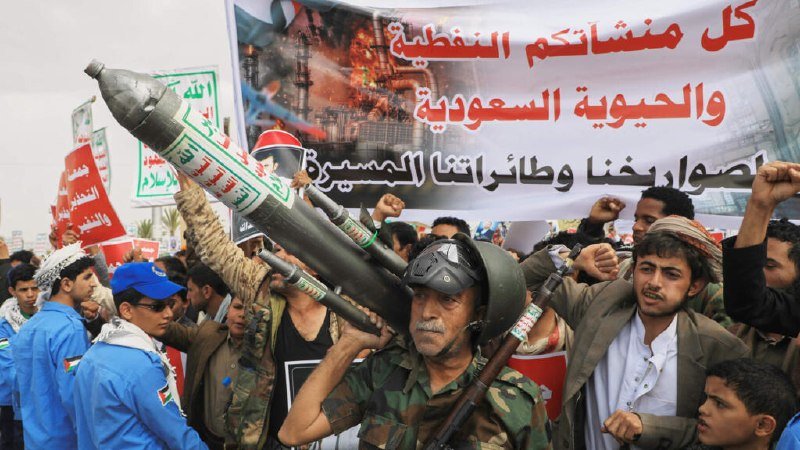
Iran launched coordinated overnight strikes against American targets in Bahrain, Jordan, Kuwait and the Iraqi Kurdistan region capital Erbil, in what the country's allies described on 16 July 2026 as retaliation for earlier US action. The channel @englishabuali, posting at 06:08 UTC, framed the operation as a direct response to American strikes, naming Saudi Arabia, the United Arab Emirates and Israel as having been briefed but not struck. Reporting from @sprinterpress at 05:13 UTC added operational detail: the night's strikes focused on US facilities in Bahrain, Jordan and Kuwait, with Kuwait hit at several economically significant industrial sites. A third account, @abualiexpress, repeated the four-country target list at 05:08 UTC.
The shape of the retaliation is unusual. Iranian missiles and drones have hit American positions in Iraq and Syria before, in cycles stretching back to 2020. What is different this time is the geographic spread: three Gulf monarchies plus the Kurdish autonomous region, in a single overnight package. Kuwait's inclusion, and the targeting of industrial sites there, signals a willingness to impose economic costs on a country that hosts thousands of US personnel but has otherwise kept a low profile in the confrontation. Bahrain hosts the US Fifth Fleet and the main naval headquarters for the Gulf. Jordan is not a Gulf state at all, but it hosts American fighter squadrons and the sprawling Muwaffaq al-Salti air base. Erbil, where US special operations forces have run a long-running counter-terrorism presence, has been hit by Iran-aligned militias repeatedly in recent years. Four countries, four different relationships with Washington, one operational night.
What we know, what we don't
The reporting available at 06:08 UTC comes from three accounts that align closely on the target list but differ in framing. @englishabuali and @abualiexpress both frame the strikes as retaliation for unspecified "American attacks", a phrase that compresses whatever preceded the overnight barrage. Neither account names which facilities were hit, what damage was inflicted, or whether there were casualties. @sprinterpress adds the operational detail about Kuwait's industrial sites without identifying them. None of the three posts cite official Iranian state media, the IRGC, the Israeli military, the US Central Command, or any government in the Gulf. The reporting is, at this hour, a single coherent narrative sourced to channels sympathetic to Tehran's framing of the exchange.
That matters for how to read the picture. The shared frame across the three posts is consistent with a coordinated Iranian messaging operation, and possibly with a coordinated military one. It does not yet constitute independent verification. The absence of Saudi, Emirati, Israeli or US confirmation, or denial, leaves open whether the strikes reached their claimed targets, whether interception rates were high, and what the casualty count is on either side.
Why these four countries
Bahrain, Kuwait and Jordan are treaty allies of the United States, host significant American military infrastructure, and have spent the past two decades keeping their relations with Tehran on a careful footing. Bahrain's role is the most exposed: Naval Support Activity Bahrain is the operational anchor of US maritime power in the Gulf. Kuwait hosts US Army forward headquarters and rotating air units. Jordan hosts Central Command's forward air wing. All three governments have reasons to keep the temperature down. Striking them tests the diplomatic bandwidth the Gulf monarchies have built up with Iran through years of quiet back-channel work, much of it brokered by Iraq and Oman.
Erbil is the odd one out. The Kurdistan Region of Iraq has its own government, its own security forces, and a complicated relationship with both Tehran and Washington. Iranian-aligned militias have fired at US and coalition targets there repeatedly, with Erbil International Airport hit in missile attacks that Baghdad and Washington blamed on Iran-backed groups. Including Erbil in this round is consistent with the established pattern of pressuring the most accessible US footprint in the wider region, rather than the heart of the Gulf.
What the targeting says about the next move
Two structural features stand out. First, the strikes appear calibrated to avoid the two countries that have acted as intermediaries: Saudi Arabia and the United Arab Emirates, both named by @englishabuali and @abualiexpress as having been briefed but not struck. That is consistent with a deliberate effort to widen the cost to American infrastructure without giving Gulf capitals a casus belli of their own. Second, the emphasis on Kuwait's industrial sites, as @sprinterpress reports, suggests a shift in Iranian doctrine toward imposing economic damage on Gulf states, not just military losses on US forces. Kuwait is a major petrochemicals and refining hub. Strikes there, if confirmed and if they reach energy infrastructure, would touch global supply in ways that a strike on a forward operating base does not.
The strategic logic, on the Iranian side, appears to be escalation at the level of geography without escalation at the level of regime. Hit American bases in four countries, avoid hitting their governments directly, impose costs that are absorbed first by insurance markets and oil traders, leave diplomatic channels intact. Whether that logic survives the morning, when satellite imagery and Pentagon briefings start to land, is the open question.
Stakes and what to watch
The immediate market reaction will come in two waves: oil, in the first hour of Asian trading, and equities, once Western desks reopen. A confirmed strike on Kuwaiti energy infrastructure would move Brent more than a strike on a desert airfield; reports so far do not specify which Kuwaiti sites were hit. The diplomatic reaction matters more in the medium term. The Gulf monarchies have spent years mediating between Washington and Tehran, and a successful Iranian strike on their soil tests the architecture of that mediation. If Saudi Arabia and the UAE read the overnight operation as a deliberate exemption rather than restraint, the back channels hold. If they read it as the prelude to a second round that hits them, the back channels close.
The most likely counter-narrative is that the strikes did less damage than the Iranian-aligned accounts claim, and that interception rates were high. Gulf air defences have improved sharply over the past three years, partly because the threat was anticipated. The morning's central-command briefings, if they arrive, will be the first independent read on what got through. Until then, the story is what the Iranian-aligned channels say it is: a four-country retaliation, a warning, and a calculation about how far escalation can go before the Gulf stops being a usable arena.
Desk note: Monexus is running this on the three accounts that surfaced the overnight reporting, none of which is a Western wire or an official Iranian outlet. Independent confirmation from the US military, Gulf governments, or major wires will reshape the picture; the claims about Kuwait's industrial sites and the four-country target list should be treated as the Iranian-aligned framing until corroborated.
Wire provenance
This editorial synthesis draws on the following public wire/social posts:
- https://t.me/englishabuali
- https://t.me/sprinterpress
- https://t.me/abualiexpress
Follow the event.
These dated source records provide context. They do not retrospectively verify this archive article.
Separate what the nuclear watchdog reported from what it could not determine after the June 2025 strikes.