Israel–Lebanon talks resume in shadow of southern strikes and an absent Hezbollah
Al Jazeera English frames the obstacles to an Israel–Lebanon deal as more than the rockets and the airstrikes: a missing local partner, an absent governing authority in Beirut, and a Washington that may not have the bandwidth to enforce what it brokers.
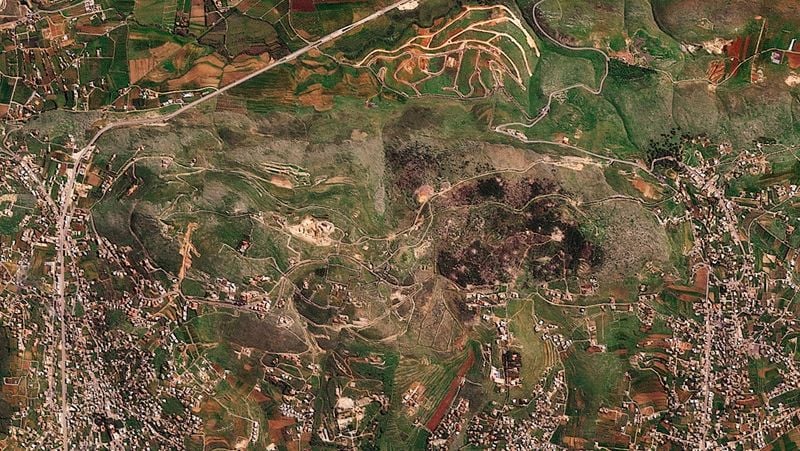
The diplomatic question hovering over the southern Levant this week is deceptively simple: what, exactly, would Israel and Lebanon be making peace between, given that one of them does not have a monopoly on its own armed force and the other has spent the past two decades saying so out loud. On 16 July 2026, Al Jazeera English's English-language stream titled its explanatory segment "What are the obstacles to peace between Israel and Lebanon?", a question whose answer has less to do with disputed borders and more to do with the structural absence of a sovereign counterpart capable of holding any deal made.
The obstacles, on the evidence of the framing Al Jazeera itself lays out, are not principally territorial. They are institutional. Lebanon has not signed a peace treaty with Israel since 1983 and has been, in formal UN and US diplomatic language, at war with the Jewish state for the intervening 43 years. Israel in turn has spent most of that period treating the border not as a diplomatic seam but as a military front, with periodic campaigns in 2006, 2018, 2019, 2023, 2024 and 2025 that the IDF has framed as targeted operations against Hezbollah infrastructure. The question that segment asks, and that the wider press now echoes, is whether the wreckage of the last campaign is the foundation for a settlement or simply the next pause in a recurring pattern.
The partner problem
Any Israel–Lebanon agreement requires someone in Beirut with the authority to enforce it on every armed actor south of the Litani. That person does not currently exist in the formal constitutional sense. Lebanon has been without a president since the previous term expired, the office has been vacant for more than two years under the country's confessional system, and the caretaker cabinet in Beirut governs on the narrowest of mandates. The US and France have, in various sequences since 2023, pushed for an election to fill the post; Hezbollah's parliamentary bloc has at various moments refused to endorse a candidate that the March 14 coalition would accept. Without a president, the Lebanese state lacks the constitutional cover to ratify a binding external accord.
The deeper problem is that even a fully functioning Lebanese state would face the harder task: disarming, or even constraining, a non-state paramilitary that has spent forty years building a parallel security architecture inside the country and that fought a 33-day war with Israel in 2006, a four-day escalation in 2018, and an extended exchange of fire from 8 October 2023 onward. Al Jazeera's segment names this absence plainly: a Lebanese state that wishes to make peace cannot, on its own current institutional resources, deliver the disarmed southern frontier that Israel has said is the precondition for any deal. Israeli security concerns along that frontier are legitimate and have to be treated as first-order facts; the question is whether the mechanism that delivers the security is political or military.
What the recent exchange looks like
Israeli strikes inside Lebanese territory in 2024 and 2025 killed senior Hezbollah figures and damaged infrastructure across the southern suburbs of Beirut and the Beqaa Valley. The IDF Spokesperson framed each operation as a strike on a specific military asset. Hezbollah's media arm, Al-Manar, framed each strike as an Israeli aggression requiring a rocket response. The exchange followed the same shape on both sides for two years: an Israeli targeted kill or strike, a Hezbollah rocket volley, an Israeli follow-up, a UNIFIL statement of concern. The cycle broke, intermittently, when a US-mediated de-escalation framework took hold in late 2024 and again in late 2025; each pause was nominally a "cessation of hostilities," not a political settlement, and each pause held less time than the one before.
The Al Jazeera framing puts weight on the question of whether the latest exchange of fire has produced a constituency for a deal. The argument is that the southern Lebanese civilian population, displaced in waves since October 2023 and increasingly unwilling to absorb the cost of the next round, has reached the limit of its tolerance. The countervailing constituency inside Israel is more fractured: northern Israeli communities displaced from Kiryat Shmona and Metula want quiet; the Israeli right has used Hezbollah disarmament as a precondition for accepting any diplomatic outcome, with the implicit threat that failure to deliver disarmament is grounds for renewed escalation. The result is a public on both sides of the border that wants quiet and a leadership class that is not sure quiet is achievable without concessions neither side's domestic politics can absorb.
What Washington is and is not offering
The structural frame the Al Jazeera segment supplies, without naming the theoretical scaffolding, is that a settlement in 2026 depends on an external guarantor whose bandwidth is finite. The United States has mediated the pauses that have held since 2024 and is the only government with the standing to enforce a deal on Israel and on the Lebanese state. The Biden administration began that mediation; the current US administration has continued it without the same intensity, with focused attention on the Gaza file and a reordering of regional priorities that has, in practice, left the Lebanon track in a holding pattern. The deal being discussed is essentially the framework that has been on the table since the 2024 exchanges: Israel halts strikes in exchange for Hezbollah's withdrawal north of the Litani, the deployment of Lebanese Armed Forces to the border with US and French logistical support, and an international monitoring mechanism on the model of the one that has nominally existed since UN Security Council Resolution 1701 in 2006.
That framework has been on the table for nearly two years. The reason it has not been implemented is not the framework's content but the absence of the partner who would carry it. Hezbollah's leadership has, in carefully calibrated public statements, neither accepted nor rejected the package. The Lebanese government's caretaker status means that even if Hezbollah agreed, Beirut could not constitutionally commit to a binding international instrument. And Israel's stated condition, disarmament, not withdrawal, adds a clause that the framework as written does not include.
What changes if a deal actually happens
If the obstacles named in the Al Jazeera framing are resolved, the immediate consequence is a cessation of Israeli air activity over southern Lebanon and an end to the rocket fire from Lebanese territory into Israel, with a corresponding drop in the civilian casualty figures on both sides of the border that the past two years have produced. The structural consequence is a shift in the regional security architecture: a quiet northern front would free Israeli operational planning for whatever the next file is, Gaza, Iran, the West Bank, and would free Hezbollah's residual attention for the political contest in Beirut that its patron, Iran, has a stake in.
If the obstacles are not resolved, the trajectory of the past two years continues: targeted Israeli strikes, calibrated Hezbollah responses, intermittent US-mediated pauses, and a southern Lebanese civilian population that absorbs the cost. The upper bound on the trajectory is the kind of large-scale Israeli operation against Hezbollah infrastructure that Israel conducted against Hamas in Gaza from late 2023, which the IDF's published doctrine describes as a regional rather than local contingency and which the current Israeli government has publicly said it reserves the right to undertake. The lower bound is the same holding pattern that has held, in various forms, since 2024.
What remains contested
The Al Jazeera segment is an explanatory frame, not an investigative finding; it names the obstacles but does not claim to resolve them. The sources it draws on are weighted toward the Lebanese and Arab press reading of the file, and the Israeli framing is partly refracted through that lens. The Israeli press and the IDF Spokesperson would, fairly, push back on the implication that the only path to security on the northern border runs through a diplomatic partner that Israel does not fully trust to deliver. The counter-reading is that targeted Israeli action has degraded Hezbollah's southern network to a point where the disarmed-frontier condition is achievable by military means if not by political ones; that reading has its own evidentiary record and its own critics inside the Israeli defense establishment. The honest position is that the question is unsettled: nobody on the record, including the officials most directly involved, knows whether 2026 produces a settlement or another cycle.
How Monexus framed this: the wire summary posed the question; the reporting here lays out the institutional absence behind the question and treats both Israeli security concerns and the structural unreadiness of the Lebanese state as first-order facts rather than as talking points.
Wire provenance
This editorial synthesis draws on the following public wire/social posts:
- https://t.me/aljazeeraglobal
- https://en.wikipedia.org/wiki/Israel%E2%80%93Lebanon_relations
- https://en.wikipedia.org/wiki/2023%E2%80%932024_Israel%E2%80%93Hezbollah_conflict
- https://en.wikipedia.org/wiki/United_Nations_Security_Council_resolution_1701
- https://en.wikipedia.org/wiki/Lebanese_presidential_election,_2022%E2%80%93present
- https://t.me/aljazeeraglobal
- https://en.wikipedia.org/wiki/Israel%E2%80%93Lebanon_relations
- https://en.wikipedia.org/wiki/2023%E2%80%932024_Israel%E2%80%93Hezbollah_conflict
- https://en.wikipedia.org/wiki/United_Nations_Security_Council_resolution_1701
- https://en.wikipedia.org/wiki/Lebanese_presidential_election,_2022%E2%80%93present