Messi at 39 rewrites the ageing script and breaks England's run
A 39-year-old Messi delivered the decisive cross in stoppage time to send Argentina past England 2-1 and into the World Cup final, exposing a tactical assumption the Three Lions had built their gameplan around.
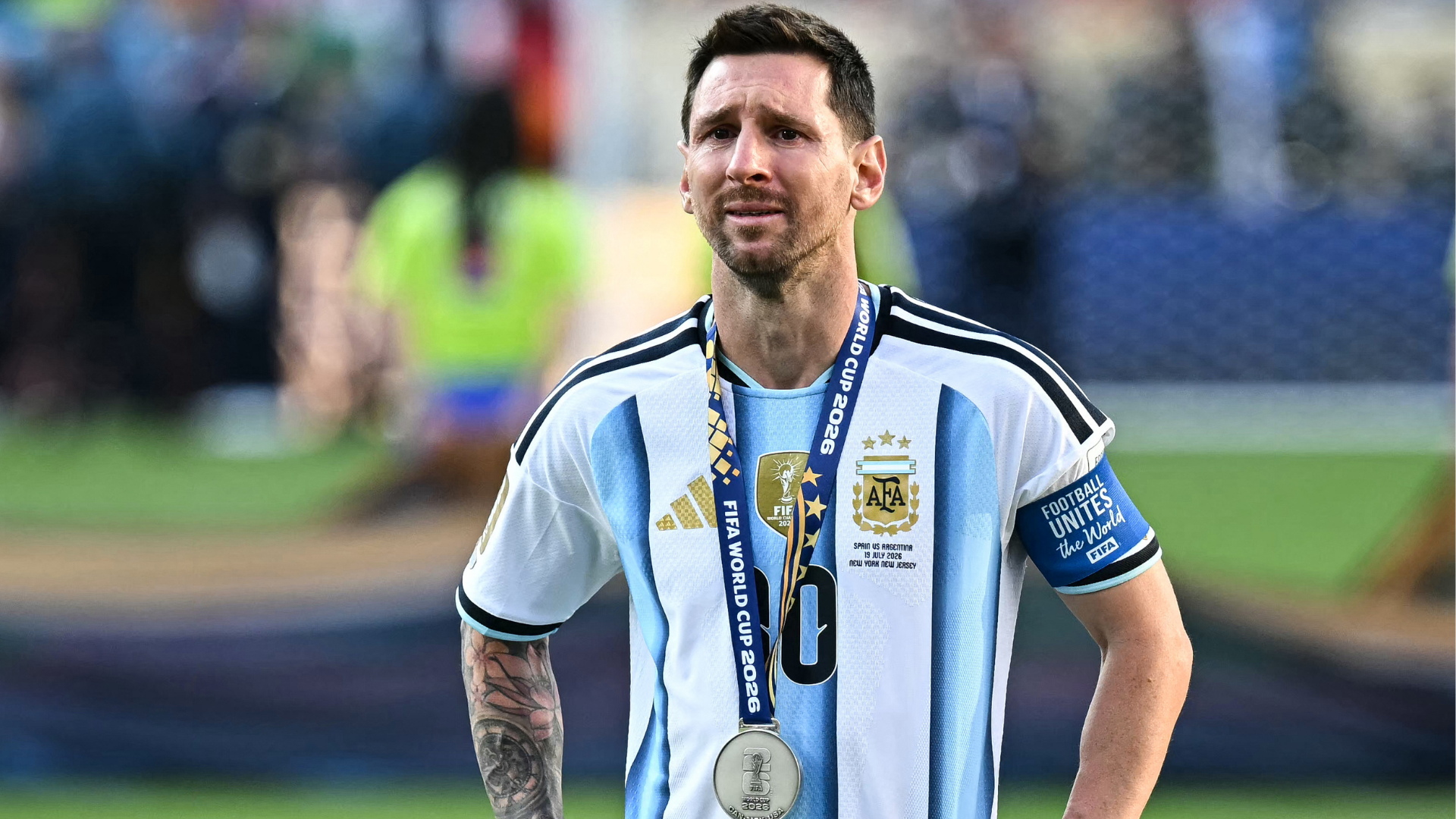
Lionel Messi, 39 years old and widely assumed to be a problem England could solve with pace and physicality, settled the World Cup semi-final in the 92nd minute. His clipped cross from the right drew the Argentina captain toward the back post, where a teammate arrived unmarked to guide the ball past Jordan Pickford and complete a 2-1 comeback at the end of a match England had led since the 35th minute. The goal, dispatched deep into stoppage time, sent Argentina into the final and ended a tournament run that had carried Gareth Southgate's side to within a match of the showpiece.
England's plan had been built on a premise that had looked sound on paper: against a 39-year-old who conserves energy by walking through phases of play, the Three Lions could press high, win second balls, and make the contest physical. Argentina's number 10 spent most of the night upright, gesticulating, pointing. He also ended the night with the decisive contribution, and a player-ratings grade to match. The match inverted the assumption: the legs that England expected to tire never did, and the tactical levers Southgate had pulled did not produce the second goal his side needed to close the game out.
What England expected, and what they got
The English premise was the conventional read on a Messi at this stage of his career. Harry Kane, operating as the focal point of Southgate's attack, was tasked with pinning Argentina's centre-backs and converting the kind of chance that arrived in the 35th minute: a clipped ball across the box that he steered in to make it 1-0. England defended the lead competently for more than half an hour, restricting Argentina to half-chances and managing the game's tempo through the kind of set-piece and second-ball work that has defined this team's tournament.
Argentina's equaliser came from a sequence that England did not contest cleanly in midfield, and from there the shape of the contest shifted. Messi began to receive the ball closer to England's back line, and his movement, even at walking pace, began to occupy two defenders at a time. Pickford produced a save from a González header that, on another night, would be the headline; instead it was a footnote, because Messi was still on the ball and Argentina were still coming. As the BBC's tactical correspondent noted in the post-match analysis, the Argentina captain was not just present in the decisive phase; he was directing it, repositioning teammates with arm signals that doubled as a coaching sheet visible to every camera in the stadium.
The other reading: England lost this, Argentina did not win it
There is a more flattering version of this match for Southgate's side, and it deserves airtime. England did not collapse; they were level-pegging for long stretches of the second half and could argue that the decisive moments turned on a deflection, on a marginal offside call that did not go their way, or on the kind of late-game swing that tournaments produce regardless of preparation. Kane, by player-ratings measures, struggled to make an impact after his opening goal, but that is partly a function of how few clear chances the team created once the game opened up. Pickford's denial of González was described in match reports as sensational, the kind of save that, in a parallel universe, preserves a 1-1 scoreline into extra time.
The counter-narrative, then, is that England's exit is a story of fine margins rather than structural failure: a semi-final lost on a moment, not on a tactical reckoning. There is something to that. But it does not explain why Messi, the supposed weak point in Argentina's press-resistance, finished the match as the most influential player on the pitch at 39, or why Argentina's bench and tactical adjustments in the final twenty minutes produced a swing that England's bench did not match.
What this looks like beyond the result
The match sits inside a broader pattern of ageing elite footballers outlasting the assumptions made about them. It is no longer unusual to see a forward in the late thirties operating at the highest level of the sport; the unusual thing is the gap between how teams prepare for that player and what actually happens on the pitch. England's preparation treated Messi's conservation of energy as a vulnerability to be exploited with pressing; Argentina's setup treated it as a feature, a way of preserving a 39-year-old's sprint capacity for the moments when it actually matters.
The structural lesson is not about Messi specifically. It is about how sides build gameplans around a snapshot of an opponent, and how those snapshots age badly when the player in question has spent two decades rewriting the rules of his position. Argentina's staff, by contrast, built their gameplan around Messi's capacity to manage a match from a standing start and to intervene surgically when the game tilted. The result was a final that Argentina will contest, and an England side that returns home with the familiar consolation that the project is on the right track.
What to watch next
Argentina face the winner of the other semi-final, with the final scheduled for the weekend. For England, the questions are sharper and more durable: whether the tactical template that has carried them to two recent semi-finals and a final is the one that will eventually carry them over the line, and whether the squad that lost to Argentina in stoppage time is the same squad that will contest the next cycle. Pickford's performance, Kane's tournament as a whole, and the integration of younger players who featured off the bench will all be parsed in the weeks ahead.
For Messi, the arithmetic is simpler. A 39-year-old who walks through most of a World Cup semi-final and still ends it with the decisive cross has not just beaten England. He has reset the conversation about what an elite forward looks like in the back half of his thirties, and he has done it on the biggest stage the sport offers. Argentina's staff will not need to be told what to do next. Everyone else will spend the next four years trying to work it out.
This publication framed the match around the tactical premise England built and the one Argentina actually played, rather than around the ageing-narrative framing that dominates English post-mortems. The wire focus on individual errors misses the structural point: the side that accounted for Messi's limitations used them as a design feature, not a weakness to punish.