Damascus Says It Foiled Iran-to-Hezbollah Arms Run Along Iraq–Syria–Lebanon Corridor
Damascus says it intercepted an arms shipment on the Iraq–Syria–Lebanon eastern route; the Israeli Alma Research Center adds that the cargo was hidden in a tanker and bound for Hezbollah.
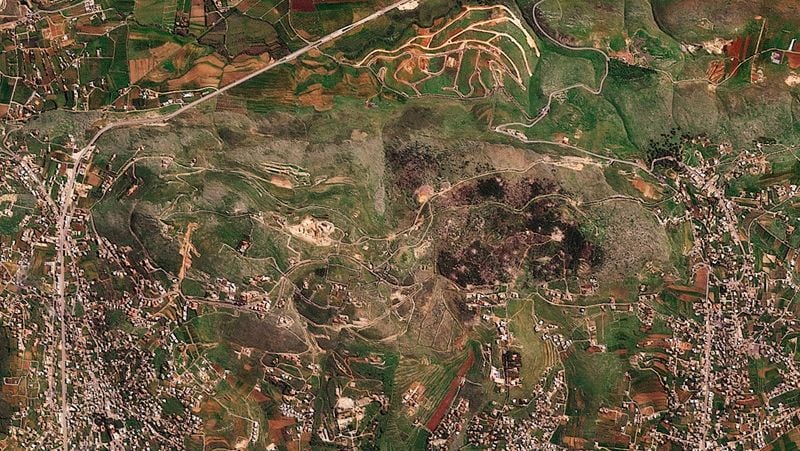
On 16 July 2026, the Syrian Ministry of Defense said it had foiled an attempt to smuggle advanced weaponry from the Iraqi border through Syrian territory toward Hezbollah via Lebanon's eastern route. The interdicted convoy was, by initial account, built to look like ordinary cross-border traffic until the security services moved in.
The claim matters less for the volume of hardware seized (Damascus has not disclosed a number) than for what it says about the route itself. The eastern Iraq–Syria–Lebanon corridor has functioned, on and off for two decades, as one of the most reliable overland pipelines moving Iranian military materiel to Hezbollah. A successful interdiction is therefore a reading of the terrain's current operating pressure, as much as a single seizure.
What Damascus says it stopped
The Ministry of Defense's public line, as relayed on 16 July by the Telegram channel English Abuali, is that the operation aimed at Hezbollah and that the cargo entered Syria from Iraq. The ministry did not identify the specific weapons category, did not name the network, and did not publish photographs of the seizure on the Telegram thread referenced here. The channel's wording is direct: foiling of advanced weaponry intended for Hezbollah via Lebanon's eastern route.
What that omits is the part of the operation report that would normally follow: where in Syria the intercept occurred, which border crossing the truck used, and which Syrian unit made the arrest. Damascus's security communiqués tend to be tight on outcome and thin on geography, a habit that leaves independent verification difficult and that this publication notes without further speculation.
The Israeli read on the concealment method
A follow-up dispatch the same day, citing the Israeli Alma Research Center, added the operational detail that Damascus left out. The weapons were concealed in a tanker, hidden inside what would otherwise read as a routine commercial fuel shipment running the Iran–Iraq–Syria land corridor. Alma, an Israeli open-source outfit that tracks Iranian arms transfers, has a track record of identifying the concealment patterns that surface in interdictions; it has described the eastern overland route as Iran's most resilient fallback when air corridors are pressured.
The tanker detail does two things at once. It explains why the shipment survived the first checkpoints (a fuel bowser has paperwork explaining its load), and it tells Syria's security services what they should now look for on every sealed tanker crossing from al-Tanf's vicinity and the Albu Kamal–Qa'im axis. A single successful concealment method tends to be reused until the buyer of the cargo is told to switch.
Why this route, and why now
The eastern land route is the oldest of Iran's three principal supply lines to Hezbollah: overland through Iraq and Syria, by sea from the Gulf, and by air through Beirut's civilian aviation. The current Syrian government, in power since the December 2024 fall of the Assad regime, has been intermittently hostile to the Iranian presence in the country, and it has had operational reasons to want a documented seizure on its own soil. A successful interdiction that also reaches public record is a way for Damascus to remind every party to the corridor that the new authorities are not passive about cross-border traffic.
The conduit's resilience, however, is structural rather than political. The driver of the route is the geography between Iran's western provinces, Iraq's Sunni-majority western governorates, eastern Syria and Lebanon's Bekaa Valley. Until at least one link in that chain stops paying off for the smugglers, interdiction is an output of the system rather than a transformation of it. The deal-making between Damascus and the surviving smuggling networks, several of which retained staff and logistics after Assad's fall, has only settled part of that picture.
What the public record still does not show
Two points carry through every reading of the seizure. First, the Syrian ministry's account and Alma's concealment narrative are complementary on the route's geometry, but neither source specified which weapons category was involved (anti-tank guided munitions, rockets, precision-guided projectiles, and small arms are all candidates for a tanker hide), and neither specified the destination cache inside Lebanon. Second, no independent imagery from the seizure site has surfaced in the public Telegram traffic on the operation; the visual record, at this point, is the compartment itself rather than its contents.
A third, harder caveat: interdictions announced after the fact have occasionally, in earlier campaigns, served a political purpose beyond the seizure. Damascus benefits from the press cycle. The security establishment in Israel benefits from confirming that the route remains active. Hezbollah's silence, if it holds, is itself a signal. None of this disputes the seizure; it qualifies how the read of it will be tested in the days after the photograph that didn't accompany it.
The interception on 16 July is therefore best understood as one data point in a corridor whose operating logic has not changed. The route survives because the geography rewards it, and because at least one party to the chain has not yet been priced out of continuing. Watch the next public seizure out of Damascus, and the next, and the next: that is how the corridor's pulse will be read until either Damascus or the buyers of the cargo find the price too high.
Desk note: Monexus carried this on the strength of two Telegram dispatches from the channel English Abuali, one paraphrasing the Syrian Ministry of Defense and a follow-up citing the Israeli Alma Research Center. Wire outlets did not, as of publication, run their own version of the seizure, so the framing rests on those two reads and on the corridor's structural history rather than on a Reuters or AP bulletin.
Wire provenance
This editorial synthesis draws on the following public wire/social posts:
- https://t.me/englishabuali
- https://t.me/englishabuali