Reports of a US attack on Jask, and what the Telegram record can carry
Telegram channels relayed reports of smoke and strikes near the airport of Bandar-e-Jask in southern Iran on the evening of 29 October 2026 UTC. The posts do not establish who fired or what was hit.
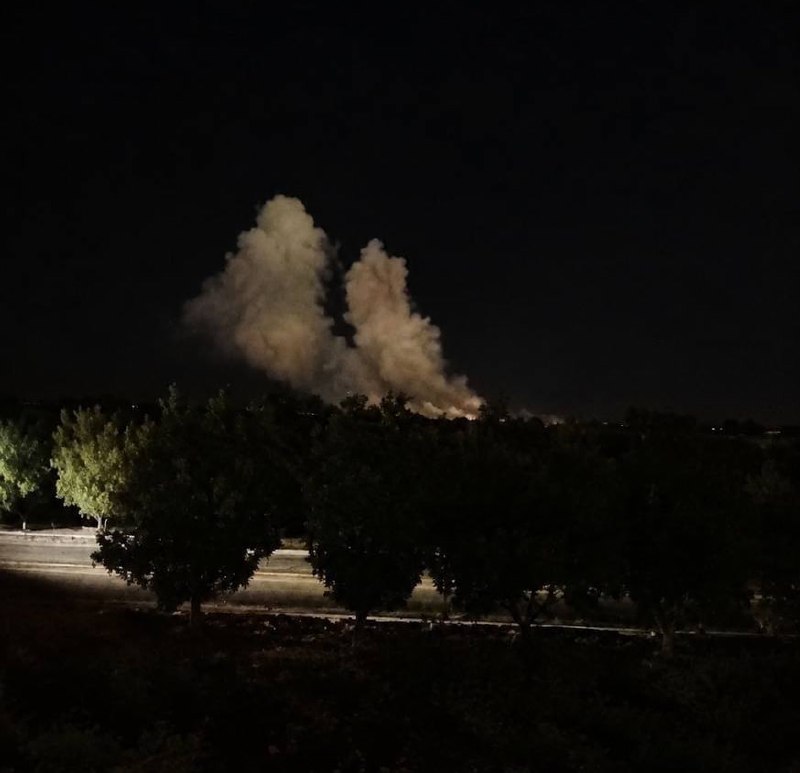
Smoke was rising over Bandar-e-Jask, a coastal city in southern Iran, when the RNIntel Telegram channel posted what it described as visual confirmation at 21:58 UTC on 29 October 2026. The post said reports indicated strikes had taken place near the city's airport. Eleven minutes later, on the minute-rounded stamps, The Cradle's Telegram channel carried an alert headlined 'Reports of a US attack on Jask, southern Iran.' At 22:54 UTC, RNIntel posted again, and that repost goes considerably further. It says the United States has carried out 'self defense strikes' on missile launch sites across southern Iran over the past two weeks, and it attributes that account to Barak Ravid of Axios and to Israeli Channel 12. This desk has not independently confirmed any of it.
This article rests on four Telegram items, which amount to three distinct posts from two channels, with one post relayed under two spellings of its handle. Together they establish that a claim of US strikes near Bandar-e-Jask was circulating on the evening of 29 October 2026 UTC, and that smoke was reported visually. They do not establish who fired, what was hit, or how many people were killed or injured. The 22:54 UTC repost adds a broader claim about missile sites across southern Iran, but the supplied text does not show the evidence behind it. Monexus analysis: when a military incident first reaches readers through channel relays of this kind, the early frame tends to run ahead of the evidence, and the record is corrected only when official or independently sourced material arrives. The gap between those two moments is part of the story.
The first posts and what they show
The earliest item is RNIntel's 21:58 UTC post, which describes plumes of smoke rising in Bandar-e-Jask and says reports indicate strikes took place near the airport of the coastal city. The 22:54 UTC repost repeats that smoke report and adds the attribution described above, so within this thread the smoke observation rests on RNIntel alone.
The two channels differ in scope. The Cradle's 22:09 UTC alert names a location and an actor, and its headline frames the material as reports, a word that carries the weight of the whole alert. The RNIntel repost names a campaign, a target class, a geography and a time window, and attributes the account to a journalist and a broadcaster. Those are different levels of specificity. Monexus analysis: a broader claim relayed through one channel does not verify the narrower claim beneath it, and the desk does not treat the breadth of the second as corroboration of the first.
The Cradle alert appears in the thread twice, once under the handle thecradlemedia and once under TheCradleMedia, with the identical post identifier 70203. It is one post, not two confirmations.
What the posts cannot carry
The supplied items establish that the reports existed on the evening of 29 October 2026 UTC. They do not establish the events the reports describe. A plume over a coastal city can have several origins, and the thread offers no location fix, no image date, no description of a munition or impact, and no casualty figure. The available source items do not specify any official statement from Washington, Tehran or a military command, and this article has not established whether such a statement exists.
Every citation here is a relay. Two channels repeat, compress and extend one another, and the material available to this desk does not show who made the first observation or from where. The desk's standard therefore lowers certainty on every claim about what happened at Jask and who was responsible. That is a judgment about the evidence, not a finding that the reports are false.
The source records carry UTC timestamps, and the sequence of 21:58, 22:09 and 22:54 is internally consistent across the items. On the minute-rounded stamps, the Cradle alert followed the first RNIntel post by about eleven minutes, close enough to establish order and too coarse to settle anything finer.
Two readings remain open. Smoke near an airport can come from incidents unrelated to any strike, and the thread does not rule that out. The alerts could equally describe a real strike whose details had not yet reached the channels. Monexus analysis: the record supports neither reading to the exclusion of the other. Caution here means withholding attribution for the Jask incident itself, not dismissing the reports.
Why the relay problem is the story
Monexus analysis: in fast-moving military incidents, the first attribution often comes from people nearest the event, and it reaches readers before anyone can check it. Institutional newsrooms typically hold attribution until a second independent source or an official confirmation is in hand. That discipline is what separates a wire report from a channel post, and it leaves a window, sometimes a long one, in which the Telegram version is the only version in circulation.
A confirmed US strike on Iranian territory would matter whatever its first telling. The questions that follow concern definition and damage: how each government describes the target, what it says was hit, and who was harmed. Those are the facts the posts leave out. Iranian official accounts, when they appear, will carry their own framing and deserve the same scrutiny applied to the channels.
The 22:54 repost uses the phrase 'self defense' as the rationale attributed to the US account. A label of that kind is a claim to be tested, not a finding, and the supplied text does not show what evidence sits behind it. Monexus analysis: whether a strike was necessary or proportionate cannot be answered from channel material, and this desk will not pretend otherwise. Readers in the region, in Washington and in Tehran will weigh the same claim against different histories, and the thread gives none of them a basis for settling the matter.
The relay structure also shapes who speaks first. A channel post names a country and a verb, and the verb travels faster than any qualifier attached to it. Monexus analysis: for readers outside the region, the first version of a strike is often the only version they hold, which makes that version the one most in need of its limits stated plainly.
What would change the assessment
The desk expects that official statements, if they appear, will set the factual record more firmly than any further channel post. Three things would move this story from reports to reporting: a named source describing the munition or target at Jask, an Iranian confirmation or denial of an incident near the airport, and an on-record account from Washington of what was struck and on what authority. Each is testable, and each is what a wire desk would be waiting for.
The desk also expects the question of which account carries a name to stay open through the next 48 to 72 hours. That is a forecast drawn from the pace at which claims of this kind usually meet official language, not a finding about this event.
The most consequential sentence in the thread is the one about missile launch sites across southern Iran, because it is the only item that reaches beyond a single location. It also carries the thinnest visible evidence, since the supplied text attributes the account without showing the material behind it. It becomes reporting when someone with a name attached confirms it. Until then it is a claim that two channels have passed along.
Desk note: A wire-style story on a claimed US strike would lead with the attribution; Monexus leads with what the Telegram record can and cannot support, because every citation in this piece is a relay.
Wire provenance
This editorial synthesis draws on the following public wire/social posts:
- https://t.me/rnintel/68401
- https://t.me/rnintel/68404
- https://t.me/thecradlemedia/70203
- https://t.me/TheCradleMedia/70203
Follow the event.
These dated source records provide context. They do not retrospectively verify this archive article.
Separate what the nuclear watchdog reported from what it could not determine after the June 2025 strikes.