Strikes on Hormozgan: what the Sirik exchange tells us about the next phase of US-Iran
US strikes on the port and bridges of Sirik on 16 July 2026, followed by Iranian cruise-missile launches from the same province, mark the most direct US-Iran military exchange in months. The geometry, not the rhetoric, is the news.
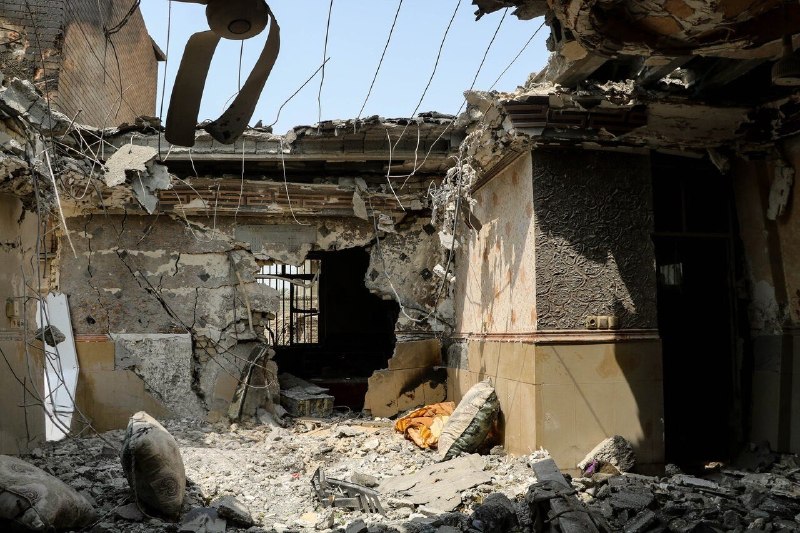
At 20:29 UTC on 16 July 2026, footage surfaced on the Telegram channel wfwitness showing the aftermath of what the channel described as US strikes on the Kahorestan bridge in Iran's Hormozgan Province. Within twelve minutes, the channel intelslava reported that US forces had struck the port of Sirik, a small coastal city on the Strait of Hormuz. By 20:55 UTC, AMK_Mapping added that US airstrikes were still actively targeting the city itself. Just over an hour later, at 22:01 UTC, intelslava returned with a different image: reports of multiple cruise-missile launches originating from Sirik, fired in the opposite direction.
The sequence, compressed into ninety minutes, is the most direct US-Iran military exchange the region has seen in months. It also inverts the usual script. In most recent US-Iran confrontations, the American action lands first and Tehran's response comes days later, calibrated and symbolic. Here, the exchange happened inside a single evening, on a single stretch of coast, and the Iranian riposte was immediate enough that the two events share a single news cycle.
What we know about the strike
The publicly available reporting is still narrow. The footage distributed by wfwitness shows damage consistent with an air-launched strike on a road bridge in Hormozgan Province, the southern Iranian littoral that fronts the Strait of Hormuz. The same channel's follow-up imagery suggests a second bridge was also targeted. intelslava, a Telegram channel that aggregates open-source intelligence and military-telegram traffic, was the first to name Sirik port as a specific target, and AMK_Mapping, a UK-based OSINT account, independently confirmed that airstrikes were hitting the coastal city itself rather than a single fixed installation.
That detail matters. Strikes on a bridge and strikes on a port-city are not the same kind of operation. Bridges are military and logistical targets in a narrow sense; they impede ground movement. A port, especially one within cruise-missile range of Gulf shipping, is a different category of target, chosen because of what leaves it, not just what sits on it. The combination, if confirmed, points to an operation designed not only to degrade Iranian ground lines of communication but to pressure the launch infrastructure that has, in past rounds, been used to threaten the strait.
What we know about the response
At 22:01 UTC, intelslava reported multiple cruise-missile launches from Sirik, Hormozgan Province, moving away from the Iranian coast. The report is unverified beyond the channel's own sourcing, and the destination of the missiles is not specified in the Telegram traffic reviewed. Two readings are plausible. The first is that Iran is retaliating against US naval assets in the Gulf, the most direct military interpretation. The second is that the launches are an Iranian operational test, fired into a designated range area, designed to signal capability after the strikes without crossing the American red line of attacks on US personnel. The sources do not yet allow a clean distinction between the two.
What is clear is the proximity. The Iranian launches appear, on the timing alone, to be a direct response to the US action of ninety minutes earlier. Whatever the missiles' intended target, the political signal is that Tehran is unwilling to absorb a strike on its southern coast and let the news cycle close without an answer of its own.
The geometry of Hormozgan
Hormozgan Province is the chokepoint inside the chokepoint. The Strait of Hormuz carries roughly a fifth of global seaborne oil; Iran's southern coast is the only place from which fast attack craft, anti-ship cruise missiles, and mining capability can credibly threaten the shipping lanes. Sirik sits east of Bandar Abbas, the provincial capital, on a stretch of coast that has been a recurring site in the open-source mapping of Iranian missile and drone deployments. Strikes there, if they degrade what open-source analysts have long identified as launch infrastructure, are not symbolic. They are an attempt to push Iranian retaliation capability further back from the waterline.
The structural reading is straightforward. Each round of US-Iran escalation has, over the past two years, moved the contest from proxies and sanctions into the geography of the strait itself. The American calculus is to raise the cost of any Iranian move against shipping before such a move happens. The Iranian calculus is to preserve the credibility of a deterrent that is cheap to brand but expensive to use. A strike on Sirik, answered by Iranian launches from Sirik, is what happens when those two strategies collide on a single coastline.
What the sources do not yet say
The Telegram traffic reviewed here does not specify casualty figures, the type of munitions used, or any official confirmation from Washington, Tehran, or the Pentagon. It does not say whether the Iranian missiles were aimed at US vessels, at a land target inside the Gulf states, or into open water. It does not name the bridges targeted, beyond the Kahorestan crossing, and it does not establish whether the damage shown in the wfwitness footage was caused by US munitions or by an earlier incident. Any article that claims more than the channels themselves have reported is, at this point, guessing.
The hour ahead is the news. Iranian missile flight times from the southern coast are measured in minutes, not hours. If launches at 22:01 UTC were aimed at a US naval asset, the absence of a large explosion or a US Navy confirmation would itself be the story. If they were aimed at open water, the silence is the message. Either way, the second cycle of this exchange is the one to watch.
This publication is reporting only what the open-source channels named above have published, with their attributions intact. Where a claim is unverified beyond a single channel, that is stated in the body. As of 22:01 UTC on 16 July 2026, no major wire has yet confirmed the strike, the targeting, or the Iranian launches.
Wire provenance
This editorial synthesis draws on the following public wire/social posts:
- https://t.me/wfwitness
- https://t.me/intelslava
- https://t.me/AMK_Mapping
- https://t.me/intelslava
Follow the event.
These dated source records provide context. They do not retrospectively verify this archive article.
Separate what the nuclear watchdog reported from what it could not determine after the June 2025 strikes.