Pelé's 1958 shirt sells for $4.9m as New York chokes on wildfire smoke ahead of World Cup final
A match-worn Brazil shirt from the 1958 final fetched a record $4.9m at Sotheby's in New York on 16 July, while officials in the same metro warned residents about wildfire smoke drifting south.
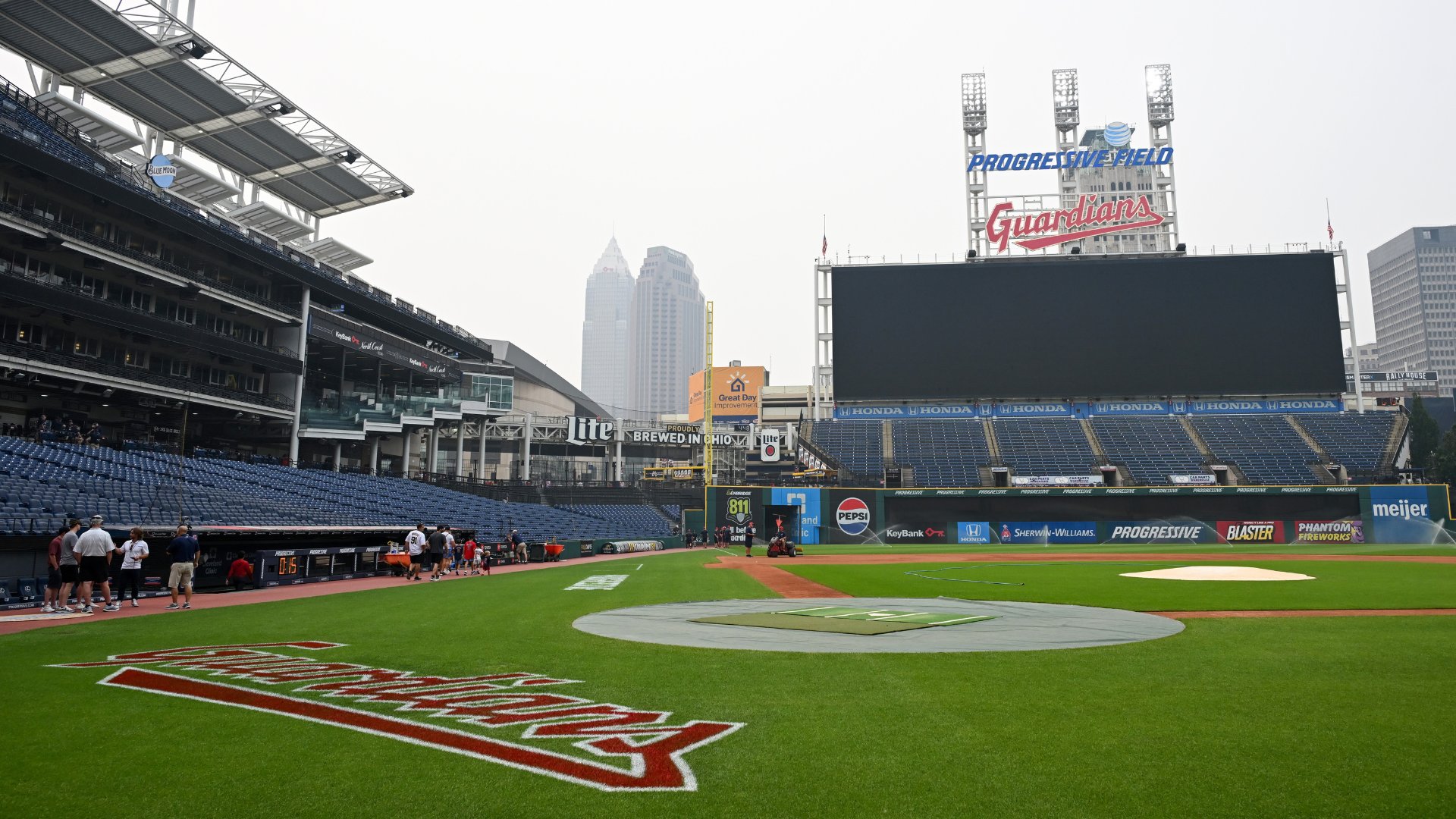
Sotheby's New York auction room hammered down a match-worn Brazil shirt from the 1958 World Cup final for $4.9m (£3.6m) on 16 July 2026, the highest price ever recorded for a piece of football memorabilia. Across the same metropolitan area, public-health officials spent the same evening issuing an air-quality alert as wildfire smoke drifted south over New York and New Jersey, four days before the city is due to stage a World Cup final. Two storylines, one city, a sport straining to absorb both.
The auction result and the haze overhead belong to the same fortnight. FIFA's marquee match lands in a host country whose infrastructure is working as intended: an antiquities market capable of moving a teenage striker's jersey into eight-figure territory, and an emergency-management apparatus capable of warning millions about what they are breathing. Neither fact is incidental to the other.
The shirt, the teenager, the price
The garment is one of three known jerseys worn by a 17-year-old Edson Arantes do Nascimento in Sweden on 29 June 1958, when Brazil beat the host nation 5-2 to win its first World Cup. The lot sold through Sotheby's in New York on 16 July, with the hammer price reported at $4.9m. The figure resets a market that, until this season, had not crossed $5m for any single item of football kit. The previous high-water mark belonged to a Diego Maradona "Hand of God" shirt from the 1986 quarter-final, sold in 2022.
Pelé died in December 2022. The supply of match-worn shirts from the three Brazil wins he anchored (1958, 1962, 1970) is finite by definition; provenance disputes have already moved through the courts in Europe. The auction price is therefore not a referendum on Pelé's standing, which has been settled for half a century, but on the depth of buyer appetite at the top of the sports-memorabilia market. A bid of $4.9m assumes a buyer who believes the next comparable jersey will not surface for years, and who is willing to warehouse the asset against that scarcity.
What the air knows
The other New York story is uglier and shorter. Officials issued an air-quality health alert on 16 July covering parts of New York and New Jersey, attributing the degradation to smoke from wildfires burning to the north and west. The alert landed four days before the World Cup final is scheduled to be played in the metropolitan area. Outdoor event operators, including those running fan-festival sites, were told to expect degraded visibility and elevated particulate readings, with the standard guidance: limit strenuous outdoor activity, keep windows closed, run filtration.
The juxtaposition is not lost on the organisers. FIFA and the local host committee have spent the cycle preparing MetLife Stadium for an event whose broadcast centrepiece is the skyline behind the open roof. Smoke does not cancel a fixture; it edits it. Sponsorship activations move indoors, pre-match programming compresses, and the imagery that leaves the host city is a colour-corrected version of the air that was actually there.
Why both stories matter at once
A World Cup is a logistics exercise pretending to be a sporting event. The on-pitch product is what gets remembered; the off-pitch apparatus is what gets the ball there. New York is the rare host city that can demonstrate both halves of that machine in the same news cycle: a market that monetises nostalgia at auction-house prices, and a public-health system that warns ten million people about particulates within hours. Neither is trivial, and neither is in tension with the other.
The deeper point is that mega-events have always traded on the assumption of stable atmospheric and civic conditions. That assumption is no longer free. Wildfire seasons on the continent have lengthened; emergency-management budgets have absorbed the cost. The host committee's contingency planning for the final will, by next cycle, be a normal line item rather than a footnote.
What remains uncertain
The air-quality alert was issued as a short-duration advisory; its extension or downgrade will determine whether fan-zone schedules need to be revised. Sotheby's has not disclosed the buyer's identity, which is conventional at this tier but leaves a question open about whether the lot is heading to a private collection, a museum, or back into the loan circuit. And the comparison to the Maradona shirt sale will dominate the headlines for a week; the more durable question is whether the $4.9m figure marks a new ceiling or a single outlier, which only the next comparable consignment can settle.
Desk note: this article treats the auction result and the air-quality alert as two halves of one story about a host city under global scrutiny, rather than as unrelated news items. Wire copy on the shirt has emphasised the price; wire copy on the smoke has emphasised the calendar. Monexus is interested in the fact that both arrived in New York on the same evening.
Wire provenance
This editorial synthesis draws on the following public wire/social posts:
- https://t.me/s/LiveMint/21748