Apple's record iPhone quarter comes with no Duo supply date
According to The Verge, John Ternus told Reuters that Apple has no timeline for easing iPhone Duo supply constraints, on the same day the company reported a record iPhone quarter.
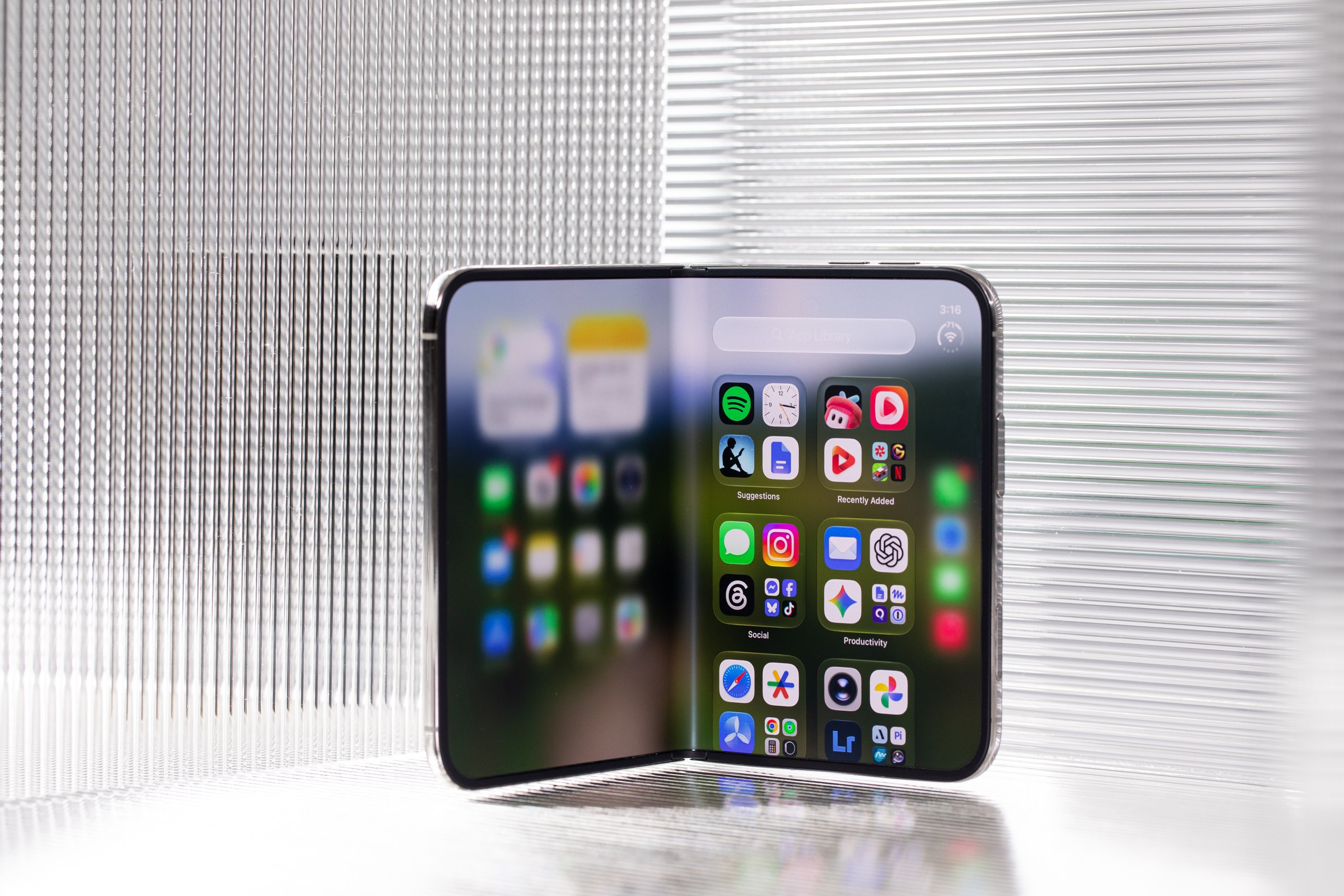
Apple reported record iPhone sales on Monday, 2 November 2026, in a fourth quarter in which it released no standard iPhone model during its latest refresh. The Verge's earnings item, posted at 22:02 UTC, puts iPhone revenue at $57.58 billion, up 17 percent on the prior year. Fifty-four minutes later, the same outlet published a supply story built on an interview with Reuters, in which John Ternus, Apple's chief executive, said the company has no timeline for when constraints on the iPhone Duo could lift. The headline put it more bluntly: Apple is “not able to predict” when it will have enough Duos to go around.
This publication reads the two stories as a single question about demand and production. Monexus analysis: a record quarter alongside a Duo whose preorders sold out and whose supply is constrained suggests demand running ahead of what Apple can deliver for that product, although the thread gives no unit figures that would size the gap. The sources establish three things with reasonable confidence. The quarter was a record, the Duo is supply-constrained, and the chief executive, in his first earnings cycle, described that constraint without an end date. The rest of this piece tests that framing against what the cited items actually contain.
A record without the standard model
The Verge's earnings item reports a record-breaking quarter for iPhone sales, achieved without a standard model in Apple's latest refresh. Nikkei Asia's coverage of the same results describes Ternus's first earnings report as posting record revenue for the September quarter on continued strong sales, and its excerpt refers to China. The two accounts agree on the headline and approach it from different sides, one from the product lineup and one from the revenue line.
The Verge's excerpt gives a figure: iPhone revenue of $57.58 billion, up 17 percent on the prior year. Apple's own filing is not among the cited items, so that number rests on The Verge's report of it, and this article has not checked it against the primary document.
The same excerpt states that, for the iPhone Duo, “preorder sales aren’t included in this earnings report.” That sentence changes how the record should be read. Monexus analysis: the quarter's strength cannot be taken as a measure of Duo demand, and the cited items do not attribute the revenue to any single model. An earnings line that leaves out the most constrained product's preorders is one reason the record and the shortage can sit side by side without contradicting each other. The record describes what Apple booked in the quarter. The shortage describes what it has not yet delivered.
The Verge's earnings item and its Telegram mirror are stamped 22:02 UTC and 22:03 UTC on 2 November 2026. Nikkei Asia's item, relayed through Telegram, is stamped 22:31 UTC. The Verge's supply story follows at 22:56 UTC, with its Telegram mirror at 22:58 UTC, so the record and the shortage reached readers within about an hour of each other.
What Ternus would not promise
Speaking to Reuters, as The Verge reports it, Ternus did not offer a date. The Verge quotes him saying Apple is working hard “to get it to as many customers as quickly as possible, but at this point, we’re not able to predict when supply and demand will be in balance.” The sentence is complete in the excerpt, and the outlet's headline lifts its core phrase, “not able to predict,” directly from it. This article has reviewed the interview only through those quotations.
The same excerpt says preorders sold out and that some shipments are expected to arrive in 2027. The cited items do not specify whether the 2027 timing applies to all Duo orders, and they do not specify a date by which the constraint itself would lift.
Monexus analysis: the 2027 reference reads as a delivery window for some orders rather than a relief date for supply as a whole. That is the most natural reading of the two statements taken together, but the sources do not confirm it.
The two Verge stories also sound different at the top. The earnings item describes sales. The supply item describes capacity. A reader who sees only the first will picture strength, and a reader who sees only the second will picture strain. Both pictures are accurate to the cited material, which is why the pairing matters.
Monexus analysis: the restraint has its own logic, and it does not require bad faith. Hardware supply depends on factories, components and shipping schedules that cannot be switched on by announcement, and a date that slips can cost more credibility than a careful non-answer. The cited items do not include Apple's explanation for the constraint, and this article has not verified other published explanations, so this reasoning is offered as a reading only.
The counter-read is less comfortable. Every month a buyer waits for a constrained device is a month in which that buyer can consider alternatives. The cited items do not say whether any buyers switched or whether rival devices gained share, and this article has not established either point.
Scarcity as a balance sheet assessment
Monexus analysis: a shortage shows up on a seller's books in two places. The first is pricing. A product whose preorders sell out does not need discounts to move, and a seller can hold its price for as long as orders exceed output. The second is planning. A firm with forecastable demand can ask more of its suppliers and commit capacity further ahead than rivals facing uncertain orders. The cited items do not describe Apple's pricing or supplier arrangements for the Duo, so both points are general, not reported.
Monexus analysis: the cost arrives when the waitlist becomes the story. A queue that persists reads to customers as evidence about capacity rather than desirability, and it hands competitors an easy comparison in every review. This describes the general pattern, not a reported effect in this case.
Monexus analysis: in a shortage the seller holds demand it has already captured, while the buyer carries the uncertainty about when a device will arrive. The more a launch depends on one anticipated product, the more of that uncertainty flows back into quarterly guidance, because the forecast rests on a supply line the company cannot fully control.
Monexus analysis: consumer electronics competes partly on the experience of owning a device and on the switching costs that build up around it. A shortage does not change the product. It changes the window in which a customer can reconsider, and that window is where alternatives get their chance.
The next report is the test
Ternus's first earnings report as chief executive, as Nikkei Asia frames it, carried two messages. The first was a record. Monexus analysis: read against The Verge's Reuters coverage, the second is that the Duo cannot yet be bought in the quantities demand implies, and that no date has been set for when that changes. The cited items do not show how investors or analysts responded to either message.
Every claim here reaches this article through a relay. The Verge's written pieces and its Telegram mirrors carry the Reuters interview as The Verge quotes it, and the Nikkei Asia material arrives as Telegram excerpts, one of them mirrored. This article has not reviewed the full earnings release, the Reuters transcript or the full Nikkei article, so certainty about what Ternus said is limited to The Verge's quotations.
For a buyer, the practical stake is narrower but concrete. Preorders sold out, so a customer who did not preorder is competing for units that remain constrained. Monexus analysis: the waiting time is a cost the company has passed to those customers, paid in weeks rather than in price. Over a longer horizon, the question is how a company manages a sold-out launch while the cited items contain no date for relief.
Monexus expects that the next quarterly report will be the first real test of whether supply has caught up, and that the question will return to the earnings call if it has not. That is the desk's expectation, not a company commitment. The cited items contain no company date for relief, and this article has not independently established whether one exists.
On the desk's reading, the question for the next report is not whether the Duo sells. It is whether “not able to predict” survives a second quarter. If Apple can name a date by then, the constraint was a matter of timing. If it cannot, the record will look less like a sales story and more like a measure of demand the company has not yet been able to meet.
Desk note: Wire-style coverage tends to split a record quarter and a supply shortfall into separate items. This desk has read them together as one question about demand and production, and has labelled each inferential passage in place.
Wire provenance
This editorial synthesis draws on the following public wire/social posts:
- https://www.theverge.com/tech/1024748/apple-q4-2026-iphone-sales-earnings
- https://t.me/theverge_news/9993
- https://www.theverge.com/tech/1024915/apple-iphone-duo-supply-chain-constraints
- https://t.me/theverge_news/9994
- https://t.me/nikkeiasia/22438
- https://t.me/NikkeiAsia/22438