US expands strikes on Iranian Gulf coast as CENTCOM announces new round
Unverified Telegram channels reported US strikes on Qeshm, Bandar Abbas, Bushehr and Sirik within a ten-minute window on the evening of 17 July 2026. CENTCOM said a new round of strikes was under way.
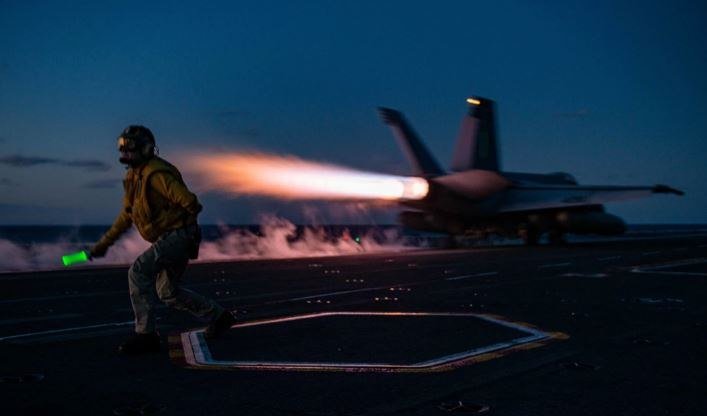
Explosions were reported across Iran's southern Gulf coast within a ten-minute window on the evening of 17 July 2026, as multiple monitoring channels carried unconfirmed claims of US airstrikes on Qeshm Island, Bandar Abbas, Bushehr and Sirik. The earliest item in the cluster, posted by Telegram channel intelslava at 19:05 UTC and citing US Central Command, said a "new round of strikes" had been launched and that US forces were "currently conducting airstrikes on Qeshm, Bushehr, Bandar Abbas, and Sirik." Within the next seven minutes, channels Middle East Spectator, GeoPWatch and rnintel carried their own versions of the same reporting, naming the same targets in the same order. By 19:12 UTC the strike tally had grown to include Bandar Kangan, a petrochemical port town immediately north of Bandar Abbas on the mainland coast.
What is verifiable at this hour is narrow but consequential: a coordinated, multi-site strike package, reported by channels that monitor open-source flight data and regional comms traffic, against four named locations along roughly 400 kilometres of Iran's Gulf coastline. What remains unverified is whether each of those locations was in fact hit, what was struck at each, and whether civilian infrastructure was caught in the targeting. The early reporting carries the unmistakable fingerprint of a fast-moving information environment: claims arriving in waves, with phrasing almost identical across channels, and with the CENTCOM-attributed headline surfacing first.
What the sources actually say
The thread contains six items, posted between 19:03 and 19:12 UTC on 17 July 2026, from four distinct Telegram channels. intelslava, which often republishes military-affiliated English-language traffic, is the only channel to explicitly attribute the strikes to CENTCOM. Middle East Spectator, a Lebanese-anchored regional channel, narrows the early reporting to "explosions now in Sirik and Qeshm, Bushehr and Bandar Abbas too" at 19:03 UTC, before any CENTCOM attribution appears in the cluster. GeoPWatch and rnintel follow at 19:07 and 19:08 UTC, with GeoPWatch hedging its first item as "unconfirmed reports of explosions" and removing the hedge in its second item a minute later. The last two items, both from rnintel, add Bandar Kangan to the target list.
The geography of the target set matters. Qeshm is the largest island in the Persian Gulf and sits at the western end of the Strait of Hormuz, the chokepoint through which roughly a fifth of the world's seaborne oil transits. Bandar Abbas is Iran's principal Gulf port and the home of its main naval base, IRIN. Bushehr hosts Iran's only operating civilian nuclear power plant. Sirik is a small coastal town east of Bandar Abbas, near the Strait's narrower Hormuz mouth. Bandar Kangan lies just north of Bandar Abbas and is the onshore terminal for the South Pars gas field, the world's largest. Striking that combination, if confirmed, is not a tit-for-tat exchange. It is an operation aimed simultaneously at Iran's naval posture, its civilian nuclear facility, its hydrocarbon export infrastructure and its territorial hold on the Strait.
Why the framing is unsettled
The cluster has the shape of a kinetic event inside an active diplomatic track. That is the framing that most Western wires will reach for first, because it fits the dominant narrative of escalation-under-negotiation that has governed US-Iran coverage since the spring. The alternative read is the inverse: that negotiations were the cover for a strike package prepared in advance, and that the parallel reporting on a new CENTCOM round is itself the operation. A third possibility, more cautious and probably closer to the truth on the night, is that some of the named targets were hit, others were not, and that the social-media cascade is mixing confirmed strikes, decoy activity, electronic-warfare effects and Iranian air-defence firings into a single undifferentiated signal.
The sourcing caveats are non-trivial. None of the six items in the cluster is from a wire service with on-the-ground staff in Iran. None is from an Iranian state outlet, Iranian opposition outlet, or independent OSINT account with verified access to flight-tracking or satellite feeds. intelslava's attribution to CENTCOM is consistent with how that channel has handled prior US strike announcements in the region, but a CENTCOM press release or a Reuters/AP/AFP wire pickup was not present in the cluster at the time of publication. Readers should treat the target list as authoritative; the specific claims of damage at each location should be treated as preliminary until corroborated.
What the larger pattern looks like
A strike package that simultaneously touches Iran's navy, its sole operating civilian reactor, its main petrochemical export complex and the country's territorial position on the world's most important energy chokepoint is not a message. It is an attempt to reset the operating environment of the Gulf in a single evening. The structural fact underneath the news is the narrowing gap between US force posture in the region and the diplomatic language that has been used to manage it. Sanctions architecture, IAEA inspections, the still-active negotiation track on a replacement nuclear framework, and the Gulf states' quiet hedging toward Beijing have all been operating, until tonight, as separate tracks. A strike of this scope collapses them into one. From this side of the event, the question is no longer whether the diplomatic track survives; it is what the regional order that replaces it looks like, and on whose terms the oil keeps moving through the Strait while the answer is being negotiated.
What to watch next
Three things will matter in the next 48 hours. First, wire confirmation: a Reuters, AP or AFP report naming targets on the ground, with imagery, would convert the cluster from a fast-moving Telegram cascade into a corroborated military operation. Second, Iranian state media's framing of the strikes and the scope of any retaliatory announcement from Tehran, including IRGC communiqués on closure of the Strait or attacks on Gulf state infrastructure. Third, market response in Brent and the regional shipping rate complex, which will register quickly if Qeshm, Bandar Abbas or South Pars terminals are in fact off-line. Monexus will update this story as wire confirmation arrives.
Desk note: this article was written from a six-item Telegram cluster in the absence of wire confirmation. The target list is treated as authoritative; the specific damage at each target is treated as preliminary. Monexus's Iran coverage steers toward primary documentation and away from unattributed claims of kinetic action.
Wire provenance
This editorial synthesis draws on the following public wire/social posts:
- https://t.me/intelslava
- https://t.me/Middle_East_Spectator
- https://t.me/GeoPWatch
- https://t.me/rnintel
- https://en.wikipedia.org/wiki/Qeshm_Island
Follow the event.
These dated source records provide context. They do not retrospectively verify this archive article.
Separate what the nuclear watchdog reported from what it could not determine after the June 2025 strikes.