Zimbabwe's repatriation drive meets a South Africa still wrestling with anti-migrant violence
Harare says nearly 100,000 citizens have crossed back from South Africa this year, even as Pretoria probes the killing of an anti-migrant movement leader shot in March and March.
Harare has expanded its repatriation and reintegration machinery for citizens returning from South Africa, saying the flow of Zimbabweans needing consular and reintegration assistance is now approaching 100,000 people. The figure, announced on 16 July 2026, marks the formal acknowledgement of a migration reversal that has been quietly gathering momentum at the Beitbridge border post for months, and that brings a longstanding irritant in southern African politics back to the front of the regional agenda.
Zimbabwe is not asking South Africa to stop its citizens leaving. It is scrambling to make the arrivals survivable. The repatriation programme now operates alongside the day-to-day logistics of transport, identity papers and re-entry procedures for tens of thousands of people whose decision to return is shaped less by political theatre than by what life has become on the other side of the Limpopo. South Africa, the region's largest economy, is simultaneously opening a special police investigation into the shooting death of an anti-migrant movement leader in Limpopo province, with the case now formally in the hands of a dedicated team after the victim died of his injuries in hospital several days after being attacked.
The numbers, and what is driving them
The near-100,000 figure out of Harare is a stocktake, not a forecast. It captures returnees who have already crossed, registered, and required some form of state assistance. The drivers are familiar and layered: a documented deterioration in employment conditions for foreign nationals in South Africa's informal and service sectors, persistent housing insecurity, and a pattern of harassment and violence that has at times drawn diplomatic notes from Harare to Pretoria. The programme is the Zimbabwean state's response to those structural pressures, but it is also a quiet admission that the conditions pushing people home are not ones Pretoria is willing, or able, to legislate away in the near term.
The scale matters. Even a fraction of that total, moving through Beitbridge in a calendar year, is a logistical and humanitarian undertaking that rival any structured refugee return in the southern African neighbourhood. The state side of it includes transit, reception centres, and reintegration grants; the unstated side is the question of what reintegration actually looks like in an economy that pushed them out in the first place.
A murder that exposes a politics
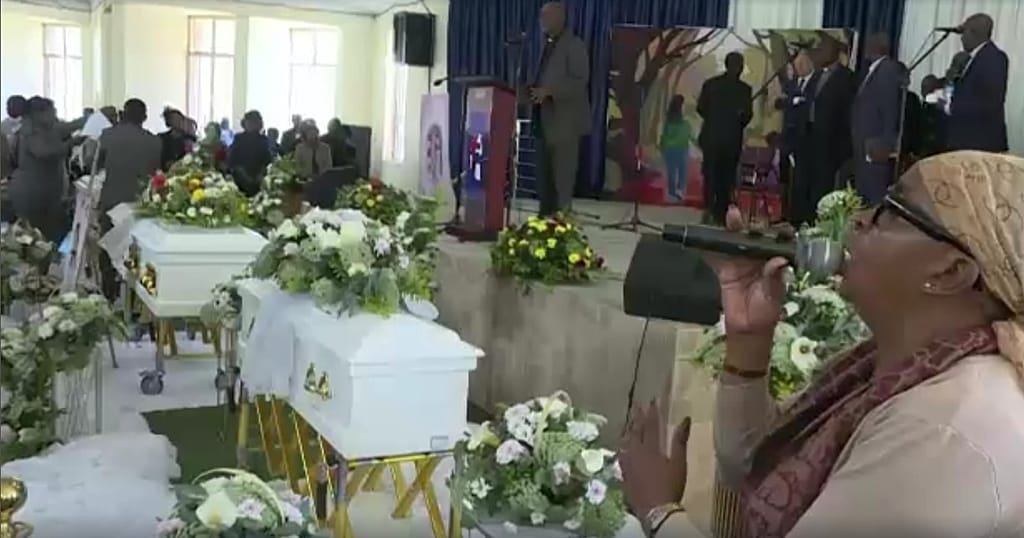
On 15 July 2026, BBC News reported that South Africa had assembled a special police team to investigate the killing of a March and March provincial leader, shot in Limpopo and pronounced dead in hospital several days later. March and March is the operational name that circulated publicly in connection with anti-migrant demonstrations in northern South Africa, an organisation whose core demand has been the departure of foreign workers and residents from South African communities. The killing puts the state in the unusual position of defending, after the fact, a constituency that many of its own members have spent years denouncing.
The case sits inside a longer pattern of vigilante and movement-leader violence in the province, where anti-migrant organising has produced both electoral pressure on South African political parties and a climate of intimidation for foreign nationals, including Zimbabweans. A special investigative team signals that Pretoria does not want the killing treated as ordinary crime. The political subtext is harder to ignore: a movement whose rhetoric has shaped the conditions driving the 100,000-strong return home has now produced a corpse, and the state's response will be read, by Harare and by migrants still in South Africa, as a test of whether that rhetoric carries consequences.
What Harare is buying itself
The repatriation programme is, in plain terms, a piece of state capacity that Zimbabwe has underinvested in for two decades. By standing it up at scale now, Harare buys itself three things. It absorbs the shock of arrivals so that returnees do not become a domestic political liability at home. It documents the migration flow in a way that strengthens its hand in any future bilateral conversation with Pretoria about the treatment of Zimbabwean nationals. And it positions itself, in regional forums, as a responsible sender state rather than a country whose citizens are simply escaping.
What it does not buy is a long-term fix. The structural pull factors on the South African side are rooted in the country's labour market and the politics of its informal settlements, both of which are out of Harare's reach. The reintegration grants and identity documentation are a bridge, not a destination, and Zimbabwe's domestic economy will determine whether returnees stay.
What the two stories say together
Read separately, the two items are a migration programme and a murder investigation. Read together, they describe a regional arrangement in which one government is preparing to receive what another government has, at least in part, made unlivable. South Africa's anti-migrant movement has not been suppressed by the state; it has been accommodated into mainstream politics, and the cost of that accommodation is now being measured in dead movement leaders and Zimbabwean returnees. The special police team and the expanded Harare programme are both downstream of the same political economy, which neither capital has an incentive to name clearly.
What remains uncertain is the tempo. The 100,000 figure could plateau if conditions stabilise, or accelerate if a high-profile incident, a sustained economic downturn in South Africa, or a further crackdown in the informal sector pushes more Zimbabweans to the border. The investigation into the March and March killing has not yet produced named suspects; until it does, both governments will speak in the language of process rather than accountability.
How Monexus framed this: the wire items pair a migration figure and a murder investigation as separate beats. Monexus reads them as two outputs of the same southern African migration regime, and leads on that connection rather than on either story alone.
sources