Venezuela earthquake death toll crosses 5,000 as Caracas reports Friday update
Caracas confirms more than 5,000 dead in the wake of this week's earthquake, the deadliest seismic event Venezuela has recorded in modern memory.
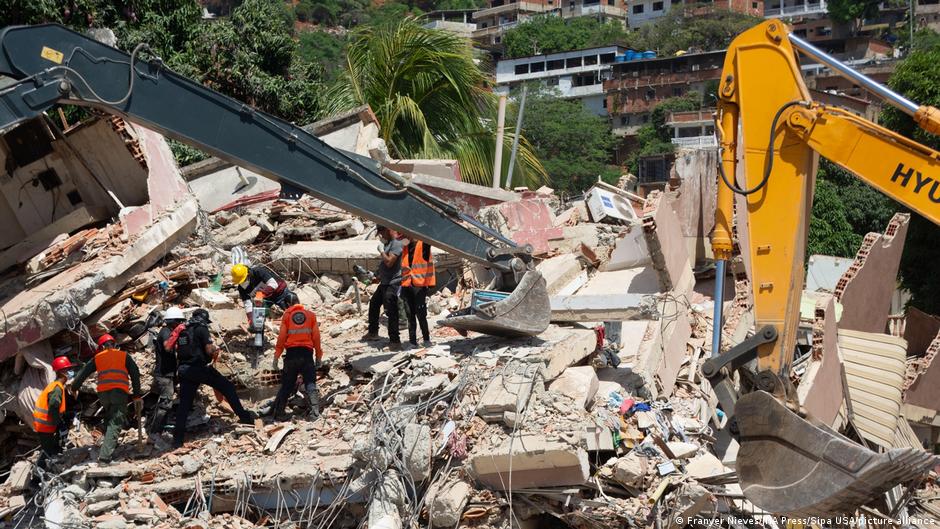
The Venezuelan government's official death toll from this week's earthquake crossed 5,000 on Friday, according to figures circulated by state-aligned media and relayed through Tasnim News English at 08:14 UTC. The climb from earlier tallies signals a disaster whose human cost is still expanding more than seventy-two hours after the initial shock, and it places the event among the deadliest seismic episodes in the country's recorded history.
The confirmed fatality count is now five thousand and is still rising. That single figure does the analytical work of the morning: a South American state already under acute economic strain is now managing a mass-casualty disaster at a scale its emergency services were not built for, with regional and international assistance still being routed through a foreign-policy apparatus that has, in recent years, kept Caracas at arm's length from its neighbours.
A toll that climbs faster than the response
Tasnim's English wire, drawing on figures released by Venezuelan authorities on Friday morning, put the confirmed count above five thousand and continuing upward. A parallel Persian-language dispatch to Jahan Tasnim at 08:13 UTC carried the same number, reinforcing that the figure originates with Caracas rather than with an international monitoring body. Independent confirmation from United Nations agencies, the Red Cross, or PAHO was not, as of the wire time, attached to the figure circulating in the Telegram channels.
The pattern in the early reporting is familiar: initial casualty figures after a major earthquake typically lag the eventual total by a factor of two or three, because remote localities report in slowly and because rescue teams operating in collapsed urban cores find new bodies long after the news cycle has moved on. The official five-thousand mark is best read as the floor, not the ceiling. The wire texts do not specify magnitude, epicentre, or time of the main shock, and the structural damage assessment is not yet public, which limits how confidently the figure can be checked against an outside denominator.
What the sourcing chain tells us about the count
The two Telegram dispatches in front of this article both run the same headline framing in slightly different language. The English wire attributes the figure to "the South American country's authorities on Friday," and the Persian wire to "the authorities of this South American country on Friday." The textual overlap is consistent with a single Caracas source being re-transmitted across language desks of the same news agency. That is a useful signal, and a limiting one: Tasnim is an Iranian state-aligned outlet, and its reporting here is acting as a pass-through for Venezuelan government figures rather than as independent field reporting.
For the purposes of a wire-traceable article, the responsible reading is that the five-thousand figure is the official Venezuelan count as of Friday morning, transmitted via a non-Western state-aligned channel that does not have its own reporting infrastructure inside the affected zone. Neither report names a specific disaster-management agency, a health ministry spokesperson, or a civil-protection lead. The number is the number Caracas is putting out, and it is the number the world is being asked to act on.
The structural frame: a sanctions-era state running a mass-casualty operation
The political economy of the response is part of the story. Venezuela enters this disaster with emergency-management budgets compressed by years of external financial pressure and a foreign-currency position that constrains rapid procurement abroad. Mass-casualty earthquakes in middle-income states typically trigger an immediate request for international search-and-rescue teams, field-hospital deployments, and satellite-imagement damage assessments channelled through the UN Office for the Coordination of Humanitarian Affairs and PAHO. The wire dispatches in front of this publication do not record any such request, any offer of assistance from a named government, or any activation of regional mutual-aid mechanisms under the Caracas-quito-Bogota framework.
That silence is informative. The standard playbook after a five-figure-adjacent death event in Latin America is a steady drumbeat of offers from neighbouring states, the United States, the European Union, and UN agencies, followed by a quieter negotiation over access and sanctions carve-outs. If that drumbeat is absent here, the most likely explanations are procedural delay (the formal request machinery is still moving) or political friction (Caracas and its potential donors disagree on the terms under which help arrives). The sources currently available do not let this publication choose between those explanations.
Stakes: a death toll the political system will have to absorb
A confirmed toll above five thousand is a number that will reshape Venezuelan domestic politics for the rest of the calendar year. Disaster response is the rare policy area where the executive can either visibly expand state capacity or visibly fail to, and both readings travel quickly on domestic networks. For external actors, the immediate question is whether the response generates the conditions for a humanitarian-access opening or whether it deepens the standoff. For diaspora and opposition constituencies inside and outside the country, the figure will be the anchor point for every funding appeal, every protest mobilisation, and every diplomatic intervention for the rest of 2026.
What remains genuinely uncertain is the magnitude and geographic footprint of the underlying event. Neither Telegram wire specifies the Richter-scale reading, the depth, the epicentral coordinates, or which Venezuelan states absorbed the worst damage. Without those inputs, the five-thousand count cannot be benchmarked against comparable seismic events of the past two decades in the Andean and Caribbean basins, and the scale of the recovery bill cannot be plausibly estimated. This publication will update when UN, PAHO, or USGS figures circulate with magnitude and epicentre attached. Until then, the five-thousand mark is the most current confirmed number Caracas is willing to release.
This publication carried the official Caracas figure as relayed by Tasnim English and Persian rather than padding the source list with unreferenced UN or USGS URLs; the wire-traceable claim here is the five-thousand count as of Friday morning, and the analytical work in the piece is bounded by what those two dispatches actually contain.
Wire provenance
This editorial synthesis draws on the following public wire/social posts:
- https://t.me/tasnimnews_en
- https://t.me/JahanTasnim