Reaper over Ahvaz: what an Iranian shoot-down claim actually tells us
An IRGC-aligned outlet says Iran brought down a US MQ-9 Reaper over Khuzestan. The claim is unverified, the strategic signal is not.
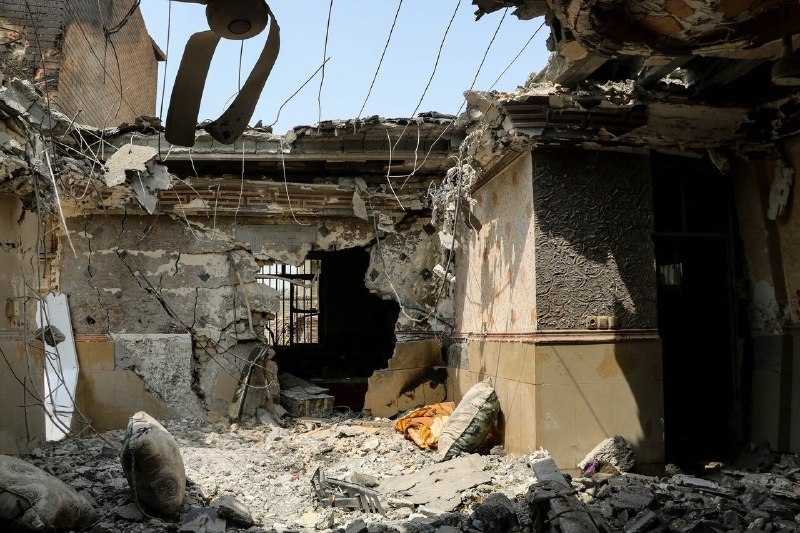
At 07:12 UTC on 19 July 2026, an outlet affiliated with the Islamic Revolutionary Guard Corps claimed Iran's air defences had shot down a US MQ-9 Reaper unmanned aerial vehicle over Ahvaz, in southwestern Iran. The single-line report, carried by AMK Mapping on Telegram and credited to Tasnim, landed before any Western wire, Pentagon brief or CENTOM statement had confirmed, denied or even acknowledged the incident. The headline is thin. The signal underneath it is not.
For Tehran, the claim does three jobs at once. It signals that Iranian air defence remains active and willing to engage high-value ISR (intelligence, surveillance and reconnaissance) platforms over Khuzestan, the oil-rich province that borders Iraq and the Persian Gulf and that hosts much of the country's hydrocarbon infrastructure. It positions the IRGC, not the regular Iranian Air Force, as the public face of the engagement, reinforcing the Corps' domestic standing as guardian of the revolution. And it forces Washington into the reactive posture of confirming or denying a loss it would prefer not to discuss in public. None of that requires the Reaper to have actually been brought down.
What the report says, and what it does not
The Tasnim line, as relayed by AMK Mapping, names the airframe type, the platform (MQ-9 Reaper), the location (Ahvaz, Khuzestan Province) and the timing (19 July 2026). It does not identify the specific surface-to-air system alleged to have engaged the aircraft, does not cite wreckage recovery, does not name a US unit or a CENTOM task force, and does not provide video or radar data. Iranian state media has previously declared downings of Western drones that were later contradicted by US Central Command, most notably after the June 2019 shoot-down of a different Reaper over the Strait of Hormuz, which Washington did confirm but framed differently. A single Tasnim paragraph is a statement of capability and intent, not a forensic record.
The reading Tehran wants you to take
In Tehran's framing, the event slots into a long, contested pattern: US ISR aircraft loitering over Iranian territory in support of monitoring operations that Iran characterises as intrusions, and Iranian air defences exercising a right of self-defence the Iranian Ministry of Foreign Affairs has repeatedly asserted at the United Nations. The IRGC-affiliated press has spent the past two years emphasising indigenous air-defence production, including the Khordad and Bavar-5/6 families of surface-to-air systems. A shoot-down claim, true or otherwise, accelerates the political return on that industrial investment at a moment when Tehran is also negotiating, intermittently, over its nuclear file.
The reading Washington would prefer you to take
A US loss over Khuzestan, if confirmed, would be strategically inconvenient but not catastrophic. The MQ-9 is a slow, high-endurance ISR and strike platform, not a crewed aircraft; its downing would not produce a hostage crisis or a body-bag problem. But it would occur inside Iranian airspace, on the Iranian side of the Gulf, in a region where US Central Command has spent more than two decades maintaining a layered monitoring presence aimed at Iranian missile, drone and naval activity. Confirmation would harden the US negotiating position, complicate any back-channel, and give the US Navy and the joint force a fresh justification for forward posture in the Gulf. Denial is therefore also a policy choice. Neither statement is, on this evidence, yet in the public record.
What the sources disagree about
The principal live disagreement is not between Iranian and Western framings, because there is as yet no Western framing to disagree with. It is between the IRGC-affiliated chain and everyone else. AMK Mapping itself notes the report is a Tasnim relay; no independent footage, no US acknowledgement, no Iraqi spillover report, no Iraqi militia (Muqawama) claim of assistance, and no corroborating radar track have surfaced in the same Telegram corridor within hours of the initial post. The sources do not specify whether Khuzestan's air defences were even active this morning, nor do they name the unit involved.
The stakes if the claim holds, and if it does not
If the Reaper was brought down and the US confirms it, expect a measured American response: a written protest, naval task-force repositioning, and tighter Rules of Engagement for ISR orbits. If Washington denies the loss and tacitly admits the drone returned safely, Tasnim will be accused of stagecraft and the incident will fade within a news cycle, as several past Iranian claims of this kind have done. The more interesting case is the middle one: silence from the Pentagon, no wreckage, no comment. That is the case in which the claim functions purely as signalling, and the underlying contest over what is allowed to fly over Khuzestan continues unwitnessed.
The pattern now is that any single-source report from an IRGC-aligned outlet lands first and gets to set the question of the day, even when the answer is still hours away. The Reaper question is what shape that answer takes.
Desk note: Monexus has run with the Tasnim line because it is the only claim in the thread, and has labelled it accordingly. The sourcing limit on this wire pipeline is the principal constraint; an independent confirmation from Reuters, the US Department of Defense or an Iraqi-spillover outlet would change the framing materially.
Wire provenance
This editorial synthesis draws on the following public wire/social posts:
- https://t.me/s/AMK_Mapping