Kindiki's unity refrain signals a coalition reshuffle already underway in Mt Kenya
Kenya's deputy president spent a single news cycle touring the central highlands with the same message: hold the line. The repetition is the story.
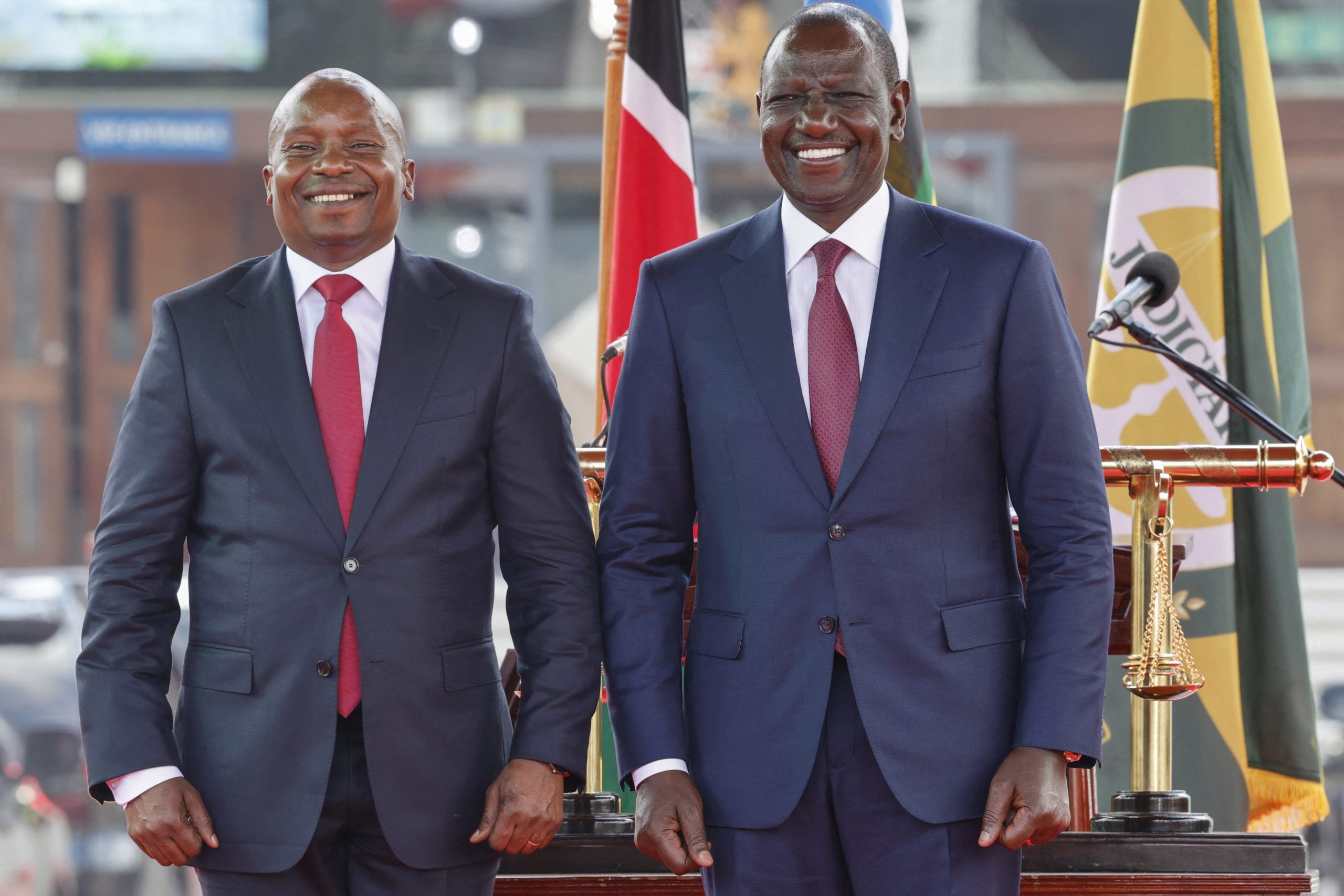
Deputy President Kithure Kindiki walked into a rally in Nyandarua on 16 July 2026 and did something every Kenyan politician does, but rarely with this much repetition in a single news cycle: he told his audience to hold together. Three days later, on 19 July, he was still on the same theme, only this time widening the aperture from a single constituency to the country as a whole.
The through-line is not subtle. The Star Kenya reported on 19 July that Kindiki urged Kenyans to "safeguard the country's unity" and warned against damaging "relationships built over centuries over small differences." A day earlier, on 18 July, the same outlet carried his pledge to "unite the people of the Mt Kenya region" and to resist "attempts to scuttle their unity," framing the central highlands as "one community and one Kenya." The previous week, on 16 July, he had congratulated Sammy Douglas Waweru Kamau on what he described as his imminent victory in the Ol Kalou parliamentary by-election, urging the incoming MP to "unite residents."
Three rallies, three identical notes. The pattern is the story.
Why a deputy president keeps saying the obvious
Kindiki's job, formally, is to deputise. In Kenya's 2022 election cycle, however, the deputy presidency has functioned less as a ceremonial second chair and more as the anchor of the Mt Kenya vote, the swing constituency whose discipline has decided every presidential outcome since the return to multiparty politics. When the deputy president tours Nyandarua and tells voters to "unite residents," he is doing what every holder of that office has done since 2002: turning out the regional base.
The current cycle is unusual because the holder is new to the role. Kindiki was elevated to the deputy presidency in late 2024 after the impeachment of his predecessor, a promotion that consolidated President William Ruto's grip on the Mt Kenya bloc at the cost of the office's claim to independent electoral weight. A deputy who arrived through parliamentary arithmetic rather than a joint ticket inherits a base he did not personally assemble. The repeated calls for unity, in that light, are the work of consolidating a coalition that was not his to begin with.
The 16 July Ol Kalou intervention makes the mechanical function explicit. A parliamentary by-election in Nyandarua is, on paper, a sub-national contest over a single county constituency. In practice, the deputy president's public blessing of a candidate, framed as a near-term victory, is the kind of endorsement the national coalition apparatus dispenses when it wants to demonstrate that its machinery still turns. The Star's report noted the endorsement was delivered as the candidate's win was already being treated as a foregone conclusion.
The wider contest the wire is not yet naming
The visible target of the unity refrain is a fractured opposition in the central region: a loose constellation of former senators, ex-governors and 2022 independent candidates who have refused to fold back into the ruling coalition. The Star's framing of "attempts to scuttle unity" reads as a direct accusation against that faction, even when the report does not name individuals. In Mt Kenya politics, where electoral margins are thin and turnout is everything, the presence of a viable third pole in 2027 is the single biggest threat to the incumbency's re-election math.
What is missing from the public thread is the policy substance behind the unity message. No source item from the past week sets out what "unity" delivers in concrete terms: a common candidate, a shared manifesto plank, a coalition agreement, or simply a tactical no-contest pact in certain constituencies. The Star's reports quote the deputy president in the abstract register of national healing, not in the transactional language of coalition formation. That gap matters because the difference between a unity appeal and a coalition deal is the difference between rhetoric and architecture.
What the repetition tells you about the 2027 runway
A deputy president repeating the same line in three different venues across three days is, in the language of campaign professionals, an operation in progress. The unity rhetoric is the soft infrastructure of a 2027 re-election bid that has to be welded together before the opposition does the welding first.
Two structural facts sit underneath the messaging. First, the Kenyan presidency is decided in a single national round, which means the Mt Kenya region's cohesion is decisive in any close race and merely helpful in any landslide. The current coalition's vulnerability is not that it will lose the region; it is that the region's turnout could be depressed by a third-force candidacy that splits the vote along sub-regional lines. Calls for unity are the prophylactic against that split.
Second, the deputy presidency is the visible instrument through which the central bloc's interests are aggregated inside the executive. Ruto himself hails from the Rift Valley; Kindiki is the bridge to the vote-rich highlands. Any internal friction between the two offices over succession planning, cabinet position, or development allocation would manifest first as a softening of the unity line. The fact that the line is hardening is, in that sense, a signal that the executive's internal compact is holding, at least for now.
What to watch before the end of the year
The Ol Kalou by-election result will be the first stress test of the message. If the endorsed candidate wins comfortably, the unity line will be read as a working coalition instrument and the deputy president will have earned the right to keep using it. If the margin is thin, or if an independent pulls a meaningful share, the refrain will quickly shift from "unite the community" to the harder language of disowning spoilers.
Two further dates will test the architecture. The next national budget cycle, expected in the autumn, will reveal whether the Mt Kenya region receives the level of project allocation consistent with a bloc being courted, or whether the coalition's transactional incentives have begun to thin. The announcement, or non-announcement, of a 2027 endorsement conference will then indicate whether the unity refrain has crystallised into a formal re-election vehicle.
The honest read of this news cycle is narrower than the rhetoric. A deputy president touring his own region telling voters to hold together is what Kenyan politics looks like when the incumbent coalition is doing the routine maintenance that keeps a re-election bid alive. The repetition is the point. It is also, for now, the only verifiable output.
Desk note: where wire coverage treated Kindiki's three rallies as discrete human-interest items, this publication reads them as a single coordinated sequence, on the view that identical messaging across venues and audiences over a 72-hour window is itself the data.
Wire provenance
This editorial synthesis draws on the following public wire/social posts:
- https://t.me/TheStarKenya
- https://t.me/TheStarKenya
- https://t.me/TheStarKenya