MQ-9 down over Dehloran: a quiet line crossed in the Iran air war
Tehran says its integrated air defense network shot down a US MQ-9 over Dehloran County on 19 July 2026. The claim, if confirmed, would mark a notable escalation in the covert air war between Washington and Iran.
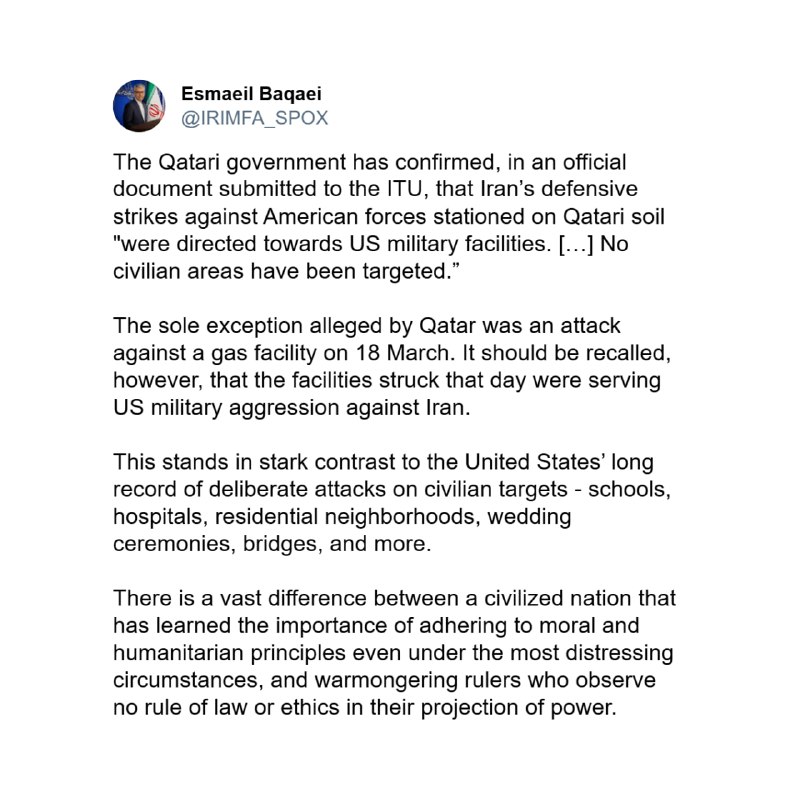
Iranian state-linked outlets reported on 19 July 2026 that a US MQ-9 Reaper unmanned aerial vehicle was brought down over Dehloran County, in the southern part of Ilam Province near the Iraqi border. The reporting, carried by Tasnim News and aggregated by The Cradle on its Telegram channel at 10:06 UTC, attributed the loss to Iran's integrated air defense network. Within minutes, the same footage had propagated across Iranian state media channels, framing the engagement as a deliberate, defensive act rather than a fluke interception. The Cradle, which has editorial ties to Iranian regional coverage, treated the claim as confirmed; nothing in the circulated reporting acknowledged competing accounts.
The shootdown, if verified by US Central Command, would extend a pattern that has run, with interruptions, since 2019: Iranian surface-to-air systems engaging American unmanned aircraft over the Persian Gulf, the Strait of Hormuz, and the borderlands with Iraq. What changes in the framing this time is the location and the emphasis. Dehloran sits deep inside Iranian territory, more than 200 kilometres from the Gulf coast, and Iran's claim that its "integrated" network produced the kill implies a layered kill chain rather than a lucky hit from a single missile battery. The Reaper, built by General Atomics, has been the workhorse of US overwatch missions across the region for two decades. Losing one is an operational cost; admitting it publicly is a political cost Washington has historically preferred to avoid.
The Iranian version, with caveats
Tasnim's framing is unambiguous: a hostile platform was detected, tracked, and destroyed by Iran's domestic air defense architecture. The footage circulated on Telegram depicts what appears to be burning wreckage in a rural, semi-arid landscape consistent with the western Zagros foothills where Dehloran sits. Iranian state media has historically treated shootdowns as proof of indigenous capability, a message pitched as much at domestic audiences as at foreign observers. The Khordad-3rd and Mersad systems, derived from Russian-supplied predecessors and upgraded under successive decades of sanctions-era reverse engineering, have been the named backbone of Tehran's medium- and high-altitude interception claims.
That the announcement came through Tasnim rather than through Iran's foreign ministry matters. Tasnim is the outlet closest to the Islamic Revolutionary Guard Corps, and its framing is calibrated for an audience that reads shootdowns as restored deterrence. Western readers should treat the geographic specifics (Dehloran County, Ilam Province) as plausible but not independently corroborated in the materials currently in circulation. The Cradle's re-publication adds a layer of regional alignment but not independent verification.
The Washington silence, and what it costs
What is conspicuously absent from the public ledger, as of the time of writing, is US confirmation or denial. The American playbook in previous incidents has ranged from quiet acknowledgment, to low-key protest, to flat non-response. Each carries a different signal: a no-comment posture is typically read as a desire to keep the incident below the threshold of formal diplomacy, while a public protest implies the engagement is severe enough to require a documented objection. None of the source material reviewed here contains a Pentagon or Central Command statement, and The Cradle's reporting does not address the American side at all. That asymmetry is itself part of the story. Tehran has learned that it can shape the first 24 hours of the narrative if Washington stays quiet, and Washington has learned that any public acknowledgment invites a domestic political debate about whether an unmanned loss should produce a retaliatory strike.
The MQ-9 programme has become a recurring fault line precisely because the aircraft are valuable, slow, and predictable in their patrol patterns. Iranian-aligned outlets have described previous engagements, including incidents near the Strait of Hormuz in 2019 and the Red Sea in 2024, as deliberate messages about the limits of US overflight. The Dehloran claim fits that pattern, but extends it inland, into a geography the IRGC's air defense command has been less willing to publicly claim in the past.
What an "integrated network" implies
Iran's language matters more than the drone loss itself. The phrase "integrated air defense network," used in Tasnim's framing, implies radar hand-off, command-and-control fusion, and the ability to track a low observable target across multiple sectors. That is a more demanding claim than a single engagement and, if true, would mark the maturation of a defensive architecture Tehran has been building since the Iran-Iraq war, when Iraqi strikes exposed the cost of relying on imported systems that could be disconnected at the source. Successive joint exercises, including the cross-service "Eqtedar" drills, have rehearsed exactly this kind of layered response, and Israeli strikes on Iranian territory in 2024 and 2025 have given Tehran a concrete reason to accelerate the work.
The structural point underneath the imagery is that sanctions-era defence industrialisation has produced something that functions, at least narratively, on a regional stage. Whether the integration claim survives independent technical assessment of the wreckage is a separate question; the immediate effect is to put the question on the agenda.
What this leaves open
Three things remain unsettled in the public record. First, whether the aircraft was armed, conducting surveillance, or carrying a communications relay payload. Second, the altitude and exact mission profile, which determines whether the engagement was conducted under Tehran's claimed rules of engagement or represented a more aggressive posture than Iran has previously acknowledged. Third, and most importantly, whether the loss will register as a political event in Washington, where an unmanned downing inside Iranian airspace could be read either as a provocation requiring response or as a confirmation that overflight of Iran is now a non-viable mission.
The next 48 hours matter more than the event itself. If the Pentagon acknowledges the loss, the diplomatic register changes; if it stays silent, Tehran retains the framing advantage it seized this morning. Either outcome sets the template for the next encounter.
How Monexus framed this: the wire aggregators that picked up the Tasnim footage reported the shootdown as a fait accompli. This piece treats the claim as serious but unverified, attributes the geographic specifics to Iranian state-linked reporting, and withholds the journalistic certainty that only a US acknowledgment would warrant.
Wire provenance
This editorial synthesis draws on the following public wire/social posts:
- https://t.me/thecradlemedia
- https://t.me/TheCradleMedia
Follow the event.
These dated source records provide context. They do not retrospectively verify this archive article.
Separate what the nuclear watchdog reported from what it could not determine after the June 2025 strikes.