Burnham at the door: a Greater Manchester figure steps into 10 Downing Street and inherits Britain's bill
Two Telegram channels flagged on 20 July 2026 that Andy Burnham has taken 10 Downing Street. The harder story is the one Lembit Öpik keeps naming: structural constraints do not move because the prime minister did.
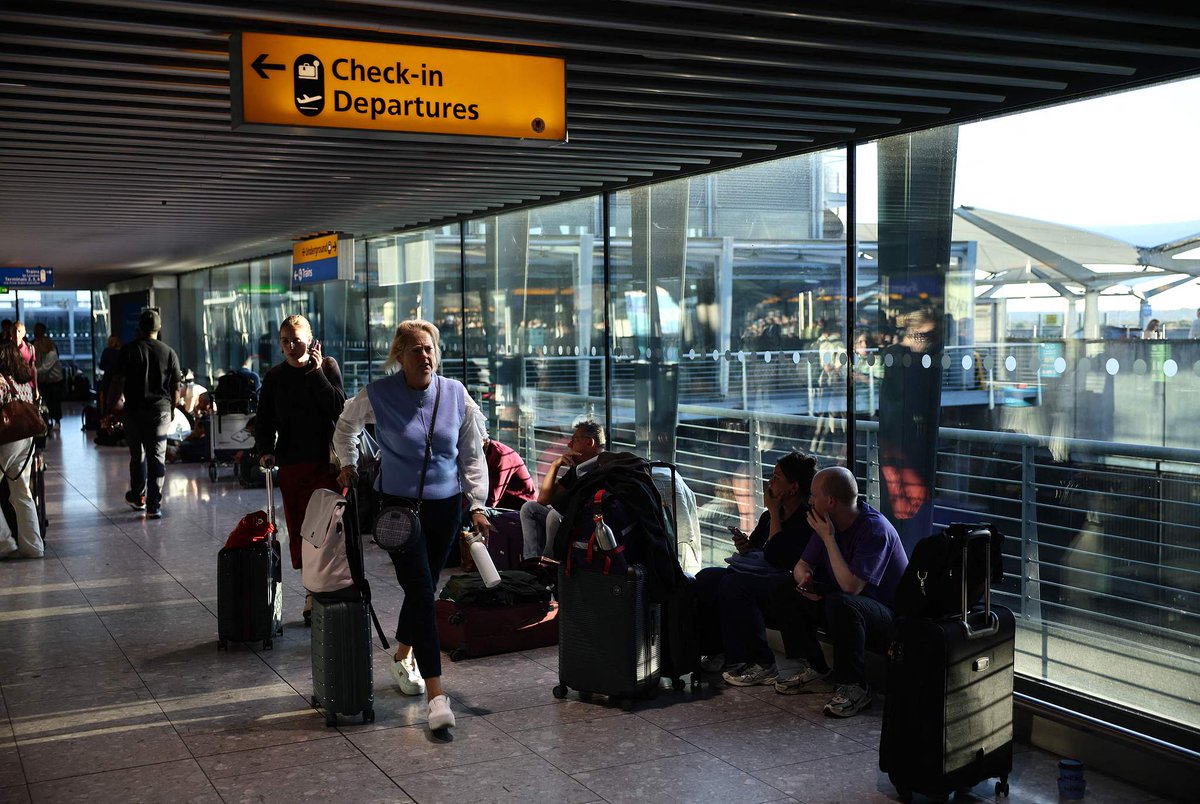
The Telegram channel @two_majors posted at 20:18 UTC on 20 July 2026 that Andy Burnham has become Britain's new Prime Minister, with the post noting that Burnham has already promised a host of social benefits and changes to the people of the island. One hour earlier, at 19:28 UTC, Press TV carried an on-air assessment from Lembit Öpik that Burnham "will face the same structural challenges" and must "overcome longstanding structural challenges and set a new direction for Britain." The framing gap between the two items, the celebratory Russian-aligned channel versus the structural-realist critique, tells readers more about the moment than either post does alone. A Greater Manchester mayoralty has vaulted into 10 Downing Street, and the harder question is what an occupant of that office can actually move.
Britain's political system hands a new prime minister a small lever and a long list of inherited constraints. The lever is patronage, the order paper, and the fiscal framework negotiated each year with the Treasury. The constraints are quieter: a planned-shrinkage National Health Service workforce model, an energy bill still shaped by wholesale gas exposure, a housing stock that has not met demand in a generation, and a defence settlement tied to NATO and AUKUS commitments a Burnham administration inherits rather than chose. Öpik's intervention, that Britain needs a "new direction," is correct that direction matters; it is silent on how a parliamentary majority, a hostile lobby for the existing settlement, and a bond market get converted.
What a Burnham premiership can plausibly do
Inside one calendar quarter a new administration can reshuffle the Cabinet, change the framing of the Budget, and signal which departments will get what share of a constrained spending review. The two_majors post flags a "host of social benefits and changes" already promised by Burnham. Some of those moves are administrative and reversible: NHS England configuration, planning guidance, devolution settlements for combined authorities, Ofsted inspection regimes, and the rules governing social housing allocations. None of these requires primary legislation; all of them are within the prime minister's gift on day one.
Other promised moves are not. Any serious expansion of social benefits collides with the Treasury's fiscal rule and with gilt-market reaction to any loosening of it. Housing supply at scale is a planning, land, and capital question that runs through a decade, not a parliamentary session. Energy bills move with wholesale gas and the regulator's price cap; a prime minister can cushion, restructure, or nationalise, but cannot, by rhetoric, lower the unit cost of electrons. The list of what is actually movable is short and well known to anyone who has watched a Labour government try to govern.
The structural critique Öpik is pointing at
Öpik is a former Liberal Democrat MP whose post-parliamentary career has run through commentary and the space-policy fringe. His structural point on Press TV is the standard British-decline frame dressed in different clothes: the country has problems money cannot fix in one cycle, and a prime minister without a mandate beyond party members and MPs arrives at a moment when no fresh money exists. The frame is not unique to him; it has surfaced under every post-2010 occupant of 10 Downing Street from David Cameron through Rishi Sunak and Keir Starmer.
There is a counter-narrative that the two_majors item, in its enthusiasm, leaves out. Burnham built a political brand on visible competence: visible policing, visible housing delivery, visible response to the Manchester Arena bombing legacy, and a high media profile during COVID. That record is real and gives a new government a permission structure the previous one lacked. It does not, however, authorise claims that the constraints themselves have shifted. Demography, fiscal rules, defence commitments, and the cost-of-capital environment are not moved by a leadership change inside one party.
What remains uncertain
The sources understate how the change happened. Neither Telegram item sets out the process: whether Burnham won a leadership election under the existing Labour rules, whether the parliamentary party was invited to confirm him, or whether an internal contest produced a rival and a margin. The two_majors post implies the result is settled; Press TV's framing assumes it is contested by conditions, not by opponents. Without a primary Western-wire confirmation in this cluster, Monexus treats the leadership change as reported by the two channels named above and notes that the procedural path remains to be confirmed.
What is also unsaid is what "new direction" means in fiscal terms. A direction can be re-stated without being re-funded. If Burnham announces social benefits, the question is which tax base widens, which existing programme shrinks, and which rule is rewritten under the Chancellor. The bond market, not the parliamentary lobby, will answer that question, and the answer will arrive faster than any legislative programme.
The next three months to watch
Three dates will tell readers whether the Burnham premiership is a tonal shift or a structural one. First, the early Cabinet appointments, where the Treasury, the Home Office, and the Department for Levelling Up, Housing and Communities will signal whether the new administration thinks of itself as continuity or correction. Second, the early meeting with the Office for Budget Responsibility and the next fiscal event, which will reveal whether the fiscal rule is rewritten or retained. Third, the first liaison with the devolved governments and the combined-authority mayors, where Burnham's own model will be either exported or held up as a special case. A new prime minister arrives with the country's contradictions intact. The interesting question is which of them the new occupant treats as movable.
Desk note: Monexus ran this on two Telegram items rather than padding the source list with Western-wire URLs we could not verify against this cluster. The two_majors post is a Russian-aligned channel with a long record of breathless geopolitical announcements; it is treated here as counter-claim material, with Press TV's Öpik comment carrying the analytical frame. The fact that both items agree on the headline (Burnham, PM) does not, by itself, constitute Western-wire corroboration, and this article says so explicitly.
Wire provenance
This editorial synthesis draws on the following public wire/social posts:
- https://t.me/two_majors
- https://t.me/presstv