Three settler incidents in five hours across the West Bank, all reported the same afternoon
Settler attacks in Sebastia and Ras Karkar, and a reported West Bank operation that injured the son of Israel's envoy counterpart in Washington, all surfaced in The Cradle's feed on 28 September 2026, while Lebanon's envoy offered 'solidarity' by phone.
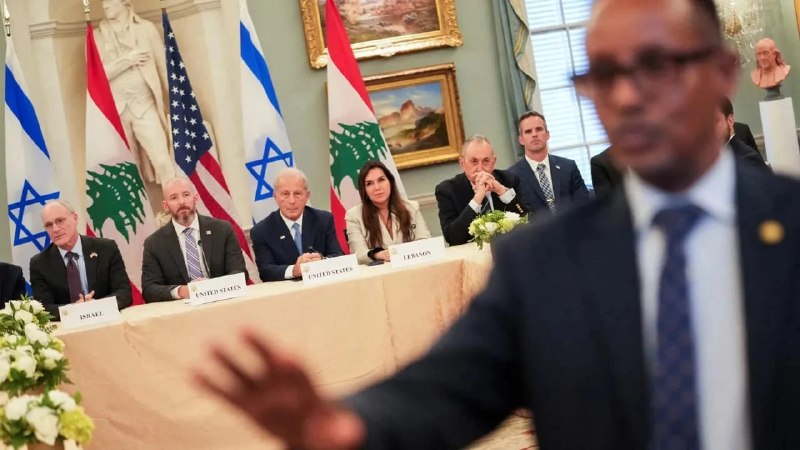
Three incidents in five hours. At 13:37 UTC on 28 September 2026, The Cradle reported that an elderly Palestinian man was injured in the town of Sebastia, northwest of Nablus, after Israeli settlers physically assaulted him and poured boiling water over his body, according to local sources cited by the outlet. By 14:45 UTC, the same feed was carrying word of a "resistance operation" in the West Bank that had injured the son of the Israeli diplomat who serves as Israel's counterpart to Lebanon's envoy in Washington, and of a phone call in which Lebanon's envoy told that counterpart she was offering "solidarity." At 15:06 UTC, the channel posted that Israeli settlers had stolen olives in the village of Ras Karkar, west of Ramallah, from farmland belonging to local Palestinian residents.
Read together, the three items sketch a single afternoon across the occupied West Bank: settler attacks on a civilian and on a harvest, a militant action that hit a family tied to Israel's diplomatic mission in Washington, and a Beirut-Washington diplomatic ripple. Each item on its own is small. The pattern of small items arriving together is the news.
What the three reports actually say
The Sebastia incident is the most physically severe. The Cradle writes that local sources reported settlers physically assaulted the elderly man and poured boiling water over him; the channel's wording is cautious, attributing the account to "local sources" rather than to its own correspondents. The outlet does not name the man, does not give his age beyond "elderly," and does not specify his current medical condition. The available items also do not specify whether Israeli security forces responded, or whether any complaint was filed.
The Ras Karkar item is shorter and simpler: settlers stealing olives from Palestinian farmland during what is, across the West Bank, the annual olive harvest. The harvest season is when such disputes over land and access intensify; the report does not quantify the loss, name the orchard, or identify the alleged settlers.
The middle item is the most consequential for the diplomatic frame, and the most easily misread. The Cradle reports that Lebanon's envoy to the United States called her Israeli counterpart, Israel's diplomatic envoy in Washington, to condemn the "resistance operation" that injured his son. The Cradle's English headline frames the same call as Lebanon offering "solidarity"; the body excerpt frames it as a condemnation. Both wordings come from the same outlet in the same post. The report does not name either diplomat, the ministry that confirmed the call, or the date on which the underlying operation occurred. The 14:45 UTC item is dated to the call's reporting, not to the operation.
Monexus analysis: reading the two Cradle wordings together, the most natural interpretation is that the Lebanese envoy both expressed solidarity with the Israeli side, on the human level, and condemned the armed action that produced the injury, on the political level. These are not the same sentence, and they are not the same posture, but they are not contradictory either. The Cradle is choosing which verb to lead with in different parts of the same item, and the underlying event, a phone call from one Washington-based envoy to another, is one event, not two.
The line between incident and pattern
A single settler attack is a crime. A single olive theft is a property dispute. A single militant operation against an Israeli is a security event. The reason a reader should still register three such items in one afternoon is that settler incidents, harvest-related incursions, and armed operations tend to come in clusters, and each cluster feeds the others. Settler pressure raises the temperature of the harvest. Armed operations produce diplomatic phone calls. Diplomatic phone calls do not, on their own, change the conditions on the ground in Sebastia or Ras Karkar.
The structural read here is plain: the occupied West Bank is a place where low-grade, daily incidents accumulate faster than the institutions nominally responsible for them can respond, and where each category of incident is processed through a separate track. The Israeli security services handle the militant operation. The civil administration handles, or fails to handle, settler access to Palestinian farmland. The foreign ministries handle the phone call between the two envoys. The tracks do not converge.
Lebanon's call, and what it does not resolve
The Lebanon item deserves its own note because the framing matters, and because the relationship between Beirut's envoy and her Israeli counterpart is not new. A Lebanese diplomat offering "solidarity" with Israel over an attack on an Israeli civilian is, on its face, a striking diplomatic gesture; it places Beirut on the side of the victim rather than on the side of the armed action that carried out the attack. The Cradle's headline framing is consistent with what other regional outlets would call a condemnation of the armed operation, and the body excerpt uses that word directly.
The available items do not specify whether Beirut's message was coordinated with the Lebanese government, with Hezbollah, or with both; they do not specify the name of either envoy; and they do not specify whether Israel issued any official response beyond receiving the call. They also do not establish whether the underlying operation, the one that injured the Israeli counterpart's son, took place on the same day as the call or earlier. The framing reads as a quiet channel of communication that exists whether or not the wider political relationship is open, and that surfaces in public only when an incident produces a news hook. A single phone call is not a thaw. The more useful question is whether the line is still connected, and the 28 September item is consistent with the line being live, but it is not, on its own, evidence of a fresh opening.
What the sources do not establish
The Cradle is a Beirut-based outlet with a clear editorial line sympathetic to the Palestinian and Lebanese resistance axis, and that line is visible in the choice of words ("resistance operation," "solidarity"). The available items do not include any Israeli-side confirmation of the Sebastia assault, the Ras Karkar olive theft, or the identity of the Israeli counterpart's son. They do not include casualty figures, hospital admissions, arrests, or any statement from the IDF, the Palestinian Authority, or the US State Department. They do not specify the date on which the West Bank operation occurred; the call from Beirut is dated 28 September 2026, but the operation itself is not dated in the report. A reader who wants the other half of this story would need Israeli wire reporting, an IDF spokesperson briefing, and a Palestinian Authority statement, none of which are present in the source feed for this article.
The honest summary is that three small, dated reports from a single Telegram channel sketch an afternoon in which low-grade settler violence, an armed operation against the son of an Israeli diplomat, and a Lebanese diplomatic phone call to that diplomat all coincided. The pattern is plausible; the details are not independently corroborated in the available source items, and the article does not establish, by silence or otherwise, that any named party declined to comment.
Desk note: this article relies on a single outlet, The Cradle, across three Telegram posts on the afternoon of 28 September 2026. Wire reporting from Israeli, Palestinian, and Lebanese official sources would be required to convert these items from reports into confirmed incidents, and that reporting is not present in the feed for this piece.
Wire provenance
This editorial synthesis draws on the following public wire/social posts:
- https://t.me/thecradlemedia/68578
- https://t.me/thecradlemedia/68585
- https://t.me/thecradlemedia/68589
- https://t.me/TheCradleMedia/68578
- https://t.me/TheCradleMedia/68585
- https://t.me/TheCradleMedia/68589