Iran's IRGC claims fresh strikes on US radar, drone hangar and shipping in Hormuz corridor
In a series of overnight statements, Iran's IRGC said it struck a long-range radar site, a missile-defence radar, satellite systems and a hangar housing MQ-9 drones, then set fire to two oil tankers that tried to run the southern Strait of Hormuz route.
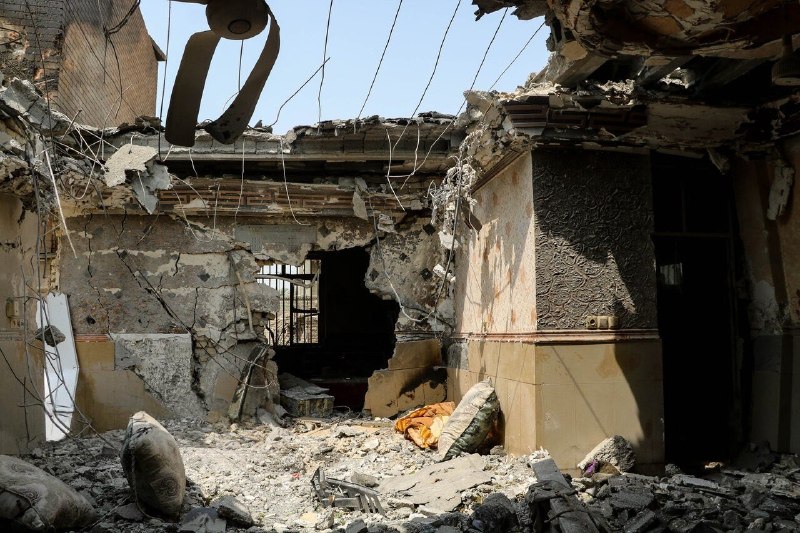
Iran's Islamic Revolutionary Guard Corps issued four back-to-back operational notices in the early hours of 21 July 2026 (UTC), claiming the destruction of US-linked radar and drone assets on one front and the burning of two oil tankers in the Strait of Hormuz on another. The bulletins, carried by the IRGC's public-relations arm and relayed through Tasnim News and Al-Alam, mark a sharp escalation in the already-simmering confrontation between Tehran and American forces deployed across the Gulf.
What the IRGC is asserting, and where the evidence sits, matters beyond the headlines. Two oil tankers tried to transit the unsafe southern route past the Strait of Hormuz and caught fire after an explosion. Hours earlier, Tehran said it had hit a long-range radar installation, a telecommunications and satellite-reception node, a missile-defence radar, and a hangar used to shelter MQ-9 Reaper drones. The notices are explicit about timing and the targets; they say nothing about casualties, the nationality of the tankers, or what triggered the explosions. That silence is itself part of the story.
What the four notices actually say
At 01:00 UTC on 21 July, IRGC Public Relations issued Notice No. 34, stating that two "offending" oil tankers intending to use the unsafe route south of the Strait of Hormuz caught fire due to an explosion and stopped, according to Tasnim's English relay. The wording placed the incident in the context of an existing Iranian warning that parts of the strait were unsafe for commercial transit.
Nineteen minutes later, at 01:19 UTC, Notice No. 36 went out: a long-range radar site, a telecommunications centre and satellite reception systems, a missile-defence radar, and an MQ-9 drone hangar were destroyed, Tasnim reported. The phrasing matched the language used across earlier bulletins in the campaign.
At 01:37 UTC, Notice No. 37, titled "Cleaning the area's radar in the continuation of the black night of American systems and radars," framed the radar strike as part of an ongoing operation against US regional surveillance architecture.
By 02:04 UTC, Al-Alam had relayed a fuller summary of the destruction list: long-range radar, telecommunications and satellite systems, missile-defence radar, and an MQ-9 hangar. The repetition across four notices in roughly 64 minutes is the point. The IRGC is not just claiming damage; it is constructing a narrative beat by beat.
The Hormuz dimension
The tanker incident sits inside a longer Iranian pressure campaign against commercial shipping in the Gulf. Tehran has, in past episodes, used the designation of waters as "unsafe" to justify coercive inspection or interdiction of vessels, often those linked to Iran's adversaries. The IRGC's framing here echoes that playbook: the tankers are described as "offending," the route as "unsafe," and the outcome as a self-inflicted fire following an explosion. Whether the tankers struck mines, were hit by IRGC fast boats, or suffered an onboard accident cannot be resolved from the source material available. Western wires have not, as of the timestamps recorded here, carried independent confirmation of the incident or the identities of the vessels.
The Strait of Hormuz remains the single most consequential maritime chokepoint in global energy. Roughly a fifth of the world's petroleum passes through it on most days. Any disruption, even a localised one affecting two vessels, rattles freight markets, prompts rerouting through longer Cape of Good Hope voyages, and inflates war-risk premiums on hull and machinery insurance. The IRGC's choice to put the tanker incident in the same overnight bulletin cycle as the radar strikes signals that Tehran wants the Hormuz lever read as part of a wider escalation, not a stand-alone maritime accident.
What is being hit, and where
The four-target list issued by the IRGC points at the layered architecture the United States has spent two decades building across the Gulf: long-range radar for early warning, a missile-defence radar tied to Patriot or THAAD-class systems, satellite and telecommunications nodes for command-and-control, and hardened hangars for MQ-9 Reapers, the long-endurance surveillance and strike drones operated by the US Air Force and, in some cases, allied air arms.
The IRGC has not disclosed the geography of the strikes. Tasnim and Al-Alam's coverage gives no coordinates and no country name for the facilities hit. Western and regional wires have not, in the material on hand, confirmed the strikes on the record. Two readings are plausible: an Iranian escalation against US positions inside the Gulf region proper, or strikes on US-linked infrastructure further afield, including in Iraq or Syria, where American forces have long maintained counter-ISIS and air-defence footprints. The structural pattern of the operation, hitting radar, comms and drone hangars together, suggests a target set designed to degrade ISR, the intelligence, surveillance and reconnaissance, capacity rather than to inflict mass casualties. That is consistent with Iran's stated doctrine of calibrated escalation. It is also, by design, hard to verify in real time.
Why this lands the way it does
There is a pattern to how these bulletins are timed. The notices are short, numbered, and stylistically identical, a deliberate echo of wartime communiques. The repetition across Tasnim and Al-Alam, both Iranian state-adjacent outlets, is meant to project reach and certainty: the same news, broadcast from multiple platforms, in the same hour. The audience is layered. Domestically, the bulletins are aimed at a public that has followed years of tension with the United States and that the IRGC needs to read as defended. Regionally, they signal to Gulf Arab neighbours, to Israel, and to Iraq that Iranian fires can reach beyond Iran's borders. Globally, they put Western capitals in the position of either confirming the strikes, with the political cost of acknowledging fresh losses, or staying silent, with the credibility cost of leaving Iranian claims unanswered.
The strategic logic is asymmetric. Iran does not need to win a shooting war with the United States. It needs to keep the cost of confrontation high enough that Washington concludes that escalation is worse than containment, while keeping its own missile, drone and proxy architecture intact. Hitting radars and Reaper hangars, rather than troop concentrations, is a way of degrading the American targeting chain without producing the body-bag footage that would force a maximalist US response. The two burning tankers serve a different purpose: a reminder that the energy chokepoint is, in extremis, negotiable.
Stakes and what to watch next
Three things are worth pinning down before the next bulletin arrives. First, whether any independent reporting, from Reuters, the AP, the BBC or regional outlets with on-the-ground capacity, confirms the strikes, names the target country, or identifies the tankers. The IRGC's word alone is not the same as the fact. Second, whether the US Department of Defense or Central Command issues a statement. The historical pattern is that Washington is slow to confirm hits on its forward sites, partly because confirmation itself becomes a strategic signal. Third, whether Brent crude and war-risk insurance premia move in the hours after the news crosses Western wires. Tanker incidents in the Hormuz corridor have historically moved freight markets even when the underlying damage was modest.
The longer horizon is harder. A single night of bulletins does not constitute a war. It does constitute an Iranian attempt to set the terms of the next exchange: that radar and drone architecture is in scope, that the southern Hormuz route is contested, and that escalation will be calibrated, on Tehran's terms, rather than reactive. Whether that framing survives contact with American and Gulf-Israeli counter-moves is the question that the coming days will answer. The IRGC has put its version on the record; the rest of the field has yet to respond.
Desk note: Monexus has relied on IRGC-aligned relays via Tasnim and Al-Alam for the substance of these claims, given that no independent confirmation has reached the desk in the window covered. Western wire confirmation, target-state identification, and casualty reporting remain the open items; this article will be updated as those arrive.
Wire provenance
This editorial synthesis draws on the following public wire/social posts:
- https://t.me/tasnimnews_en/37541
- https://t.me/tasnimnews_en/37543
- https://t.me/tasnimnews_en/37544
- https://t.me/alalamfa/124582
Follow the event.
These dated source records provide context. They do not retrospectively verify this archive article.
Separate what the nuclear watchdog reported from what it could not determine after the June 2025 strikes.