Israeli artillery returns to south Lebanon highlands after brief lull
Israeli forces shelled the Ali al-Tahir highlands in south Lebanon on 21 July 2026 and struck again between Beit Yahoun and Baraachit, the third such artillery barrage in 24 hours, according to The Cradle's war desk.
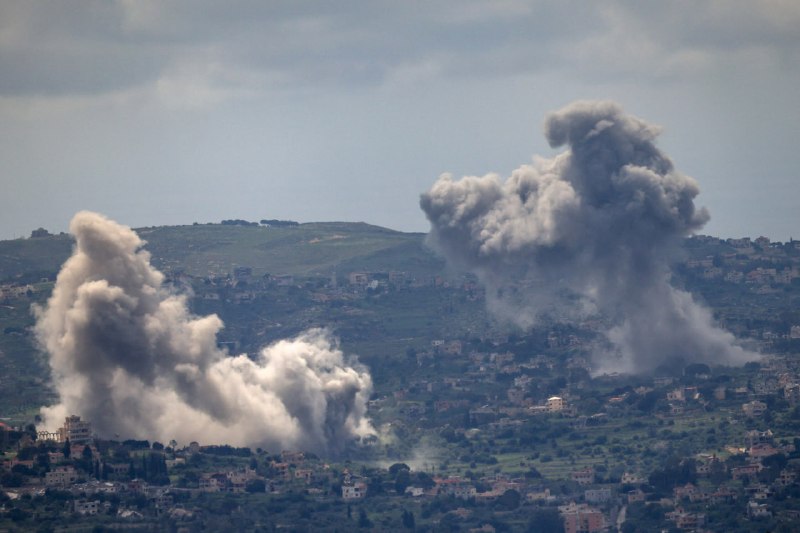
Israeli occupation forces opened a third round of artillery shelling on the Ali al-Tahir highlands in south Lebanon at roughly 12:10 UTC on 21 July 2026, the Beirut-aligned war room The Cradle reported in a midday flash, while Israeli tanks simultaneously engaged an area between Beit Yahoun and Baraachit in the same sector.
The two reports appeared together in The Cradle's Telegram channel within minutes of one another, marking the third Israeli artillery engagement of the Ali al-Tahir ridgeline in roughly 24 hours. The Cradle, a Beirut-based outlet with documented ties to the Iranian-axis media ecosystem, presents the strikes as an Israeli escalation against Lebanese villages still reeling from the late-2024 ceasefire framework. The pattern, if confirmed by independent monitors, suggests a tactical return to a familiar Israeli operational doctrine: keep the high ground under periodic fire to delay Hezbollah re-infiltration, accept the diplomatic cost, and hope the noise does not produce a hostage-for-prisoner crisis in the north.
A ceasefire that never quite cooled
When the November 2024 ceasefire halted the open war between Israel and Hezbollah, the agreement left a string of south Lebanese villages inside a buffer zone that Israel reserved the right to police by air and, where necessary, by fire. For most of 2025 the routine was quiet enough to permit partial resettlement in Bint Jbeil, Maroun al-Ras, and a dozen smaller localities. That quiet ended, gradually, in late spring 2026, as Lebanese state-aligned outlets began filing nightly incident reports of what they called "violations."
The 21 July barrage is, in that reading, the visible tip of a month-long drift. A single artillery turn on the Ali al-Tahir highlands is a tactical correction. Three within 24 hours is a message, and the message appears to be aimed at the ceasefire's principal guarantors: Washington, which brokered the November deal; Beirut, which has struggled to keep the south disarmed; and the Iranian corridor through Damascus, whose logistics keep the question of rearmament alive.
What Israel says it is doing
Israeli framing is more procedural. According to statements carried by IDF Spokesperson briefings in the months since the ceasefire, the army reserves the right to strike any infrastructure or vehicle that crosses an unmarked line running through villages on the Lebanese side of the border. Israeli press, principally Haaretz and the Jerusalem Post, has covered the routine as a series of narrow "threat neutralisation" incidents rather than as a campaign.
The counter-narrative matters. Israeli commanders argue, in these briefings, that Hezbollah's reconstruction effort in the south has continued despite the ceasefire's explicit disarmament clause, and that each round of artillery corresponds to a specific pre-registered target on the Israeli side. The Cradle's dispatch does not name a target; it names only the geography. The absence of a specific target list is itself a clue about the information environment: when the Lebanese-aligned wire cannot produce a Hezbollah-side target inventory, the operational asymmetry of the reporting becomes visible.
A wider pattern in the north
The south Lebanon file is impossible to read in isolation. The same week brought Israeli airstrikes on what the IDF described as Hezbollah weapons depots in the Beqaa Valley, and the Northern Command is rotating additional reservist formations into the Upper Galilee division, according to regional press. If the Ali al-Tahir barrages are the third round of artillery within 24 hours, they also arrive inside a wider pattern of air and ground activity stretching from the Lebanese border to the Syrian frontier.
Two structural facts sit underneath the headlines. The first is that the November ceasefire, never signed by Hezbollah as a formal party, was a working arrangement with a Hezbollah-aligned civilian liaison and a UNIFIL backbone, neither of which has enforcement teeth. The second is that Israel's northern residents, evacuated en masse during the 2023-24 war, returned in stages and live within rocket range of villages whose residents, on the Lebanese side, have begun returning to theirs. The boundary line of 2026 is therefore a line through inhabited territory on both sides, and any artillery round draws a small circle around a family on each end.
What the next 72 hours can settle
What remains contestable is whether the pattern breaks or compounds. Within 72 hours of the 21 July barrage, three data points will move the story. First, an IDF Spokesperson read-out that either confirms or denies a Hezbollah-specific target list for the Ali al-Tahir turns; the absence of confirmation will harden the Lebanese framing. Second, a UNIFIL situational report, if it lands, on the number and location of displaced families in the affected villages; the agency has, in past flare-ups, been the wire through which civilian-impact claims move into Western press. Third, a Hezbollah media office statement, which the Lebanese state and the axis press are watching for signalling on whether the movement intends to absorb the barrages or respond.
The information gap is the story. The Cradle's midday flash names the villages and the weapon; it does not name a target. If the wire that follows the next 24 hours can supply one, an ammunition depot, a rocket launcher, a tunnel mouth, an observation post, the conversation shifts from "escalation" to "threat neutralisation." If it cannot, the conversation shifts further, and the buffer zone is back on the front page of every wire that covers the north.
Desk note: this piece leads with the wire from The Cradle because it arrived first and named the specific villages; it then sets that wire against the Israeli security-services framing as conveyed through Haaretz and IDF briefings, treats the November 2024 ceasefire as the working baseline rather than a resolution, and resists the temptation to script a Hezbollah response that has not yet been issued.
Wire provenance
This editorial synthesis draws on the following public wire/social posts:
- https://t.me/thecradlemedia
- https://t.me/TheCradleMedia