Tehran and Washington trade Hormuz transit warnings as Trump quotation circulates without primary attribution
Iranian channels relay an IRGC formulation tying Hormuz transit rights to the disposition of frozen Iranian assets, while two pro-Trump channels carry a 'US controls the Strait' line without transcript or White House confirmation.
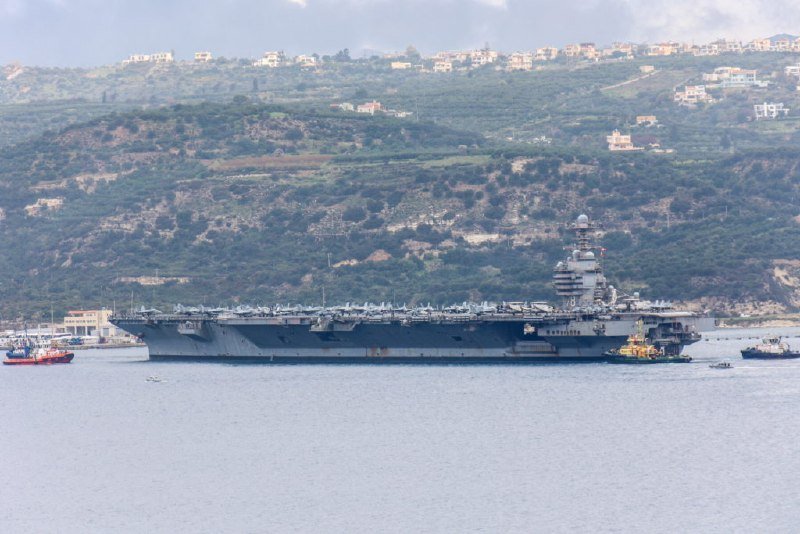
At 13:03 UTC on 28 July 2026 the Telegram channel Clash Report carried a warning, framed in the post as originating with Iran, that any country or company taking money from Iran's frozen assets would be barred from transiting the Strait of Hormuz (https://t.me/ClashReport/90706). Four minutes later a pro-Trump channel, Megatron, posted the line "The US controls the Strait of Hormuz" without venue or attribution (https://t.me/megatron_ron/16273). Iranian academic Seyed Mohammad Marandi echoed the asset-warning substance in English on X at 13:11 UTC ("Any country that accepts Iran's stolen assets from the Trump regime will no longer be allowed to access the Strait of Hormuz", https://x.com/s_m_marandi/status/2082091673891274984). PressTV then posted what the channel described as an IRGC response to Trump's handling of Iranian assets at 13:15 UTC (https://t.me/presstv/200621), and BRICS News followed at 13:23 UTC with a longer "We control the Strait" formulation attributed to Trump (https://t.me/bricsnews/17339). Twenty minutes of messaging, two governments, one corridor.
Monexus analysis: read as a single signal the exchange lines up as a reciprocal warning shot over a specific trigger, the disposition of frozen Iranian assets. Tehran has named a retaliatory instrument (transit denial) and tied it to a defined third-party act (asset acceptance). A second party has issued a sovereignty-of-the-corridor counter-claim. The structure of the messaging, with an Iranian-framed warning first and a Trump-attributed line following, hints at the order of moves. Neither statement in the cited material carries an operational order; both are declaratory on the available record.
What the Iranian messages actually say
The PressTV item at 13:15 UTC frames an "IRGC response to Trump ploy to steal Iran assets" and states that "any firm, nation taking assets [will] forfeit Hormuz transit rights" (https://t.me/presstv/200621). Read narrowly, the channel is presenting this as a Guards-level reaction, and the operative language is conditional rather than absolute. The trigger is the act of a third party, not a standing closure. The earlier Clash Report item at 13:03 UTC used a parallel formulation ("any country or company that takes money from Iran's frozen assets"), narrower in scope to monetary transfers (https://t.me/ClashReport/90706).
Marandi's X post at 13:11 UTC sits between the two in tone, a single-sentence English amplification that names the asset angle directly. Analysts treat his social-media output as a conduit for Iranian foreign-policy signalling rather than detached commentary; whether the post carries the standing of an official communiqué, in the sense of a Foreign Ministry statement or a presidential order, is not specified in the cited material. The chain of authorship on the Iranian side is therefore a Telegram channel framing an IRGC response, a named academic amplifying in English, and an earlier Telegram channel carrying what looks like a parallel formulation. The source items do not contain a primary IRGC press release or a Foreign Ministry statement, and the operators do not include a quoted order from President Masoud Pezeshkian's office.
The Trump quotation and its provenance gap
Two posts attribute a Trump line to the strait, neither with a primary-source link. The BRICS News item at 13:23 UTC carries the longer formulation, with the bracketed quote marks around the second sentence intact: "Iran does not control the Strait of Hormuz. 'We control the Strait.'" (https://t.me/bricsnews/17339). Megatron at 13:07 UTC carries a shorter single-sentence version, "The US controls the Strait of Hormuz" (https://t.me/megatron_ron/16273). The two formulations are consistent in substance rather than identical in wording.
The source items available to this article do not specify the venue of the remark (podium, interview, social media), nor do they contain a White House transcript, a press-pool link, or any other confirmation that the words were uttered on 28 July 2026. Both Telegram posts are relays, with the original utterance unattributed inside the items themselves. That provenance gap is the distinguishing feature of the US-side message: even allowing for Trump's history of public remarks on Iranian control of the strait, the cited record does not place the words on the morning of 28 July. For anyone pricing oil-corridor risk in the next 72 hours, that gap is the first thing to close; until it is closed, the "we control the strait" line circulates as a relayed slogan rather than a confirmed statement of US policy on the day.
Two readings of the same morning
Monexus analysis: the dominant read is that both sides are in a declaratory phase. Each statement is conditional or assertive rather than operational. The Iranian line, as relayed, is conditioned on third-party action (asset acceptance); the Trump-attributed line is a flat assertion of corridor control. Read narrowly, neither requires an immediate maritime consequence.
A second reading treats timing and standing as the story. The Iranian-framed warning arrived first by minutes, then was amplified; the Trump-attributed line followed. On that account, the first mover set the agenda and the second was reactive. The two messages are also asymmetric in standing and in the plausibility of operational enforcement. A transit ban against named counterparties depends on maritime capacity that the cited posts do not document; a US naval guarantee of free passage in the Gulf rests on a carrier and surface presence the US has maintained in the region for decades. The source items do not specify which framing is correct, and they contain no shipping advisory, no UKMTO notice, no tanker-tracking data, and no Fifth Fleet or CENTCOM release that would corroborate an operational shift on the morning of 28 July. Until any of those signals appears, declaratory is the most defensible characterisation of the record on hand.
Why Hormuz, why the funds
The structural frame, in plain terms: a financial-sequestration dispute is being converted into a maritime-access dispute. Frozen Iranian funds held in third-country jurisdictions have been the subject of protracted negotiation with Washington for years; any release requires the consent of both the US and the holding jurisdiction. By tying access to the strait to the disposition of those funds, the Iranian-framed message extends a courtroom fight into a shipping lane.
Hormuz is the relevant lane because it is the most consequential energy chokepoint on the planet. Saudi, Iraqi, Kuwaiti, Qatari and Emirati crude, plus most Iranian LNG, exits through it. Any actor with credible denial capacity at Hormuz can move the global crude benchmark without firing a shot, by lifting the war-risk premium embedded in tanker freight and insurance. That is why Iranian-channel rhetoric about the strait gets pricing attention even when no operational change accompanies it. The wider pattern is one in which secondary sanctions and asset freezes are increasingly contested not in courtrooms but in the corridors they most directly threaten. The morning's exchange sharpens that pattern: a conditional warning, a relayed counter-claim, and no operational movement either way.
What to watch next
Three markers would indicate that the signalling is hardening rather than resting. First, a primary US-side statement (White House transcript, State Department briefing, or on-record press-pool quotation) confirming that the "we control the Strait" line was uttered on 28 July 2026 and specifying the venue. Second, a direct statement from the Iranian foreign ministry or from President Pezeshkian's office lifting the Guards-framed line into state policy, with an operative order. Third, a UKMTO advisory, a US Fifth Fleet notice, or any other formal shipping warning issued by Gulf-based naval authorities. None of these signals appears in the source items available to this article.
The narrow uncertainty worth flagging is provenance. On the Iranian side the chain of authorship is more transparent in the material on hand, with a state-aligned broadcaster, a named academic, and an earlier Telegram framing. On the US side, the cited posts are relays of a slogan without a podium or a transcript. For an investor or shipping operator pricing the next 72 hours, that asymmetry is the working fact of the morning, before any analysis of corridor risk.
Monexus framed this exchange as a reciprocal signalling event anchored to the disposition of Iranian assets, rather than as an immediate closure threat. The editorial weight is on the conditional structure of the Guards-framed line and on the provenance gap behind the Trump-attributed quotation, which is presented here as a relay rather than as a confirmed on-record statement. Western wires and Iranian state-aligned channels received the same set of statements; the analysis above reads the order of moves and the asymmetry of enforcement capacity, then flags what has not yet been corroborated.
Wire provenance
This editorial synthesis draws on the following public wire/social posts:
- https://t.me/ClashReport/90706
- https://t.me/megatron_ron/16273
- https://x.com/s_m_marandi/status/2082091673891274984
- https://t.me/presstv/200621
- https://t.me/bricsnews/17339