Gaza talks reach briefing stage as oncology cases stall in parallel
Israeli journalist Amit Segal reports both sides are being prepared for a possible Phase 2 announcement, while a Gaza professor's account highlights stalled medical evacuations.
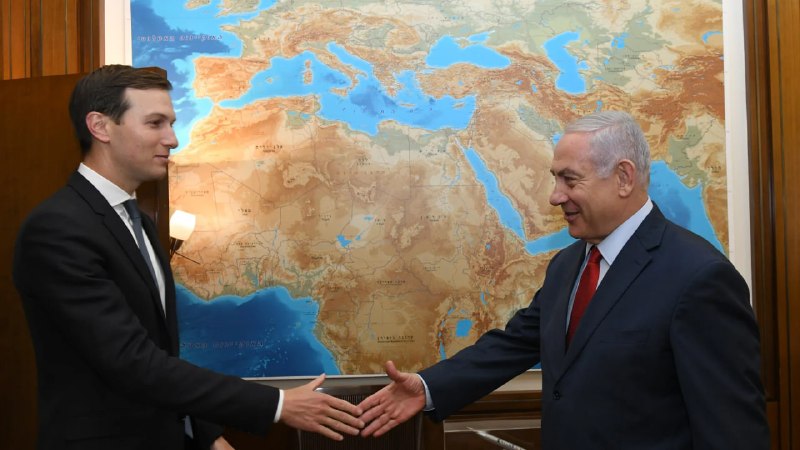
At 11:37 UTC on 30 July 2026, Israeli journalist Amit Segal reported via his Telegram channel that Israel and Gaza were being briefed on the progress of cease-fire talks and on the possibility of an imminent announcement on Phase 2 of the agreement. The post is short on detail: it describes the briefing, names no mediator, no venue, and no specific terms. Read literally, it tells the reader that the negotiating track has reached a stage where publics on both sides are being prepared, not that a signature is imminent.
That thinness is itself the story. The cease-fire framework has been the dominant diplomatic track inside Gaza for months, and each new round has produced a familiar pattern: a procedural signal out of Israeli media, a longer silence from Palestinian counterparts, and a humanitarian track that moves on a separate clock. The 30 July Segal post fits that pattern at the procedural end. Whether the substance has also moved is what the available reporting does not establish.
What the Segal post actually says
The cited Telegram message runs to a single substantive line: that Israel and Gaza are being briefed on progress and on the possibility of an imminent announcement on Phase 2. There is no mention of Doha, of the mediating parties, of hostage or prisoner counts, of disarmament language, or of any specific Israeli cabinet decision. There is no named official, no quoted figure, and no timeline beyond "soon."
Monexus analysis: read narrowly, the post is a procedural signal that the negotiating channel has reached the point where both sides consider an announcement sufficiently likely to begin public preparation. Read against the pattern of the past several months, it is consistent with a phased, conditional implementation rather than a single overnight settlement. The post itself does not distinguish between those readings.
A parallel humanitarian signal
At 11:28 UTC on 30 July, Middle East Eye carried testimony from a Gaza university professor who said she is "dying slowly" after being blocked from cancer treatment by Israel's siege. The headline frames the case as part of a broader pattern in which Israel's restrictions on medicines and medical evacuations leave thousands of cancer patients without life-saving treatment.
The Middle East Eye post supplies the human weight that the Segal post conspicuously lacks: a named patient, a specific diagnosis, and a specific obstacle. What it does not supply is a quantified trend line, a comparator figure from the pre-war period, or a list of which categories of case are most affected. The single account, in other words, is evidence of a stalled file; it is not, on its own, evidence of a quantitative collapse.
Monexus analysis: the disconnect between the two tracks is the structural point. A cease-fire framework can produce movement on its central transaction while leaving humanitarian sub-files unchanged, because the two are typically negotiated through separate channels and on separate timetables. The 30 July evidence shows movement on the first and stagnation on the second; it does not show that the two are linked.
The beekeepers frame
At 10:38 UTC on 30 July, Reuters published a feature on Gaza's beekeepers rebuilding after more than two years of war. The piece frames the rebuilding as both a livelihood question and an environmental one, because the same apiaries support pollinator populations in a damaged ecosystem.
The Reuters headline is small in news weight and large in implication: any economic activity inside Gaza that depends on inputs, space, and export channels is hostage to a sustained end-of-hostilities rather than a procedural pause. The cited post establishes the existence of the beekeepers' rebuilding effort; it does not establish the operational status of crossings, the volume of honey exports, or whether a Phase 2 announcement would in itself reopen the channels those apiaries depend on.
Monexus analysis: the Reuters framing matters because it inserts a civilian-economy angle into a story that is otherwise dominated by the hostage and security frames. The beekeepers' work is a measurable proxy for whether a deal has produced the conditions for ordinary economic life, not merely the conditions for a prisoner swap.
What the available sources do not specify
The 30 July thread leaves several questions unanswered, and the honest answer to each is that the cited material does not say. It does not specify whether the Phase 2 announcement under discussion involves a hostage-for-prisoner transaction, whether Israeli officials are conditioning it on disarmament of any armed faction, whether the Rafah or Kerem Abu Salem crossings have been reopened for medical evacuations, or whether the mediating states have attached their names publicly to a Phase 2 mechanism. It does not specify the scale of the medical-evacuation backlog, the categories of patients most affected, or the comparator figure against which "blockage" is being measured.
What it does specify is narrow and verifiable: a procedural briefing on both sides of the negotiation, a single named patient blocked from cancer treatment, and a beekeeping sector attempting to rebuild. Those three data points, taken together, describe a war in which the diplomatic track is moving in small procedural increments while the humanitarian track is moving, if at all, on a different clock. That asymmetry is the structural frame, and the cited evidence supports the framing without overclaiming the substance.
This Monexus piece leads with Israeli-source reporting on the negotiations and pairs it with the parallel humanitarian track reported by Middle East Eye and the civilian-economy angle from Reuters, treating Israeli security concerns and Palestinian civilian harm as first-order facts of equal human weight.
Wire provenance
This editorial synthesis draws on the following public wire/social posts:
- https://t.me/amitsegal/63512
- https://x.com/MiddleEastEye/status/2082790336074551642
- https://reut.rs/4pMbZ4J
- https://x.com/Reuters/status/2082777864567452130