Ceuta's day of breach and Europe's migration reckoning
Spain's military deployment to Ceuta after thousands crossed from Morocco has reopened the question Europe has refused to answer since 2015: who controls a Schengen border when a neighbour decides to stop holding it?
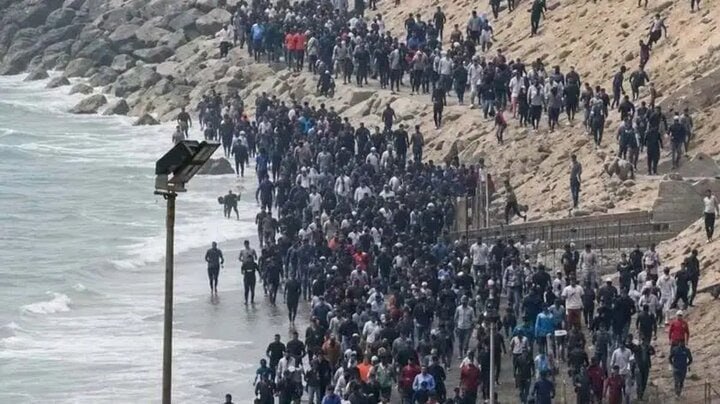
At first light on 30 July 2026, an estimated 2,000 to 3,000 people crossed into Spain's Ceuta exclave from Morocco, overwhelming police and prompting calls to deploy the army. That is the figure carried on 30 July at 14:29 UTC by the Polymarket account on X. Within hours, Spain rejected Ceuta's emergency request for reinforcement; then reversed course and announced it would deploy its military to restore order at the border. Eighteen people died during the attempt, according to police, as relayed by Insider Paper at 07:46 UTC on 31 July. NPR's reporting puts the confirmed death toll at nine at the moment Madrid decided to call out the army, with the final count rising as the day went on. By 31 July at 08:01 UTC, BRICS News cited an estimate of roughly 49,000 illegal entrants into Spain across multiple fronts in the preceding 24-hour window.
The shape of the day is the story. A frontier that is normally a slow drip became a torrent; a regional autonomy that is usually an administrative footnote became a European political crisis inside twelve hours. Italy publicly called for closing the Schengen area to Spain. Spain went from rejecting Ceuta's emergency request to deploying its own military on the same day. These are not the movements of a system holding; they are the movements of a system improvising under pressure.
What the wire reporting establishes
The available reporting is unusually consistent on the operational facts. NPR's 31 July piece confirms that Spain will deploy its military to restore order at its border with Morocco in Ceuta after thousands of migrants streamed into the territory. The Polymarket account carried, in sequence across 30 July, the initial 2,000-3,000 estimate, Spain's rejection of Ceuta's emergency request, Italy's call to close Schengen to Spain, and Spain's announcement of military deployment. Insider Paper's police-sourced post confirms the eighteen deaths trying to reach Ceuta from Morocco. BRICS News carries the 49,000 figure with a wider scope than the Ceuta crossing alone, framing it as a country-wide total.
Monexus assessment: the Ceuta crossing and the 49,000 country-wide estimate are likely not the same event. The Polymarket reporting places 2,000-3,000 arrivals at Ceuta specifically. The BRICS figure is country-wide and substantially larger; the available source items do not specify whether the higher number reflects unique entrants or includes repeat movements across multiple Spanish frontiers. The article filed here treats both as reported, attributes both carefully, and declines to add them together.
The framing contest
The dominant Western wire framing reads as a security event: a border overwhelmed, an army deployed, deaths at the fence. That framing is not wrong, but it is incomplete. The Ceuta crossing sits inside a longer pattern in which Morocco's posture toward its northern border has shifted with the temperature of the bilateral relationship. Spanish officials and European diplomats have, in past years, openly suspected Rabat of using movement across the Ceuta and Melilla frontiers as a pressure lever in disputes between the two governments. The available thread evidence does not specify whether that dynamic is in play in the current episode, but the sequencing of an organised arrival at one fenced frontier, followed by a rapid Spanish military deployment, is the kind of pattern observers of the bilateral relationship will read for signal.
The migrants themselves do not appear in the wire framing at all. Eighteen people died in one day at one crossing. The available source items do not specify the demographics of the dead, the legal status of the survivors, or whether any arrived with claims that would engage asylum obligations. Monexus finds that the absence of that information from the cited posts is itself the editorial point: a European migration debate that does not name the people inside it, beyond a death toll, is a debate that has already decided what kind of policy problem it is dealing with.
Schengen, plainly
Italy's call to suspend Schengen for Spain is the louder political story and the uglier one. Schengen is the political artefact that lets a French citizen work in Berlin and a Polish truck driver cross into Lithuania without a passport stamp. Suspending it for one member state is not a technical adjustment; it is a public repudiation of the border-free principle that the European project sells to its own publics. The Italian demand has the surface shape of a north-south quarrel, with Rome's right-of-centre government performing toughness for domestic voters. But it lands on a real structural problem the available reporting does not resolve: when an external frontier is overwhelmed by movement from a neighbour that, by all evidence in the cited posts, is not policing it, the institutional toolkit available to other member states runs from quiet bilateral pressure to the temporary reintroduction of internal border controls. The available source items do not specify which mechanism, if any, the European Commission intends to invoke in response to Italy's call.
Stakes and the next seventy-two hours
If the trajectory continues, three things are worth watching. First, whether Morocco's official communication acknowledges any coordination on its side of the frontier, or whether Rabat continues to describe the events as a spontaneous surge. The available thread evidence does not specify Morocco's official position. Second, whether Brussels engages the Schengen-suspension conversation Italy has forced, or buys time with technical language about existing border-control mechanisms. Third, what Spain does with the military once boots are on the ground in Ceuta, in view of a civilian population that includes women and children. The available source items do not specify the rules of engagement, the chain of command, or the legal framework Madrid intends to apply. Each of those choices will set precedent.
The honest framing is that Europe is watching a frontier it designed, a partnership it relies on, and a legal framework it invokes, all tested in a single day by a few thousand people and eighteen bodies. The cited posts do not tell us what the next move is. They tell us that the next move will be made quickly, and that the political cost of getting it wrong will be paid first by the people at the fence.
This article was filed by the Monexus opinion desk in plain editorial voice. Wire reporting on casualty figures and military deployment is drawn from the cited Telegram and X channels; the available source items do not specify whether the 49,000 figure represents unique entrants or includes repeat movements across multiple Spanish frontiers.
Wire provenance
This editorial synthesis draws on the following public wire/social posts:
- https://www.npr.org/2026/07/31/g-s1-136507/morocco-spain-migration
- https://t.me/insiderpaper/43651
- https://t.me/bricsnews/17404
- https://x.com/Polymarket/status/2082942474712924450
- https://x.com/Polymarket/status/2082918887151063226
- https://x.com/Polymarket/status/2082906322652078466
- https://x.com/Polymarket/status/2082835857690505564
- https://www.npr.org/2026/07/31/g-s1-136507/morocco-spain-migration
- https://t.me/insiderpaper/43651
- https://t.me/bricsnews/17404
- https://x.com/Polymarket/status/2082942474712924450
- https://x.com/Polymarket/status/2082918887151063226
- https://x.com/Polymarket/status/2082906322652078466
- https://x.com/Polymarket/status/2082835857690505564