Tehran closes the week with a London line and a New Delhi line, in that order
Two state-media readouts, filed in roughly an hour on 31 July 2026, put Iran's foreign minister on the phone with Ed Miliband first and S. Jaishankar second. Both conversations were characterised, in identical Iranian wire phrasing, as covering bilateral relations and regional developments.
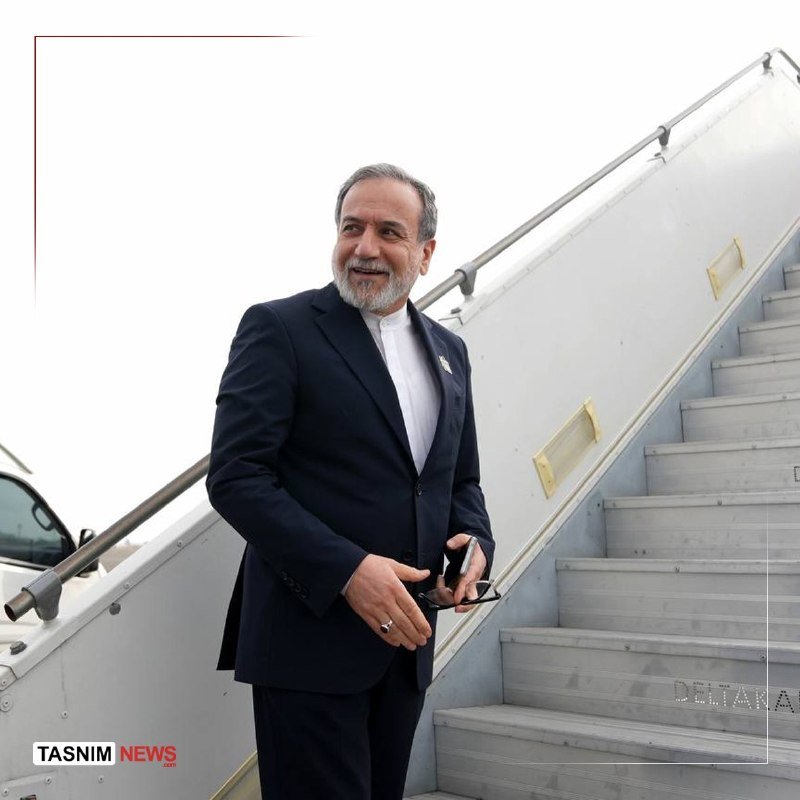
Iranian state media filed two foreign-minister phone-call readouts on the afternoon of Friday 31 July 2026, in a sequence that put London first and New Delhi second. At 14:15 UTC, Mehr News and the Farsi-language Tasnim mirror Jahan Tasnim carried an identical three-line item: Foreign Minister Seyyed Abbas Araghchi had spoken by telephone with British Foreign Secretary Ed Miliband, and the conversation covered bilateral relations and regional developments. The English-language Tasnim feed posted the same exchange at 14:16 UTC. No British readout had surfaced in the cited cluster by the time of publication.
The South Asian line followed. At 14:53 UTC, Jahan Tasnim posted a parallel item recording a phone call between Araghchi and India's external affairs minister, identified in the post as Subramaniam, the truncated form of S. Jaishankar common to Iranian wire copy. The English Tasnim feed posted the same exchange at 14:55 UTC, and Al-Alam News carried it at 15:10 UTC. No Indian Ministry of External Affairs readout had appeared in the cited cluster by the time of publication.
The only public record of either call, as the cluster stood at publication, came from the six Telegram posts cited above. The substance in both cases was identical phrasing in two languages: bilateral relations and regional developments. Nothing more specific was disclosed in any of the six posts.
A cluster that is what it is
The cluster is narrow. Two of the six items are from Mehr News, one is from Al-Alam News, and three are from Tasnim, two from the English-language account and one from the Farsi-language Jahan Tasnim mirror. All six are Iranian state-adjacent. None is a first-party release from the British Foreign, Commonwealth and Development Office, and none is a first-party release from India's Ministry of External Affairs. Read in isolation, the cluster tells a reader that two calls happened, identifies both counterparties by name and title, and characterises both agendas in general terms. It does not tell a reader what was said.
The timing matters for what it does not show. The London readout appeared first, the New Delhi readout second, and the sequence mirrors how Iranian wire copy typically handles Friday diplomatic traffic, with Farsi accounts publishing in the afternoon Tehran time and English mirrors following minutes later. The pattern is consistent with a Tehran newsroom that files once and recycles across accounts. Whether that newsroom reflects a substantive foreign ministry push, or simply a routine end-of-week coordination call, cannot be determined from the cited posts.
Read without the parts the cluster does not provide
There are larger frames that fit these two calls comfortably. A London line fits a post-Brexit United Kingdom that retains UN Security Council influence and EU-mechanism adjacency without being bound inside the EU sanctions envelope. A New Delhi line fits a counterpart that maintains a working relationship with Tehran across energy, regional and Indian Ocean files. Both lines are plausible routes for a Tehran widening its call sheet at the close of a July that has seen a number of regional diplomatic readouts.
What the cluster does not do is substantiate any of that. The cited posts do not specify whether either call discussed sanctions architecture, the Strait of Hormuz, Chabahar, the JCPOA snapback debate, prisoner exchanges, Indian energy planning, or any other specific file. They do not specify the duration of either call, or whether the calls were initiated from Tehran or from the other capital. They do not specify whether further calls followed before the time of publication. The framing above is one this publication reads as plausible; the cited posts do not themselves confirm it.
What the cluster leaves open
Three things remain unresolved at the close of the cluster. First, no first-party readout from either London or New Delhi had appeared in the cited posts by 15:10 UTC on 31 July 2026. Second, the cluster contains no indication of a Washington line on the same day, and does not specify whether one was planned or had been recently logged. Third, the generic phrasing, bilateral relations and regional developments, is identical across both calls, which makes the cluster resistant to a substantive read either way: that phrasing could carry a wide agenda beneath it, or it could mean nothing more than a routine courtesy exchange.
The cautious reading, on the cluster alone, is narrower than the cluster invites. Two calls happened. Both are now on the public record by virtue of Iranian state media. What was said in either remains to be confirmed by readouts from the other end of either line, which have not yet appeared in the cited material.
This article was built from a six-item Telegram cluster filed on 31 July 2026 by Iranian state-aligned outlets: Mehr News, Tasnim News (English), Jahan Tasnim (Tasnim's Farsi-language mirror), and Al-Alam News. No first-party readout from the United Kingdom's Foreign, Commonwealth and Development Office, and no first-party readout from India's Ministry of External Affairs, had appeared in the cited material by publication time.
Wire provenance
This editorial synthesis draws on the following public wire/social posts:
- https://t.me/mehrnews/401141
- https://t.me/JahanTasnim/227757
- https://t.me/tasnimnews_en/29012
- https://t.me/JahanTasnim/227762
- https://t.me/tasnimnews_en/29016
- https://t.me/alalamfa/348313