Wildberries strike shows Ukraine pressing the drone war deep inside Russia
Two Russian regional governors confirmed a Ukrainian drone strike on a Wildberries warehouse on 2 August, hours after Kyiv endured a missile barrage that killed nine.
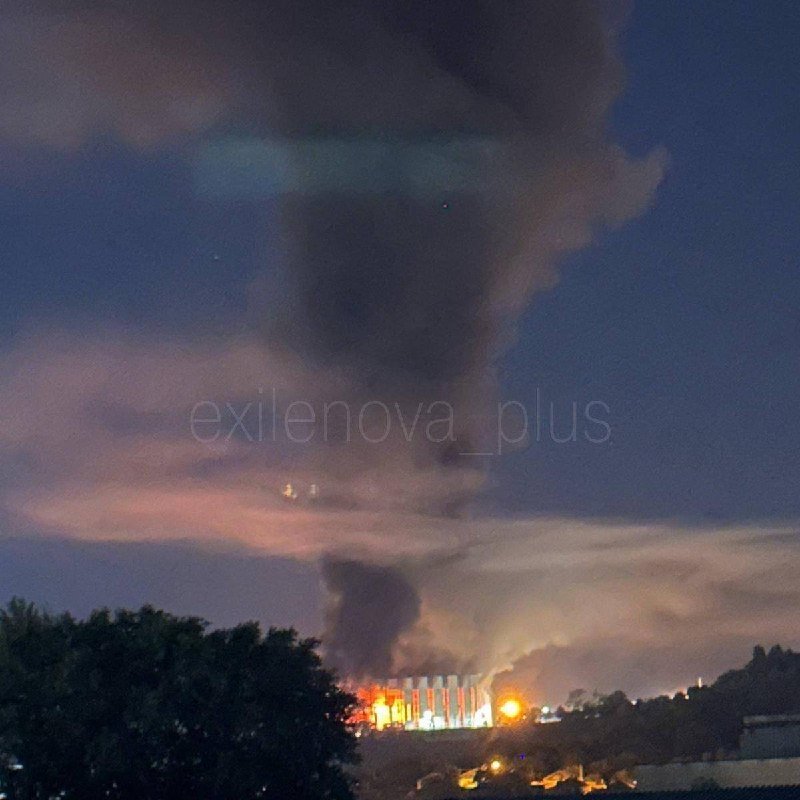
A Ukrainian drone strike hit a Wildberries warehouse complex in Russia overnight, killing two people and giving Kyiv another symbolic scalp in a war Moscow insists is going its way. Russian regional governors confirmed the strike within hours, a rare instance of official acknowledgement that the air war now reaches deep into the Russian heartland with a regularity the Kremlin once declared unimaginable.
What the event really maps is the steady ratcheting of Ukraine's long-range drone programme: cheap airframes, domestic production lines, and a target list that now includes logistics nodes owned by Russia's largest online retailer. The strike lands a day after one of the heaviest Russian missile barrages of the summer hit Kyiv, killing nine and wounding dozens. The exchange lays bare the strategic paradox of the war in its fourth year: both sides are escalating faster than the other can absorb.
A warehouse, a marketplace, a target
Reuters reported on 2 August 2026 that Ukrainian drones killed two people in Russia and struck a Wildberries warehouse, citing Russian regional governors. The alert, relayed by the @Reuters account on X at 09:40 UTC, did not give a city or region in the headline itself; the available reporting does not specify which governor confirmed the strike or where the facility sits. Wildberries is Russia's dominant online retailer, and a hit on one of its fulfilment nodes is not merely a commercial loss. It is a press-the-nerve strike on the civilian-facing infrastructure Russians interact with daily.
The Telegram channel WarTranslated, which translates Russian Ministry of Defence statements into English, noted within hours that Russia's MoD claimed its air defence had shot down 1,158 Ukrainian drones in the preceding 24 hours, a figure that, if accurate, would represent an unprecedented pace of intercepts. The OsintLive channel, which aggregates similar material, raised the same question in pointed form: shot down with what, Wildberries warehouses and oil refineries? The framing is the point. Russian air-defence claims have grown so large that independent observers are increasingly reading them less as battlefield statistics and more as signals about which Russian cities the defence network can no longer cover.
The previous night's counter-blow
The Wildberries strike lands in the immediate aftermath of a punishing Russian barrage. LiveMint reported on 1 August 2026 that Russia launched ballistic missiles and attack drones at Kyiv overnight, killing nine people and injuring at least 30, with Ukrainian officials publicly urging the supply of more air-defence interceptors. LiveMint's dispatch described the attack as one of the heaviest of the summer campaign and noted that Kyiv's energy and transport infrastructure bore the brunt.
The asymmetry of reporting is itself revealing. Western and Ukrainian wire copy carries granular casualty figures and named districts. Russian state media, by contrast, tends to frame the same barrages as precise strikes on military-industrial targets. The 2 August 1,158-drone figure from the Russian MoD, run through both Russian-language and translation channels on Telegram, is best read as the official counter-narrative to a sequence of embarrassing strikes on Russian commercial infrastructure. It is a statistic that asks to be believed, not one that can be independently verified inside Ukraine's airspace.
The strategic logic of cheap mass
Monexus assessment: what the past 48 hours show is not a new capability but a maturing doctrine. Ukraine's long-range drone programme, built on the back of Western-supplied components and an indigenous aerospace sector that scaled rapidly after February 2022, is now firing at a tempo that outruns Russian interception. The targets matter as much as the tonnage. A Wildberries warehouse, a refinery in the Volga region, an oil depot near the Black Sea: each one forces Moscow to choose between defending an economy already operating below pre-war capacity or accepting attrition that compounds over months.
This is the structural shift the Western wire line has been slow to name. The conventional frame treats Ukrainian strikes inside Russia as retaliation, a permission slip granted by Western capitals after a particular battlefield episode. The frame the available evidence fits better is industrial. Ukraine has built a mass-production strike complex the size of a mid-sized European car plant, and it is now operating at a rhythm that resembles a supply chain rather than a campaign. Russia, which still conducts barrages measured in cruise missiles and S-300/400 interceptors, is paying per round; Ukraine is paying per airframe. The exchange rate favours the cheaper side unless one side runs out of raw inputs.
What we verified / what we could not
The 1,158-drone claim deserves its own paragraph. Russian air-defence statistics have a long history of inflation, particularly when the political pressure on the General Staff is high. The figure is large enough to be unfalsifiable inside Ukraine's airspace and small enough not to look absurd to a domestic Russian audience. It is also useful as a counterweight to a domestic conversation the Kremlin would rather not have: that Russian cities, including those more than a thousand kilometres from the front, are now reachable by Ukrainian airframes on a near-nightly basis. Independent open-source trackers have not verified the 1,158 figure in the cited posts, and the available source items do not specify which systems were used or how many drones Russia itself attributes to decoy or electronic-warfare failures rather than physical intercepts.
The Wildberries strike itself raises a similar caveat. The available reporting confirms the strike, the casualties, and the target class. It does not specify which drone variant was used, the launch point, or whether the warehouse was a primary target or selected from a broader target list. Reuters' alert, the most authoritative single item in the cluster, names two killed and a warehouse struck but the cited posts do not specify a city. The available source items do not specify whether other Russian regions reported damage in the same window. The picture is therefore a sketch, not a portrait, and a fair reading treats the strike as confirmed while leaving the operational details open.
What we verified: two deaths on Russian territory attributed by regional governors to a Ukrainian drone strike on a Wildberries warehouse, reported by Reuters at 09:40 UTC on 2 August 2026; the Russian MoD claim of 1,158 Ukrainian drones intercepted in 24 hours, circulated in English by WarTranslated and OsintLive; the 1 August Kyiv barrage of ballistic missiles and attack drones killing nine and wounding at least 30, per LiveMint; and the Ukrainian government appeal for additional air-defence interceptors.
What we could not verify from the cited sources: the city or region of the Wildberries strike; the name of the governor or governors who confirmed it; the drone variant used or its launch point; the origin of the 1,158 figure inside the Russian MoD; the full target list and whether other Russian regions reported damage in the same window; and the specific air-defence systems Russia claims carried out the intercepts.
Stakes over the next quarter
The next 90 days will test whether the Ukrainian drone complex can sustain this tempo against Russian adaptation. Three indicators deserve watching. First, the rate at which Russian governors continue to confirm strikes on commercial targets. Each confirmation is a small political cost the Kremlin is willing to absorb in public; a sudden drop in confirmations would suggest either successful suppression of reporting or successful interception. Second, the proportion of Russia's claimed intercepts that independent open-source analysts can corroborate. A widening gap would erode the credibility of the MoD's daily tally. Third, the trajectory of Western air-defence deliveries to Kyiv. The LiveMint dispatch noted Ukrainian appeals for more interceptors in the immediate aftermath of the Kyiv barrage; whether those appeals are answered in volume will shape how sustainable the Ukrainian drone tempo really is, given that every cruise missile Russia saves through Ukrainian interception is a missile it can spend elsewhere.
If the pattern holds, the war enters the autumn with Russia defending more territory with less certainty and Ukraine punching deeper into the Russian economy with cheaper hardware. If it breaks, the break will show up first in the statistics the Russian MoD no longer publishes, not in the ones it amplifies.
How Monexus framed this vs the wire: wire copy led on the Wildberries strike and the Kyiv barrage as two separate items on 1 and 2 August. Monexus joined them into a single 48-hour exchange to make the point that the war's tempo is now measured in mutual overnight strikes, and that the Russian MoD's 1,158-drone claim reads less as a battlefield statistic than as a domestic-political counter-weight to confirmed strikes on Russian commercial infrastructure.
Wire provenance
This editorial synthesis draws on the following public wire/social posts:
- https://x.com/Reuters/status/2083850337085948016
- http://reut.rs/4bsndFL
- https://t.me/wartranslated/17805
- https://t.me/osintlive/561252
- https://t.me/LiveMint/22038
- https://www.livemint.com/news/world/russia-hits-kyiv-with-horrific-missile-barrage-killing-nine-11785570569026.html
Follow the event.
These dated source records provide context. They do not retrospectively verify this archive article.
A dated voting record is evidence of one decision. Use the original UN record before turning it into an alignment label.
Visual explainer · historical vote of 2022-03-02 →