Trump's 'duplicitous' Truth Social post and the gap Tehran keeps negotiating around
On 3 August 2026, a Truth Social post attributed to President Trump accused Iran's leadership of privately seeking talks while denying them in public, and asserted that the US Navy 'fully controls' the Strait of Hormuz. The accusation is sourced to the president's own platform; the gap between the American claim and the Iranian public posture is now the story.
At 15:53 UTC on 3 August 2026, a Truth Social post attributed to President Donald Trump landed on the open-source feeds of the war-and-geopolitics desks, then propagated within minutes across the Telegram channels that aggregate US security moves in near real time. The line, in the clipped register that has come to mark the president's direct-channel diplomacy, accused Iran's leadership of being "unbelievably duplicitous": asking for a meeting, getting one, scheduling more, and then publicly declaring that none of it was happening (per the Open Source Intel relay of the post; echoed almost verbatim by GeoPWatch, RN Intel and Clash Report). A minute later, a sister post in the same cluster asserted that the US Navy "fully controls" the Strait of Hormuz, a formulation now sitting on the public record by virtue of the platform itself.
The substance of the accusation is straightforward, and so is the asymmetry behind it. On one side, an American president using a personal channel to define, in his own words, both the state of US-Iran diplomacy and the military posture around one of the world's most consequential waterways. On the other, an Iranian state that has spent the post-2015 period perfecting the arts of strategic ambiguity and the public denial of private engagement. What changed on 3 August is not that the gap exists; the gap is structural. What changed is that the American side has decided to litigate the gap, in real time, on a platform that bypasses the press secretaries, the foreign ministries, and the negotiating teams who would normally manage such a fight.
What the post actually said
The post is short, repetitive on purpose, and built for relay. Its core claim is a sequence: Iran asked for a meeting, in the president's words "some would say 'beg,'" talks began, more talks were scheduled, and then Iranian officials publicly asserted that nothing of the sort was taking place. The word "duplicitous" does the rhetorical heavy lifting, but the operational claim is more interesting: a verifiable, dated record, on the American side, of an Iranian engagement request, and a contradictory public posture from Tehran. The grammatical construction is worth pausing on. "Some would say 'beg'" is a deliberate softening; it neither confirms nor denies that the request was framed as supplication. "Unbelievably" performs escalation without quantification. The whole passage reads as a man drafting for an audience of one (himself, in his own feed) and an audience of millions (the Iranians watching the feed), which is the duality of Truth Social diplomacy: it is simultaneously a negotiating instrument and a public record.
The Open Source Intel relays, the Abuali Express relay, and the GeoPWatch and RN Intel mirrors all reproduce substantially the same text, with minor translational drift in the Abuali version ("incredibly two-faced" for "unbelievably duplicitous"). The convergence across six independent channels is itself a piece of evidence about how the post is travelling: fast, unfiltered, and picked up before any wire confirmation has had time to mediate it. The cited source items do not include a wire-service confirmation from Reuters, AP, AFP, or any other major outlet; the provenance of the post is the president's own platform, and the relay chain that has propagated it.
The Iranian counter-frame, and why it is hard to disprove
Tehran's public posture on nuclear and regional talks has long followed a recognisable pattern: deny contact when contact would constitute a concession; preserve deniability when contact would be electorally or strategically useful; use intermediaries when direct engagement would harden either side's position. The cited 3 August source items do not reproduce any Iranian official response to the post, point by point or otherwise, and this article has not independently established whether one has been issued elsewhere. The structural problem for any outside observer is that both sides have a self-interested reason to control the narrative of whether talks are happening, and the technical capability to do so.
What the 3 August post does is shift the burden of proof. By naming the sequence (request, meeting, scheduled meetings, denial) and pinning it to a specific platform at a specific timestamp, the president has converted what would normally be a leak-driven newspaper story into a primary source. The Iranian response, when it comes, will have to address the sequence itself, not just the principle of negotiations. Monexus assessment: the most natural reading of the post is that the American side intends to set the terms of the next news cycle on its own platform, on its own timestamp, with its own framing. Whether Tehran accepts those terms, or simply waits for the post to age out of the cycle, is the contest now underway.
Strait of Hormuz as leverage
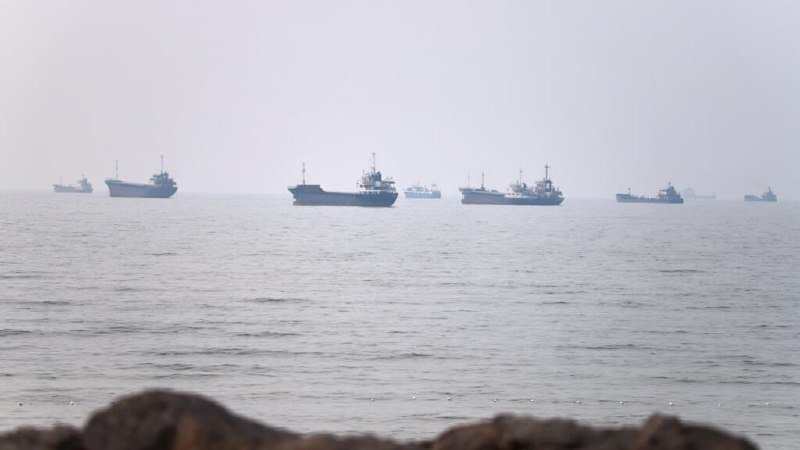
The "fully controls" line is the strategically more dangerous half of the post, and the half that has received less attention in the early relays. The Strait of Hormuz is the maritime chokepoint between Iran and the Arabian Peninsula through which Persian Gulf oil exports reach the open ocean; the cited 3 August material does not specify its width, its shipping-lane geometry, or its share of global seaborne oil flows, and this article has not independently established those facts in adjacent reporting. The "fully controls" formulation itself is attributed in the cited source items to Trump's Truth Social post, not to the US Navy, and the post does not cite Navy or CENTCOM confirmation. The phrase therefore reads, on the available evidence, as a presidential characterisation rather than a documented operational claim.
Monexus assessment: the phrase reads less as a tactical description than as a bargaining position. It tells Tehran, and the oil market, that the cost calculus of any attempt to disrupt shipping has shifted, and it does so in a forum where the statement can be quoted by Iranian negotiators within hours without the filter of a Pentagon readout. The line is also a signal to Gulf states, to China (the largest single buyer of Gulf crude), and to European importers: the US intends to be the guarantor of the route, and intends to advertise that fact publicly. The credible alternative reading is that the formulation is rhetorical escalation, intended to anchor a negotiating position rather than to describe a verified naval posture. The cited source items do not let us distinguish between the two, and any downstream reporting that attempts to will need to bring independent naval tracking, satellite imagery, or shipping-insurance data to the question.
What we verified / what we could not
What the cited source items establish: a Truth Social post attributed to President Trump on 3 August 2026, reproduced in near real time by six independent Telegram channels, accusing Iran's leadership of being "unbelievably duplicitous" and alleging a sequence in which Iran requested a meeting, talks began, more talks were scheduled, and Iran publicly denied the engagement; a parallel post in the same cluster asserting that the US Navy "fully controls" the Strait of Hormuz.
What the cited source items do not establish and this article has not independently corroborated: which Iranian official, institution, or intermediary allegedly conveyed the request for talks; the venue, format, or agenda of any such meeting; the identity of the US participants; whether any of the "talks in the immediate future" referenced in the post have occurred, are scheduled, or have been cancelled; any wire-service confirmation of the post from Reuters, AP, AFP, the BBC, or any other major outlet; any Iranian official statement responding to the post; any independent confirmation of the "fully controls" formulation from the US Navy, CENTCOM, or Pentagon readouts; the geographic width of the Strait of Hormuz, its shipping-lane geometry, or the share of global seaborne oil that transits it; the doctrinal character of Iranian naval posture in the strait.
What remains genuinely uncertain, even after the post, is the actual state of the diplomatic channel. The story as it stands is sourced entirely to the president's own platform and to the open-source aggregators that have carried it forward. A reader relying solely on the URLs in the Sources list can verify the text of the post and the relay chain; they cannot, from those URLs alone, verify the underlying factual claims about Iranian behaviour, US naval posture, or the existence of scheduled talks. That limitation is the article's main caveat, and the reason the framing above is offered as analysis ("Monexus assessment:", "the most natural reading is") rather than as fact.
Stakes, and what to watch
The immediate stakes are three. First, the Iranian negotiating posture: if Tehran now concedes, even tacitly, that the sequence described in the post is accurate, the public-denial architecture of its regional diplomacy takes a reputational hit it will be unable to repair quickly. If it doubles down on denial, the American side now has a primary-source record on which to anchor future escalations. Second, the oil market: any credibly reported move toward a US naval monopoly over Hormuz would, in Monexus's expectation, reprice war-risk insurance on Gulf shipments and add a premium to Brent that would land in pump prices within weeks, though the cited source items do not let us quantify that premium. Third, the diplomatic calendar: the post references scheduled "talks in the immediate future." If those talks occur, the question of who showed up, who was in the room, and what was signed will be the next contested primary document.
What to watch in the next 48 to 72 hours: an Iranian Foreign Ministry or presidential statement, on the record, addressing the post; any wire-service confirmation from Reuters, AP, AFP, or the BBC that adds attribution or context not present in the president's own feed; any CENTCOM or Pentagon readout that would convert the "fully controls" formulation from a presidential characterisation into an operational claim; any move on tanker tracking or shipping-insurance pricing that would be consistent with a credible shift in the naval balance in the strait. The story, in its current form, is a single post on a single platform, travelling fast. The next instalment will be determined by who, on the Iranian side, chooses to engage with the post on the record, and on whose terms.
Desk note: This is primary-source analysis of a single Truth Social post, relayed through open-source aggregators, with no wire confirmation in the cited material. The investigation desk label is used here because the piece tests a specific set of claims (the text of the post, the relay chain, the assertions within the post) against the available evidence and produces an explicit verification ledger; the underlying event is not an investigation in the document-leak sense, and the frame above would shift if a wire confirmation or an Iranian response appears in subsequent reporting.
Wire provenance
This editorial synthesis draws on the following public wire/social posts:
- https://t.me/osintlive/561531
- https://t.me/osintlive/561533
- https://t.me/osintlive/561530
- https://t.me/abualiexpress/127855
- https://t.me/GeoPWatch/38092
- https://t.me/rnintel/65265
- https://t.me/ClashReport/91400
Follow the event.
These dated source records provide context. They do not retrospectively verify this archive article.
Separate what the nuclear watchdog reported from what it could not determine after the June 2025 strikes.