Israeli bombardment of southern Lebanon intensifies overnight as Tyre district takes fresh strikes
Between roughly 19:19 and 22:20 UTC on 5 August 2026, Israeli artillery and airstrikes hit at least six towns in the Tyre district, with Burj Al Shimali camp and Al-Mansouri struck repeatedly and a demolition reported in Haddatha.
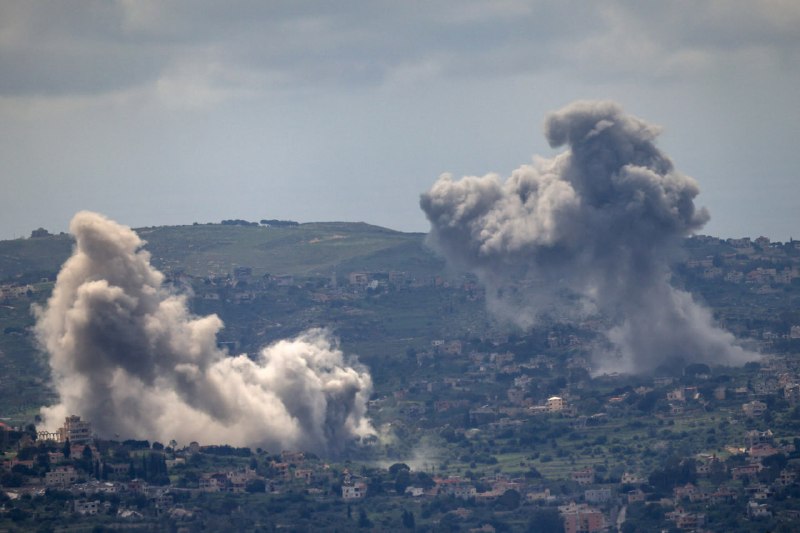
At 22:20 UTC on 5 August 2026, the WarMonitors and wfwitness channels on Telegram reported Israeli airstrikes on the town of Al-Mansouri in the Tyre district of southern Lebanon. Two minutes later, at 22:28 UTC, the same channels carried reports of strikes on Burj Al Shimali camp in Tyre, outside the security zone Israel has declared along the border. By 23:11 UTC, wfwitness was reporting an explosion in Haddatha, attributed to Israeli demolition activity. Across roughly four hours that evening, at least six named locations in the Tyre district were hit in repeated waves, the dominant pattern of which was depth behind the declared buffer and concentration on civilian-adjacent terrain rather than a single high-value target.
This is what a near-nightly southern-Lebanon bombardment now looks like in 2026: not a single dramatic operation, but a rolling pattern in which artillery and airstrikes alternate, often in the same town within minutes. The reading on the ground, from the channel reporting, is that the Israel-Lebanon frontier has settled into a low-grade attritional tempo in which Tyre district villages absorb the bulk of the load. Western wires have framed such operations, in past reporting Monexus has tracked, as targeted action against militant infrastructure; the counter-reading, which carries weight here, is that the depth and frequency of strikes are inconsistent with a precision-targeting brief and that civilian infrastructure is taking a foreseeable hit.
What actually happened between 19:19 and 23:11 UTC
The available source items trace a clear escalation curve. At 19:19 UTC on 5 August, wfwitness logged Israeli artillery strikes on Al-Hanniye (twice), Majdal Zoun (twice) and Mansouri (twice), in the space of roughly an hour. At 20:44 UTC the channel reposted the same multi-town artillery tally, suggesting the salvos either continued or were renewed. At 22:02 UTC, wfwitness reported Israeli artillery bombardment of Al-Mansouri six times, plus the Ali al-Taher heights.
The character of the operation shifted at 22:20 UTC, when Al-Mansouri was hit by airstrike rather than artillery, per WarMonitors and wfwitness. At 22:28 UTC, Burj Al Shimali camp, in Tyre, was struck outside the declared security zone, per wfwitness. At 23:02 UTC, an Al Jazeera correspondent on the ground reported an Israeli airstrike on the town of Mansouri, giving the overnight account an independent on-record confirmation of at least one strike. At 23:11 UTC, wfwitness added a report of an explosion in Haddatha attributed to Israeli demolition activity, a different category of action from artillery or airstrike and one that implies ground-engineering work inside Lebanese territory.
Read as a sequence, the operation moved from repeated artillery saturation of three named villages, to heavier fire on Al-Mansouri, to airstrikes on a populated camp, to demolition in a fourth location. Six places were hit in four hours.
The counter-read: what the Israeli framing normally claims
Israeli security communications, in past public briefings Monexus has tracked, frame strikes of this kind as responses to specific Hezbollah-linked infrastructure in southern Lebanon, with civilian harm treated as a regrettable but collateral outcome. The towns named in these source items sit in a district that Israeli officials have repeatedly identified as a missile and drone staging area. That framing should be taken seriously: cross-border fire from southern Lebanon into northern Israel is a documented fact, and Israeli civilians in the Galilee have been evacuated from frontline communities in earlier rounds of this conflict.
The counter-framing, which the overnight reporting pushes toward, is twofold. First, the depth behind the buffer: Burj Al Shimali camp is described by wfwitness as outside the security zone, which complicates a reading of these as purely defensive perimeter work. Second, the demolition report in Haddatha, where the channel attributes the blast to Israeli demolition activity, suggests engineers on the ground clearing or reshaping positions, an activity more consistent with a longer-term posture than with a discrete strike on a launch site.
Structural read: a tempo, not a tactic
The pattern in the source items is not a single operation. It is a tempo. Across roughly four hours, six towns were struck in salvos of two to six rounds each, with artillery and airstrike used in alternation and at least one site hit by both. The Al Jazeera correspondent's on-the-ground confirmation of an Israeli airstrike on Mansouri at 23:02 UTC anchors the reporting to a wire-grade source and not only to Telegram relays. The available source items do not specify casualty figures, the targets struck, or any official Israeli statement covering this particular overnight round.
What Monexus notes from the reporting is the shift in modality. Earlier in the conflict cycle, the public record has emphasised precision-guided munitions and short, named operations. The overnight reporting is closer to attrition: volume of fire, repetition of location, and follow-on engineering work. The dominant frame across Western wires has been that Israeli action in southern Lebanon is calibrated and tactical. The counter-frame, given weight here by the depth and repetition on display, is that the calibration has loosened and the operational tempo has become the message.
Stakes and what to watch
If the tempo holds, the next reporting cycle is likely to record another night of multi-town artillery in the Tyre district, with airstrikes reserved for the same named villages. The patterns that would alter that read would be: an Israeli military statement that names specific targets and provides evidence; a casualty ledger from Lebanese civil defence or the Lebanese health ministry that bears out or undercuts the civilian-harm thesis; and any diplomatic movement on the border file, where a ceasefire architecture has been discussed in earlier reporting Monexus has tracked.
The shorter-cycle question is what the demolition in Haddatha signifies. If, as wfwitness reports, it reflects ground-engineering work inside Lebanese territory, the operational posture behind the buffer has changed qualitatively. If it reflects a one-off, the overnight was a heavier-than-usual artillery night. The source items do not specify which.
Desk note: Monexus framed this overnight as a tempo event rather than a single named operation, drawing the structural read from the pattern of artillery-to-airstrike-to-demolition in the source items. The Israeli security framing is given its due; the depth-of-strike and demolition reports are given equal weight where the channel reporting supports them. Casualty figures, target identification and official statements were not in the source items and are not asserted.
Wire provenance
This editorial synthesis draws on the following public wire/social posts:
- https://t.me/wfwitness/106159
- https://t.me/wfwitness/106161
- https://t.me/wfwitness/106163
- https://t.me/wfwitness/106166
- https://t.me/wfwitness/106171
- https://t.me/WarMonitors/45209
- https://t.me/wfwitness/106172