Hormuz on a knife edge: US ultimatum, Iranian draft plan and an Oman channel collide on 7 August 2026
A US warning that Iran will be "hit very hard" if it walks away again, a Tehran draft plan that would restrict Hormuz traffic, and a separate Oman-mediated reopening track landed in the same news cycle on 7 August 2026, sending oil higher.
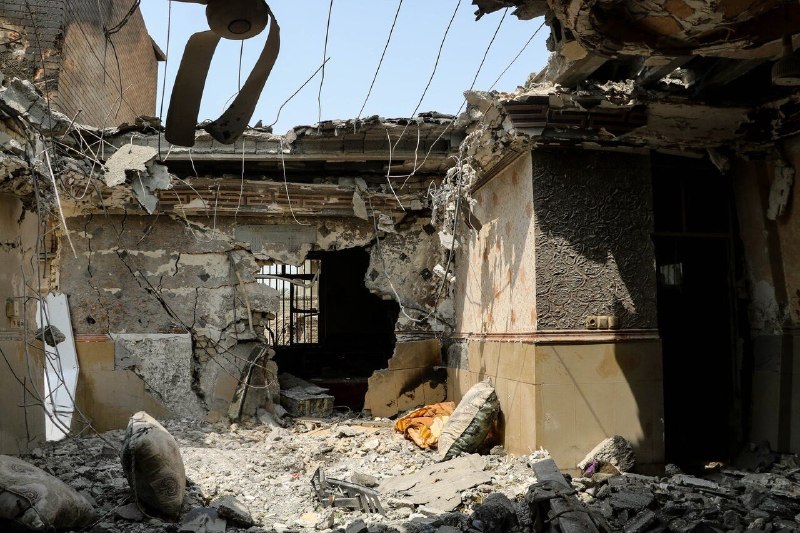
A US warning that Iran will be "hit very hard" if it backs out of a deal again, paired with a separate warning that Tehran will be "targeted" if the Strait of Hormuz is not reopened soon, surfaced on 7 August 2026 against a backdrop of oil prices rising on supply-disruption fears. The escalation rhymes publicly, even if the underlying moves on the record are narrower than the rhetoric suggests.
What is actually on the table, on the public record available to this article, is a draft plan from Iran for traffic through the strait, a parallel track described as an agreement with Oman to reopen it, and a negotiating posture in Tehran that the Americans are calling theatre. Each piece sits inside a wider contest: who controls the choke point, who calibrates the threat of force, and who absorbs the price of the next misstep. Oil traders are already pricing the answer.
The warning, the draft, and the price tape
The sharpest line came early, on 7 August 2026 at 03:36 UTC, when a social-media post attributed to the unusual_whales account relayed a US warning that if Iran "backs out again, they will be hit very hard," and added that if the Strait of Hormuz is not reopened soon, Iran will be targeted. The same post pointed readers to a longer write-up on the unusualwhales news desk. That is the headline frame the day has been read through.
Behind it, two CNBC stories laid out the mechanics. At 01:00 UTC on 7 August, CNBC reported that oil had risen after news of an Iranian "restrictive draft plan" for the Strait of Hormuz, with traders reading the document as a threat to the free flow of crude rather than a confidence-building measure. An hour later, at 01:46 UTC, the same outlet reported that Iran's chief negotiator had accused Donald Trump of "theater diplomacy," and that Hormuz traffic was near a standstill, with the conflict broadening across Gulf energy infrastructure and key shipping chokepoints. NPR's morning brief at 08:41 UTC added a third data point: Iran had shared details of an agreement with Oman to reopen the strait. The headline warnings and the headline draft plan were moving in the same hour.
The contradiction is the story. Tehran is signalling a draft plan restrictive enough to rattle oil markets and a separate Oman-mediated deal credible enough to land on NPR's morning brief. Washington is signalling an ultimatum and, in the same breath, that talks are going well. Both signals are being sent on purpose. The question is which one the market believes when the tape opens.
What Tehran is offering, and what it is not
The CNBC report on the draft plan is the cleanest read of the Iranian position on the public record: a regulatory framework for Hormuz that Gulf shippers and Western insurers will read as restrictive, with implications for tanker routing, insurance premiums, and the freedom-of-navigation principles that have underwritten Gulf oil exports. The chief negotiator's "theater diplomacy" line is the diplomatic equivalent of that document: a public assertion that Iran does not intend to be the party that blinks, and a signal to intermediaries that there is still a deal to be had.
The Oman channel is the load-bearing piece. NPR's morning brief framed it as Iran sharing "details of an agreement with Oman to reopen" the strait. The unusualwhales post framed the parallel warning as conditional on Hormuz being "reopened soon," which suggests the US side is treating the Oman channel as the metric by which it judges Iranian good faith. Monexus assessment: the available source items do not specify which Iranian or Omani officials negotiated the channel, the text of the draft plan, or the precise terms of the Oman agreement; what they show is the structure of a two-track Iranian posture, restrictive on one rail and accommodating on another.
The risk is sequencing. If the draft plan is published before the Oman channel produces a publicly verifiable counter-document, oil markets price the restriction without pricing the relief. The CNBC story tied the move explicitly to "supply disruption fears" following the draft plan's publication, and the same outlet's second report put Hormuz traffic "near a standstill," which is the market's reading of the draft, not the deal.
Why oil is reacting the way it is
The price move reported by CNBC is, on the evidence available, a supply-disruption premium attached to a draft plan that could be read as restricting Hormuz traffic. The unusualwhales warning sharpens the second-derivative move: if the US follows through on the threat to "target" Iran if Hormuz stays restricted, the disruption premium is no longer a paper premium; it is a physical-risk premium layered on top. Insurers adjust war-risk terms, tanker operators reroute or wait, refiners hedge differently. The price response in that scenario is larger than the price response to the draft plan alone, which is why the markets are watching the diplomatic channel and the military channel in parallel.
Monexus analysis: the price action is consistent with a market that has not yet decided whether the day's headlines are a negotiating posture or a precursor to kinetic action. That uncertainty is the product. Until either the Oman agreement lands in a publicly verifiable form with terms, timeline and named counterparts, or the draft plan is implemented in a way that physically restricts traffic, the tape will trade on every new wire and every new ultimatum.
The structural frame, in plain terms
The Hormuz standoff sits inside a wider pattern this publication has tracked across Gulf energy infrastructure being used as leverage in negotiations that are nominally about something else. The current cycle is a compressed version of that pattern, with the additional variable that one of the principals is openly threatening military action on a near-daily basis while the other is publicly accusing the first of theatre. The leverage is asymmetric in two directions: Iran holds the strait and can plausibly threaten to disrupt it; the United States holds the over-the-horizon military capacity and can plausibly threaten to strike. Neither side can afford the cost of the threat being carried out in full. Iran cannot afford a sustained closure of its own export route, and the United States cannot afford the regional conflagration that an actual strike would ignite, particularly with Gulf energy infrastructure in the line of fire.
That mutual deterrence is what makes the negotiations possible. It is also what makes them fragile. The CNBC report's second piece, framing the conflict as "broadening across the region," with Gulf energy infrastructure and key shipping chokepoints under renewed threat, is the version of the story that reads escalation; the NPR morning brief, with Iran's Oman deal details circulating, is the version that reads de-escalation. The day's tape will move on whichever frame the next wire ratifies.
What remains uncertain, and what to watch next
Three near-term signals will determine whether the day ends as a negotiating chapter or as the opening of an escalation. First, whether the Oman-mediated agreement moves from "details shared" on NPR's morning brief to a publicly verifiable document with terms, a timeline, and named counterparts. Second, whether Iran's draft plan is implemented as published, modified in response to the Oman channel, or shelved pending a wider deal. Third, whether any further public warning from Washington is paired with a verifiable military movement, or remains at the rhetorical altitude the unusualwhales post captured at 03:36 UTC on 7 August 2026.
The available reporting does not specify the precise text of Iran's draft plan, the named Iranian officials who negotiated the Oman channel, the specific Hormuz traffic figures that would distinguish a "near standstill" from a routine slow day, or the precise scale of the oil-price move reported on the day. Monexus finds that those details are precisely the ones that will move the tape and the diplomacy once they surface, and that this article has not independently established them from the source items available.
Desk note: Monexus framed this as a leverage contest over a chokepoint on the public record available to the desk on 7 August 2026. The CNBC reporting and NPR's morning brief are treated as the load-bearing wires; the unusualwhales post is treated as a relay of the US warning, with sourcing caveat attached. The desk has not independently verified any of the historical or background claims that appear in other coverage of this dispute and has not introduced them here.
Wire provenance
This editorial synthesis draws on the following public wire/social posts:
- https://unusualwhales.com/news/trump-iran-talks-going-very-well-hormuz
- https://x.com/unusual_whales/status/2085570627226964418
- https://www.cnbc.com/2026/08/07/oil-rises-supply-fears-iran-draft-plan-strait-hormuz.html
- https://www.cnbc.com/2026/08/07/us-iran-war-trump-hormuz-diplomacy-oil-.html
- https://www.npr.org/2026/08/07/nx-s1-5921269/morning-news-brief
- https://unusualwhales.com/news/trump-iran-talks-going-very-well-hormuz
- https://x.com/unusual_whales/status/2085570627226964418
- https://www.cnbc.com/2026/08/07/oil-rises-supply-fears-iran-draft-plan-strait-hormuz.html
- https://www.cnbc.com/2026/08/07/us-iran-war-trump-hormuz-diplomacy-oil-.html
- https://www.npr.org/2026/08/07/nx-s1-5921269/morning-news-brief