Israeli artillery hits two villages in southern Lebanon as Israeli media report a soldier injured near the frontier
Artillery fire struck Mays al-Jabal and Wadi al-Salouqi in southern Lebanon on Saturday morning, and Israeli media separately reported a soldier moderately wounded in what they described as an operational accident near the frontier.
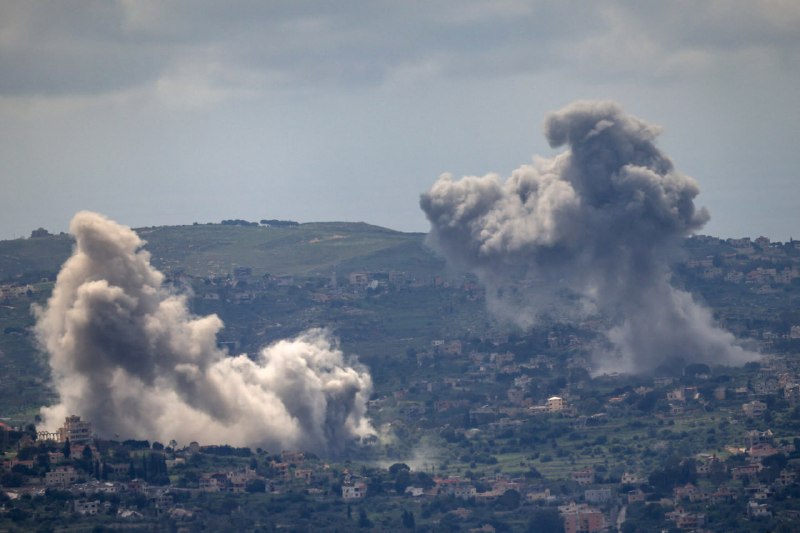
Artillery shells landed on the outskirts of Mays al-Jabal and the neighbouring Wadi al-Salouqi in southern Lebanon at 10:22 UTC on 8 August 2026, according to regional outlets covering the frontier, in a morning bulletin that also carried a separate report of an Israeli soldier wounded near the border.
The first bulletin of the morning came from The Cradle Media, which reported Israeli artillery shelling on both Mays al-Jabal and Wadi al-Salouqi at 10:22 UTC. Eighteen minutes later, at 10:40 UTC, Al-Alam Arabic posted a second bulletin describing artillery bombardment on the outskirts of Mays al-Jabal specifically, framed by the channel as an Israeli action against a Lebanese border town. By 11:00 UTC, the same channel had relayed an Israeli-media report that one army soldier had been moderately injured in what Israeli outlets described as an operational accident in southern Lebanon, the term regional monitors read as the standard Israeli framing for a kinetic incident rather than a training mishap.
Read together, the three bulletins describe two events on the same morning inside the same operational theatre: an artillery episode reported from the Lebanese side, and a soldier casualty reported from the Israeli side. The available source items do not specify whether the two are causally connected, and this publication has not independently established that they are. What the bulletins do establish is narrow and verifiable, and the rest is analysis.
What the bulletins say
The Cradle Media bulletin at 10:22 UTC names two villages, Mays al-Jabal and Wadi al-Salouqi, both inside southern Lebanon, as the targets of Israeli artillery. The Al-Alam Arabic bulletin at 10:40 UTC names one of those same villages, Mays al-Jabal, in a follow-up report that uses the phrase "Israeli enemy artillery bombardment on the outskirts of the town," language consistent with that channel's standing framing of cross-border fire. The third bulletin, at 11:00 UTC, reports an Israeli-media item rather than an Israeli military statement, and the channel's use of "enemy media" for Israeli outlets is consistent with Al-Alam's editorial line.
No casualty figures from the Lebanese side appear in the cited items. No mention of a Hezbollah response, rocket fire into northern Israel, an Israeli ground incursion, or a specific Hezbollah movement that might have prompted the bombardment appears in the cited items either. The artillery episode and the soldier-injury report are linked in the cited items only by timing, not by causation. The Al-Alam Arabic relay of the Israeli-media item does not name the specific Israeli outlet, the unit involved, or the sector in which the injury occurred, which leaves the geographic relationship between the two events unspecified on the public record.
What the framing tells us
The bulletin sequence is itself the story. Two outlets aligned with the regional, Iran-axis editorial line carry the artillery report from the Lebanese side, and one of them carries the soldier-casualty report by paraphrasing Israeli media. That asymmetry of sourcing is not unusual for this file: the wire that reaches Beirut-based and regional Telegram channels first is almost always the Lebanese-side incident; the Israeli-side casualty count arrives by relay, framed as what those channels call "enemy media." A reader who only saw the Lebanese-side bulletins would not know a soldier had been hurt; a reader who only saw the Israeli-side bulletin would not know which villages had been shelled. Both halves are necessary for a full picture of the morning.
Monexus analysis: the dominant frame in the cited bulletins is Israeli artillery directed at Lebanese villages, with the soldier injury reported as an unconnected operational accident inside the same theatre. The most natural reading of the three items, taken together, is that two reports of artillery fire on Mays al-Jabal and Wadi al-Salouqi are followed by an Israeli-side casualty note, and that the regional channels have chosen to publish all three as a single morning bulletin.
What the bulletins do not establish
Three things the cited items do not specify, and which this article has not independently established. First, what the artillery was responding to, whether a launch toward Israeli territory, a detected ground movement, or a pre-planned strike on a site the Israeli side had previously identified. Second, whether the soldier's injury occurred in the same sector as the reported shelling, in a different sector of southern Lebanon, or in a separate incident altogether, since the Israeli-media language used was "operational accident," which the cited items do not connect to the artillery fire. Third, the scale and duration of the bombardment, since the bulletins refer to "shelling" and "bombardment" without specifying the number of rounds, the calibre, or whether fire continued past the second bulletin at 10:40 UTC.
A fuller account would require either an Israeli military spokesperson readout, wire-service reporting from northern Israel, or a statement from the Lebanese Armed Forces or UNIFIL. None of those is in the cited items. The same bulletin cycle that morning, distributed across the same two channels, did not produce a follow-up casualty note from the Lebanese side or a Hezbollah statement taking responsibility for, or denying, any launch toward Israeli territory.
Why the gap is the story
The structural point worth holding onto is that the morning's bulletin is not an isolated item. The cited items establish three discrete data points, two artillery reports and a casualty note, and the analysis question is what they add up to. Monexus assessment: the bulletins are consistent with a single operational morning in which artillery fire and a separate soldier injury occurred inside the same theatre, but the cited items do not let a reporter move past "consistent with." Reporting the two as a connected incident, or as two unconnected incidents, both go beyond what the cited items support. What can be said from the wire is that two named Lebanese villages were reported under fire on the morning of 8 August 2026, and that an Israeli soldier was reported moderately injured in southern Lebanon the same morning. The next testable data point will be the first Israeli military spokesperson readout, which typically resolves whether an operational accident and a cross-border shelling were logged as one incident or two.
Desk note: Monexus reports from the cited regional channels without attributing either side's preferred framing of causation. The artillery reports are from The Cradle Media and Al-Alam Arabic; the soldier-injury report is from Israeli media as paraphrased by Al-Alam Arabic. The cited items link the events only by timing, not by causation.
Wire provenance
This editorial synthesis draws on the following public wire/social posts:
- https://t.me/TheCradleMedia/65819
- https://t.me/alalamarabic/493281
- https://t.me/alalamarabic/493286
- https://t.me/thecradlemedia/65819