British Columbia's emergency reflex is going to run out of seasons
A provincial state of emergency in British Columbia, with more than 20,000 people evacuated and roughly 10,000 hectares burned, has become a near-annual ritual. The reflex of declaring a crisis is no substitute for the policy of preventing one.
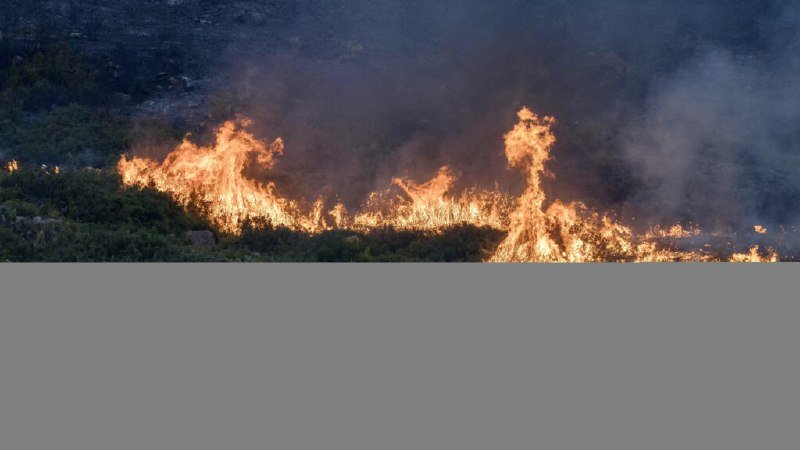
On 8 August 2026, Canadian authorities declared a provincial state of emergency in British Columbia as fast-moving wildfires forced the evacuation of more than 20,000 people and burned roughly 10,000 hectares, according to a Telegram-channel dispatch from GeoPWatch and a wire summary from Tasnim News English. The Polymarket markets desk flagged the declaration at 20:42 UTC on 8 August, treating it as a tradable information event as the official text circulated. The available source items do not specify the ignition cause, the current perimeter, or the number of structures lost.
The reflex of declaring a crisis is no substitute for the policy of preventing one. British Columbia has cycled through this script often enough that the declaration now reads as a starting gun, not a shock. The question is no longer whether the province will burn this season, but how much of the response is built on durable infrastructure and how much on improvisation plus luck. That distinction matters: emergency budgets pay for helicopters and motel rooms, not for the forest stands and First Nations-led fuel breaks that would shrink the next fire before it starts.
What the source items do, and do not, tell us
The provincial state of emergency was declared as fires spread through British Columbia's western interior, per a Tasnim News English wire summary that reports a state of emergency declaration and roughly 10,000 hectares destroyed. Telegram-channel GeoPWatch reported the evacuation figure of "more than 20,000 people" tied to the fast-moving blaze, timestamped 23:25 UTC on 9 August 2026. The Polymarket post appeared at 20:42 UTC on 8 August 2026; the Tasnim wire summary was published at 20:04 UTC on 9 August 2026, roughly a full day later. The cited thread does not contain a link to the Premier's office or the BC government press release, and the relative ordering of the official text versus the market flag cannot be settled from these sources alone.
That sequencing tells its own story, with caveats. By the time the Tasnim wire summary landed in international channels on 9 August, the financial infrastructure around the fire was already digesting the news. Monexus analysis: the gap between market reaction and international-wire pickup is itself part of the modern disaster cycle, and worth watching in future events. What the cited posts do not contain is any official Canadian-government link, any named fire complex (the Premier's statement and regional emergency briefings referenced elsewhere on 8 August named complexes including Summerland, Bald Range and Bradley Creek, but those documents are not in this thread), or any count of structures lost. Those numbers, when they arrive, will reshape the political conversation more than the hectare count already has.
The counter-narrative: a system that responds well
It is worth steelmanning the official line. Canadian inter-agency wildfire response has, in two decades, professionalised into a national fire service that mobilises structural-protection teams, runs mass-notification systems, and coordinates across provinces. The declaration of a state of emergency is not, on its own, a confession of failure. Read generously, the reflex saves lives. The early declaration in this case, made while the fire was still active rather than after it had run its course, sits inside that protective logic.
The honest counter-read is that the system works because British Columbians vote for it, fund it, and tolerate the smoke. The moment any of those legs weakens (austerity, voter fatigue, a normalisation of summer smoke as background rather than crisis) the protective logic frays. The state of emergency is a tool, not a strategy. And on the evidence available in this thread, the desk cannot say more about the specific legal mechanics of the order, the typical duration of British Columbia emergency declarations, or the federal-provincial cost-sharing arrangements that the declaration unlocks; those are widely reported in Canadian coverage but are not entailed by the cited posts.
The structural frame, in plain prose
Monexus assessment: the harder question is whether an emergency-led model of fire governance is sustainable when the fire season stretches across more of the calendar each year, a claim widely reported in Canadian climate coverage in recent years but not supported by the specific source items cited here. Emergency powers are by definition episodic; they are designed to clear rubble, not to rebuild a forest. Every year that the script repeats, the gap between the duration of the crisis and the duration of the preparation grows. Federal-provincial fire-mitigation funding, in Monexus analysis, tends to arrive in tranches rather than as multi-year capital commitments capable of underwriting the prescribed burning, Indigenous-led cultural burning, and mechanical thinning near communities that would shrink the next fire before it starts. The thread evidence does not specify the funding cadence; this is the desk's reading of the structural pattern, not a sourced fact.
There is also a quieter structural problem. As smoke drifts south into Washington, Oregon and Idaho, the cost of British Columbia's fires is increasingly borne by US public-health systems, while the political authority to manage the fuel load sits in Victoria. Cross-border smoke compacts exist in some form, per the desk's prior reporting; cross-border fuel budgets do not, on the evidence available. The result is a slow-motion externality: a Canadian province burning, an American West inhaling, and neither jurisdiction with the budget line to pay for the upstream work.
What to watch
The available source items do not specify the ignition cause, the current perimeter, the number of structures lost, or which named fire complexes drove the evacuation order; reporting on 8 August from the Premier's office and the Columbia Shuswap Regional District referenced Summerland, Bald Range and Bradley Creek, but those documents are not in this thread and their specific contents have not been verified here. Any of those numbers, when official, will reshape the political conversation. The likeliest inflection points in the coming weeks, on Monexus analysis, are the first air-quality readings in the US Pacific Northwest, the seasonal forecast for September, and any extension of the state of emergency. If the province extends the order, that is a strong signal that the 2026 season has crossed from acute emergency into chronic disruption, and the case for off-season capital reallocation, rather than another emergency appropriation, becomes harder for Victoria and Ottawa to defer.
Monexus framed this as a governance story first and a disaster story second, in contrast to wire coverage that led on the evacuation count and the hectare figure. The structural point: emergencies declared by routine stop looking like emergencies.
Wire provenance
This editorial synthesis draws on the following public wire/social posts:
- https://t.me/GeoPWatch/38368
- https://t.me/tasnimnews_en/30361
- https://x.com/Polymarket/status/2086191442548965408