Hormuz stays shut: Tehran's demands recast the bargaining around Iran's nuclear file
Iran's Revolutionary Guards say the Strait of Hormuz will stay closed until Washington lifts sanctions and pays compensation for war damage. A separate Iranian security-official ask adds US military withdrawal and release of frozen Iranian assets. Trump is privately willing to walk without a nuclear deal if shipping resumes, per the Wall Street Journal.
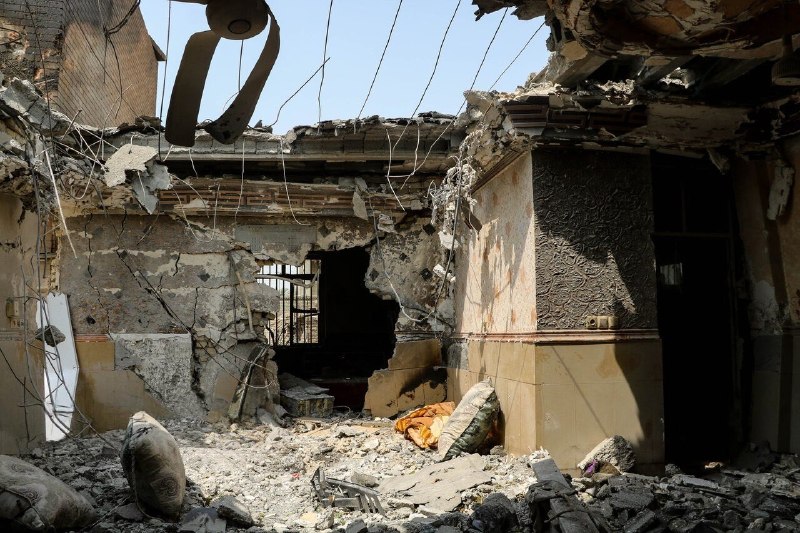
Iran's Revolutionary Guards said on Sunday, 9 August 2026, that the Strait of Hormuz would remain closed until the United States lifts sanctions and pays compensation for war damage. A separate Iranian formulation, attributed by Unusual Whales to "Iran's top security official" and circulated on 8 August, widened the ask to include US military withdrawal from around Iran and the release of frozen Iranian assets. Together the two formulations reset the political math in Washington at a moment when the Trump administration is privately entertaining a deal that decouples shipping access from the nuclear file.
The practical consequence is that the chokepoint, not the centrifuge, has become the principal object of negotiation. By attaching legal-political relief (sanctions termination, asset release, war reparations) to free passage, Tehran has converted a maritime pressure point into a settlement-wide lever. The leverage of any narrow technical nuclear concession is now, by Iran's own framing, smaller than the leverage of unblocking the waterway.
The conditions on the table
Two distinct Iranian formulations are in circulation. The first, carried by France 24's English service on 9 August and repeated via its Telegram channel, lists two pillars: an end to sanctions and compensation for war damage. The second, reported by Unusual Whales on 8 August and attributed to "Iran's top security official," adds two more: US military withdrawal from around Iran and the release of frozen Iranian assets. A third formulation, also circulated on 8 August via Polymarket's account on X, condensed the message further: an unnamed Iranian official said the Strait would not fully reopen "until America corrects its behavior."
Read together, the three registers point to a single Iranian end-state expressed at different levels of granularity. France 24 carries the Guards' two-pillar version; Unusual Whales carries the security official's four-pillar version; Polymarket carries the political shorthand. None of the cited posts identifies a single Iranian actor as the source of all three formulations, and the available source items do not specify whether the Guards' statement and the security official's statement are coordinated, sequential, or competing. That ambiguity is itself part of the negotiating posture: Tehran is comfortable signalling the same end-state through multiple registers, appearing simultaneously maximalist to domestic audiences and transactional to foreign counterparts.
The Guards' Sunday formulation is the more modest of the two. Its two pillars, sanctions relief and war reparations, are longstanding Iranian asks across two decades of maximum-pressure cycles, with reparations the more recent addition. The security official's four-pillar list is the more expansive, and the one that does the heaviest diplomatic work. The release of frozen Iranian assets, in particular, is a demand that turns the bargaining from a non-proliferation argument into a financial-recovery argument. Military withdrawal, likewise, has a price in forward defence of Gulf allies that goes beyond the nuclear file.
Washington reads the cost
U.S. stock-index futures were little changed on Sunday evening, after Iran's new demands and ahead of inflation data due later in the week, according to MarketWatch. The market's flatness is itself a read: traders have learned to wait out the headlines. They do not, on the cited evidence, appear yet to believe the closure will last long enough to draw strategic petroleum reserves, and they do not appear yet to believe the US will accept the conditions.
Inside the administration, the public and private positions diverge. The Wall Street Journal, as relayed via Unusual Whales on 9 August, reports that President Donald Trump has privately told senior aides he may be willing to "walk away" from the Iran war without a nuclear deal if Iran fully reopens the Strait of Hormuz. The formulation, attributed by Unusual Whales to the WSJ rather than confirmed by the White House in the cited posts, separates two political goods the administration has until now bundled together: a non-proliferation outcome and a maritime-flow outcome. Unbundling them is a structural shift, and one that sits in tension with the maximalist Iranian ask.
Monexus analysis: the most natural reading of the President's reported stance, on the cited evidence, is that the political cost of a sustained closure, in fuel prices, insurance premiums, and Gulf-state anxiety, has begun to compete with the political cost of tolerating a partly unconstrained Iranian nuclear program. The Strait is doing the work that sanctions once did. Tehran has, in effect, found a new pressure point by refusing to unblock it.
The chokepoint and what we do not yet know
The Strait of Hormuz sits at the mouth of the Persian Gulf, between Iran to the north and Oman and the UAE to the south. On the cited evidence, the chokepoint's structural standing is what makes it consequential: the available source items do not specify current throughput of crude, condensate, or LNG through the Strait, and do not enumerate the nameplate capacity of bypass pipelines such as the UAE's East-West route to Fujairah, Saudi Arabia's Petroline to Yanbu, or Iraqi-Turkish flows via Ceyhan. The structural point the region has lived with for half a century is that there is no cheap bypass, and any prolonged closure forces war-risk premia, rerouting, and a widening of the price differential between Middle East crudes and Atlantic-basin alternatives.
That is the context in which Tehran's conditions have to be read. Each of the four demands has a price. Sanctions relief has a price in foregone US leverage. Asset release has a price in restored Iranian state revenue and the precedent of returning frozen balances. Withdrawal has a price in forward defence of Gulf allies. Reparations has a price in precedent: a US administration paying an adversary for damage done during hostilities would license future claims from other states. Add them up and the deal on offer would, in effect, be a peace settlement rather than a nuclear arrangement. That is a different category of agreement.
The bargaining window
The narrow opening is that Iran's ask is not binary. "Lifting sanctions" can mean partial, reversible, time-bound measures, the kind of choreography that accompanied the 2015 Joint Plan of Action. "Release of frozen assets" can mean tranches tied to IAEA verification. "Withdrawal" can mean rotation rather than permanent redeployment. "Reparations" can be reframed as a humanitarian escrow, the kind of language Iran has used in previous rounds. None of these moves gets Washington to a full settlement, but each lowers the political cost enough that a partial settlement becomes thinkable.
The wider risk is that the bargaining window closes. Iran's domestic politics reward firmness on the four demands; the Guards' Sunday framing is aimed as much at Iranian audiences as at Washington. The Trump administration's domestic politics reward a hard line on the nuclear file specifically, but punish sustained fuel-cost pressure. If the next round of talks, the timing of which the cited posts do not specify, fails to produce even a partial shipping-for-freeze arrangement, the Strait will stay shut long enough to break the domestic bargain in at least one capital.
The remaining uncertainty is concrete and material. The cited posts do not specify what "compensation for war damage" means in Iranian practice: a written commitment, a frozen fund, an oil-for-payment escrow. They do not specify which sanctions Iran treats as primary: nuclear, ballistic-missile, or human-rights designations. They do not specify whether the Guards and the unnamed security official are speaking with one voice or two, whether the four-pillar list supersedes the two-pillar list, or whether Tehran is willing to sequence (sanctions now, assets now, withdrawal later, reparations later still) or wants everything at once. They do not specify the cause of the closure: the available source items describe the blockade and the conditions attached to its lifting, but do not characterise what triggered it. Until those details move into the public record, the Strait of Hormuz remains the world's most expensive leverage point, and the negotiation is the negotiation about its price.
Desk note: Monexus has framed this against the Iran-US war and the post-strike bargaining rather than the older nuclear-file narrative, because the cited posts point exclusively to shipping-access conditions. The Iran-deal story this week is a shipping-access story first. Where the draft distinguished between the Guards' two-pillar list and the security official's four-pillar list, that distinction is preserved verbatim from the cited posts; the cause of the closure is left unstated because the available source items do not address it.
Wire provenance
This editorial synthesis draws on the following public wire/social posts:
- https://www.france24.com/en/middle-east/20260809-iran-vows-to-keep-strait-of-hormuz-closed-until-us-meets-demands
- https://t.me/france24_en/18150
- https://x.com/unusual_whales/status/2086201818606915749
- https://x.com/Polymarket/status/2086195884912488509
- https://x.com/unusual_whales/status/2086479000629543373
- https://www.marketwatch.com/story/u-s-stock-futures-flat-as-investors-await-inflation-data-grapple-with-more-iran-uncertainty-133212d2?mod=mw_rss_topstories
Follow the event.
These dated source records provide context. They do not retrospectively verify this archive article.
Separate what the nuclear watchdog reported from what it could not determine after the June 2025 strikes.
- https://www.france24.com/en/middle-east/20260809-iran-vows-to-keep-strait-of-hormuz-closed-until-us-meets-demands
- https://t.me/france24_en/18150
- https://x.com/unusual_whales/status/2086201818606915749
- https://x.com/Polymarket/status/2086195884912488509
- https://x.com/unusual_whales/status/2086479000629543373
- https://www.marketwatch.com/story/u-s-stock-futures-flat-as-investors-await-inflation-data-grapple-with-more-iran-uncertainty-133212d2?mod=mw_rss_topstories