ADNOC tanker hit as Iran sets terms for any Hormuz reopening
A missile struck an ADNOC vessel in the Strait of Hormuz on the morning of 8 August 2026. Hours later, Iranian officials laid out three conditions for reopening the waterway: a U.S. military withdrawal, war reparations, and the release of frozen Iranian assets.
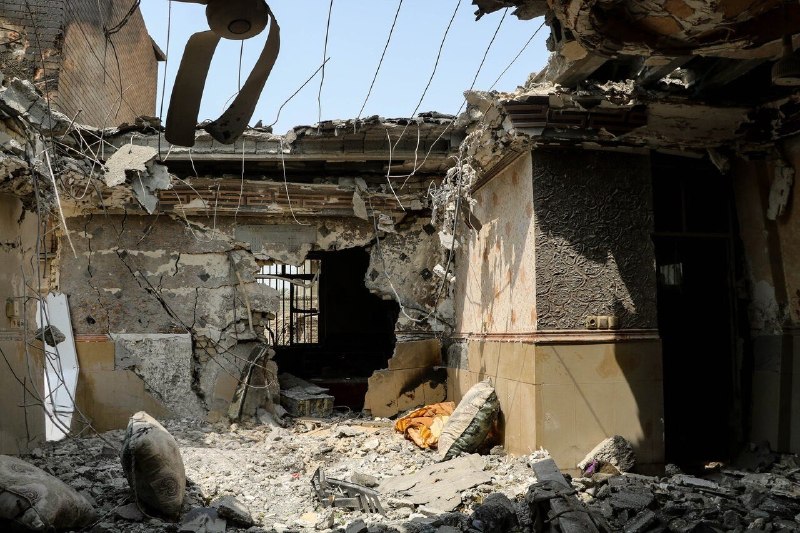
At 11:48 UTC on 8 August 2026, the United Arab Emirates said a missile struck a vessel operated by the Abu Dhabi state oil company ADNOC in the Strait of Hormuz, the corridor through which a large share of the world's seaborne crude normally transits. By 21:00 UTC the same day, an Iranian official had laid out, in the most public terms yet, the conditions under which the waterway would fully reopen: a withdrawal of U.S. military forces from around Iran, the payment of war reparations, and the release of frozen Iranian assets. The shipping lane and the benchmark oil price that prices it are now negotiating the same question at once.
The standoff is no longer a flirtation with closure. It is a sequenced set of demands, delivered in the same 24-hour window as a missile on a UAE-flagged commercial hull, accompanied by Iranian messaging that a deal is "close" but will not be executed unilaterally by Tehran alone. The market will read the demand list as a price, not a posture.
What happened on the water
The Emirati account, as carried by wire reporting, is that Iran attacked the ADNOC vessel with a missile. The Investing.com headline on the incident states the UAE "says Iran attacked" the vessel; the CNBC piece on the same day characterises the UAE as reporting that "one of its ships was targeted by missile" without attributing the projectile to a state actor. The Iranian government has not, in the items available to this article, acknowledged launching against the UAE ship. Iranian messaging on 8 August instead framed the closure as conditional and pointed to a "close" deal that it would not execute unilaterally. The available reporting does not specify the casualty status of the vessel or any damage assessment.
The price tape is the second place the next 48 hours will show their hand. Any sustained disruption in the strait moves the shipping of crude, LNG and refined products, and the cost of insurance is bound directly to the futures market through the war-risk premium. Whether the missile is confirmed as Iranian-launched, attributed to a proxy, or left unattributed, the operational reality is the same: underwriters reprice, and shipowners reroute, on the news flow alone.
The Iranian terms, as listed on 8 August
The Iranian demands relayed on 8 August 2026, as carried by the Unusual Whales account of remarks by Iran's top security official, are three: the withdrawal of U.S. military forces from around Iran, the payment of war reparations, and the release of frozen Iranian assets. A separate formulation from an Iranian official, carried by the Polymarket account, summarised the standard more compactly: the strait will not fully reopen "until America corrects its behaviour." The shorter framing and the three-item list are doing the same work in different registers: a public anchor against which any eventual settlement can be measured.
Read in plain terms, the structural claim is that the United States' forward military presence in the Gulf is a precondition for the disruption, and that the United States alone can end it. The list reads as a maximalist bargaining position rather than a settlement text. Western wire framing has generally read the same posture as escalation, that Tehran is raising the price of any deal by attaching reparations and a withdrawal. That reading is also the one that best serves Tehran's domestic audience, where any settlement that does not visibly cut the U.S. footprint is a settlement that fails at home. The same demand list is therefore doing two jobs at once: meeting a domestic political requirement for the appearance of rollback, and offering the outside world a face-saving ladder to climb down. The market will probably wait for the ladder, not the list.
A chokepoint and a price
Monexus analysis: the strait is a single point on the map. The price of oil is a single point on the tape. The two are now operationally yoked. Past episodes of threat or partial closure have produced a sequence familiar to anyone who has traded the last decade of Gulf news: an immediate premium on the nearest-dated futures contract, a widening of the term structure, an insurance repricing for tanker hulls, and then a partial fade as the news flow cools. The current episode differs in one respect. The Iranian demand list has been put on the table after the morning strike and before any sustained physical closure has been confirmed in the available reporting, which means the market is being asked to price a contingent reopening rather than a current shutdown. That is a different animal. It lifts the political risk premium on a slug of crude that is still flowing, and the discount only closes when either side announces the deal.
There is a wider pattern here, the kind of structural frame that recurs whenever a single corridor and a single benchmark meet. The economic logic of the strait is that any one of the Gulf producers is replaceable, on a long enough timeline, by another; the political logic is that any one of them can be held hostage to a regional dispute in which it has no vote. The Iranian position is that the United States has chosen the location of that hostage-taking by maintaining naval and air assets in the Gulf, and that the cost of those assets should be shared. The American position, by longstanding policy, is that the assets are the only thing preventing the hostage-taking from being permanent. Both positions are internally consistent. The market is now repricing the room between them.
Monexus assessment: what the next 72 hours probably look like
The most likely near-term sequence, on the desk's read, is a diplomatic exchange that confirms the three Iranian terms are maximalist, paired with no physical closure that would force a sustained price move. The tape will be more sensitive to attribution around the ADNOC vessel than to the demand list itself. If the projectile is confirmed as Iranian-launched, the war-risk premium steps up and Washington is more likely to outline retaliation, which in turn raises the probability that the demand list becomes the opening of a negotiation rather than the closing of a door. If the projectile is left unattributed, the most probable read is that the Iranian public position remains the conditional reopening, and the deal moves into a quiet channel for the next several days. This is the desk's expectation, not reader instruction, and the evidence is the news flow of 8 August, not a primary-source statement of intent from either capital.
The uncertainty is genuine. The sources available to this article do not specify the casualty status of the ADNOC vessel, the identity of the Iranian official whose demands are being relayed, the exact wording of any Iranian military statement on the closure, or whether any third-party broker (China, the UAE itself, Oman, Qatar) has been formally engaged since the missile strike. What the 8 August reporting does specify is that the strait is being treated, on both sides, as a bargaining chip rather than a battlefield, with the price of that treatment paid in the insurance markets and the futures complex.
Wire sourcing is documented in the sources panel. The Iranian official behind the 8 August demand list is not identified by name in the items reviewed.
Wire provenance
This editorial synthesis draws on the following public wire/social posts:
- https://www.cnbc.com/2026/08/08/uae-ship-targeted-missile-us-iran-tensions-stay-high.html
- https://www.investing.com/news/stock-market-news/uae-says-iran-attacked-adnoc-vessel-with-missile-in-strait-of-hormuz-4847650
- https://www.investing.com/news/commodities-news/iran-says-deal-on-strait-of-hormuz-is-close-but-will-not-open-the-waterway-by-itself-4847656
- https://x.com/unusual_whales/status/2086201818606915749
- https://x.com/Polymarket/status/2086195884912488509
Follow the event.
These dated source records provide context. They do not retrospectively verify this archive article.
Separate what the nuclear watchdog reported from what it could not determine after the June 2025 strikes.
- https://www.cnbc.com/2026/08/08/uae-ship-targeted-missile-us-iran-tensions-stay-high.html
- https://www.investing.com/news/stock-market-news/uae-says-iran-attacked-adnoc-vessel-with-missile-in-strait-of-hormuz-4847650
- https://www.investing.com/news/commodities-news/iran-says-deal-on-strait-of-hormuz-is-close-but-will-not-open-the-waterway-by-itself-4847656
- https://x.com/unusual_whales/status/2086201818606915749
- https://x.com/Polymarket/status/2086195884912488509