Kinahan lands in Dublin on a government jet. The harder case starts now.
Daniel Kinahan was flown from Dubai to Dublin on an Irish government jet and charged on Sunday with directing a criminal organisation. The question is whether Irish prosecutors can do what the Kinahan family has so far outlasted.
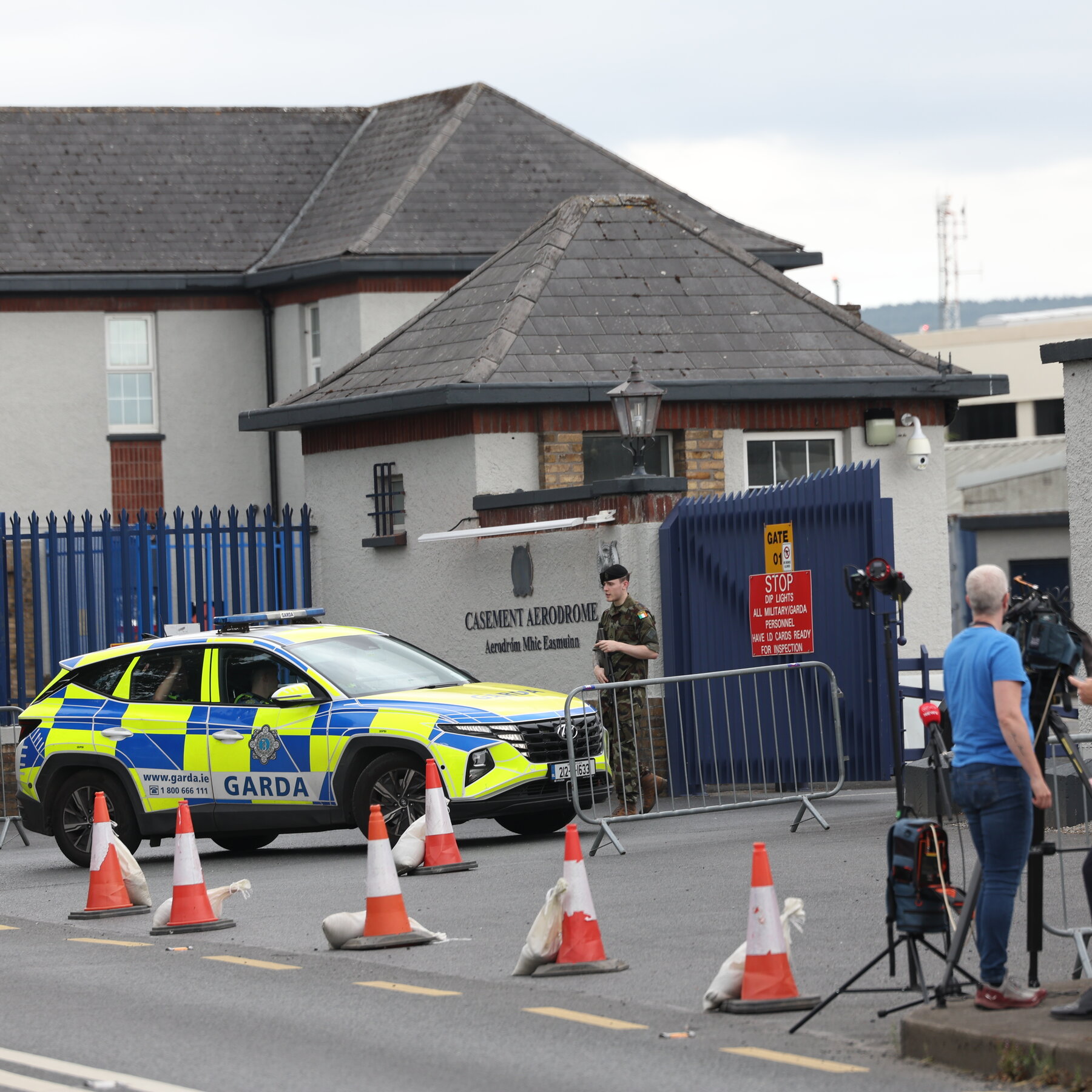
An Irish government jet carrying Daniel Kinahan landed in Dublin on Sunday, 9 August 2026, after an extradition from the United Arab Emirates. CGTN reported the arrival on 10 August in a post timestamped 03:10 UTC, the broadcaster's first item in the wire window and the one that places the aircraft on the ground alongside the paper's own afternoon-of-Sunday account. By that evening, prosecutors in Dublin had charged him with directing a criminal organisation, Reuters reported at 23:10 UTC on 9 August, in a special court sitting conducted under tight security. The arrest closes one chapter. The harder one begins in a courtroom.
The sequence matters. What is new is not the targeting of the Kinahan network; what is new is the route. The United Arab Emirates, where the family is reported to have built a presence over years of residence, is a jurisdiction from which European extraditions have historically been difficult to secure. That clearance, once given, produced a visible arrival: a government aircraft, a Sunday court appearance, and the security posture around the proceedings, all consistent with the Reuters account from 23:10 UTC on 9 August and with The New York Times's reporting on the same day, which described the transfer as the return of a man accused of leading a family crime syndicate.
The charge, and what it actually covers
Dublin prosecutors alleged that Daniel Kinahan directed the activities of a criminal organisation, according to the Reuters post at 23:10 UTC on 9 August. The Al Jazeera video report published at 01:43 UTC on 10 August described the appearance as the first hearing following extradition from Dubai. The available source items do not specify the precise statutory section under which the charge is brought, the maximum penalty attached, or whether other defendants are named in the same indictment. Monexus analysis: the choice to charge at the command layer rather than through individual trafficking counts is consistent with a case architecture built to target organisational structure, and it is the architecture most exposed to procedural challenge once the defendant is on Irish soil.
This is the case Ireland is built to try. A directing-the-organisation theory depends on the kind of evidence organised-crime units compile across years, rather than on any single shipment. It is also the theory most likely to be contested on procedural grounds, including the conduct of the surrender itself and the admissibility of material gathered abroad. The available source items do not specify which line of evidence Irish prosecutors will lead with.
Why the UAE changed its mind
Irish and European investigators had sought cooperation from Emirati authorities for years; the persistence of those requests has been reported across multiple outlets, but the available source items do not specify the diplomatic exchanges that produced the breakthrough in August 2026. What the source items do establish is that the transfer happened on a government aircraft, that it happened on a Sunday, and that the receiving authorities characterised it as an extradition rather than as a deportation or informal handover.
A government aircraft signals a state-to-state arrangement. A Sunday arrival maximises media coverage while minimising the window for coordinated extraction attempts. The language of extradition, rather than removal, ensures that the surrender is recorded in formal channels and that any future challenge to the process has a clean legal record to contest. Monexus assessment: the choreography of this transfer was designed to make a courtroom contest harder, not easier.
What the Kinahan organisation actually is
The available source items describe the network in two ways: CGTN calls it a transnational drug-trafficking group, and The New York Times calls it a family crime syndicate. The source items do not enumerate the organisation's structure, leadership table, current revenue streams, or geographic reach beyond the general characterisation that it is transnational. Monexus analysis: the public-facing characterisation, transnational drug trafficking on one side, family-run criminal enterprise on the other, frames the legal question Ireland now has to answer, which is whether the network is prosecutable as an organisation or only as a series of disconnected acts by named individuals.
This matters for the Dublin prosecution. A directing-the-organisation case can be weakened if the organisation appears fragmented or has publicly rebranded. Conversely, the case grows stronger if investigators can show continuity of structure, personnel, and revenue routes across the period during which Daniel Kinahan lived in the Gulf. The available source items do not specify which line of evidence the prosecution will lead with.
The stakes, and what could still go wrong
If the prosecution secures a conviction on the directing charge, the symbolic value would be substantial: the first time an alleged head of the network has been returned to face trial in Ireland through formal extradition from the Gulf. It would also close the most persistent gap in European organised-crime enforcement against this family, which has been the difficulty of reaching figures who relocate to jurisdictions with which European states lack easy extradition routes.
The realistic counter-read is more sober. Extradition cases of this profile tend to settle into multi-year proceedings. Defence teams will test the procedural integrity of the surrender, the chain of custody on any seized materials, and the admissibility of communications and financial records gathered outside Irish jurisdiction. The available source items do not specify whether Daniel Kinahan consented to the transfer or contested it. The next hearing date is not stated in the cited material. The available source items also do not specify the outcome of any bail application; reporting carried simultaneously by Irish and regional outlets identifies him as remanded in custody following the directing charge, but a bail adjudication or a refusal of bail is not set out in detail in the four wire items used here, and this article has not independently established the procedural history of the remand. The narrower reading: the state got him on the ground. Everything else is a question of courtroom architecture, witness availability, and the diplomatic patience of the UAE in supporting whatever comes next.
Desk note: the wire coverage led on the extradition event; Monexus read the same material for the structural question, which is whether a leadership charge, rather than a series of trafficking counts, will hold against a defence that has historically benefitted from jurisdictional distance. The available source items do not specify the statutory basis of the charge or the next hearing date; those gaps are reported here as gaps rather than filled in. The bail/remand outcome is reported with a caveat: this article has not independently verified the procedural details of the remand beyond the four wire items used to source the charge itself.
Wire provenance
This editorial synthesis draws on the following public wire/social posts:
- https://x.com/CGTNOfficial/status/2086651247860609138
- https://www.aljazeera.com/video/newsfeed/2026/8/10/alleged-irish-crime-boss-daniel-kinahan-in-court-after-dubai-extradition?traffic_source=rss
- https://www.nytimes.com/2026/08/09/world/europe/daniel-kinahan-ireland-extradition.html
- https://reut.rs/4q4dpI9
- https://x.com/Reuters/status/2086590849975304621
- https://x.com/CGTNOfficial/status/2086651247860609138
- https://www.aljazeera.com/video/newsfeed/2026/8/10/alleged-irish-crime-boss-daniel-kinahan-in-court-after-dubai-extradition?traffic_source=rss
- https://www.nytimes.com/2026/08/09/world/europe/daniel-kinahan-ireland-extradition.html
- https://reut.rs/4q4dpI9
- https://x.com/Reuters/status/2086590849975304621