Hormuz traffic falls as the US-Iran standoff tests a narrow agreement
Commercial traffic through the Strait of Hormuz fell to nine vessels against an August daily average of twelve, while Tehran disputed whether an interim arrangement was ever capable of extension.
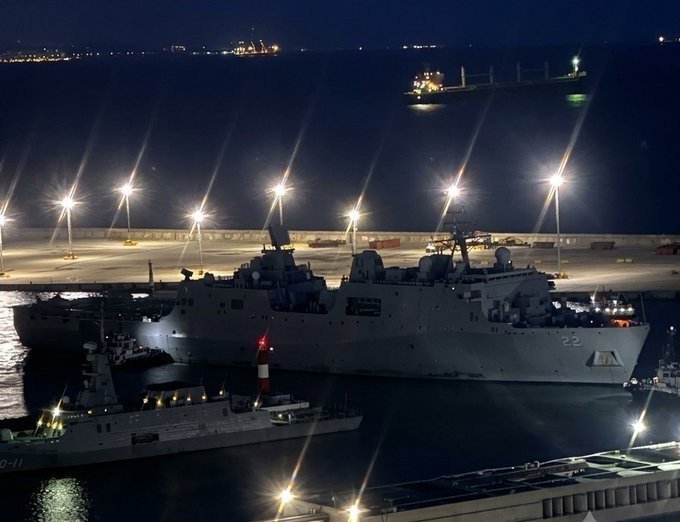
Commercial shipping through the Strait of Hormuz fell to nine vessels on 14 August 2026, below the August daily average of twelve, according to Kpler tracking data cited by The Cradle Media. The decline came amid a deepening US-Iran standoff and followed attacks on two oil tankers, adding a physical security risk to an already uncertain diplomatic environment.
The figures do not prove that Iran or the United States has formally closed the waterway. They do show that commercial operators are moving through one of the world’s most consequential maritime corridors at a slower pace while governments dispute the meaning of an interim arrangement. The risk is being priced in movement before it is expressed in a formal government order.
The traffic signal
The Cradle Media reported on 14 August 2026 at 09:37 UTC that nine vessels had transited the Strait of Hormuz against an August daily average of twelve. The report identified Kpler as the source of the tracking data. It also linked the period of reduced movement to attacks on two oil tankers, although the supplied report excerpt does not specify the circumstances of those attacks.
That distinction matters. Nine vessels versus an average of twelve establishes a measurable decline, but not a total shutdown. Nor does the available material identify the vessels, their cargoes, the direction of travel, or whether the change reflects deliberate diversions, delayed departures, or other operational decisions. The narrow conclusion is that traffic was lower than the cited August daily average during a period of heightened tension.
The timing is significant because the strait connects the Persian Gulf with open ocean routes. Decisions made far from the water can alter commercial behaviour without any formal change in the route’s legal status. When operators treat a corridor as less predictable, the consequence is not only a possible increase in voyage costs. It is a reduction in the margin for diplomatic error.
A dispute over what was agreed
A separate source item, published on 14 August 2026 at 02:58 UTC and relayed by Unusual Whales from an Iranian account of the talks, said Tehran viewed the interim deal as having no start date and therefore having nothing to extend. The same item attributed to a senior Iranian source the assertion that the United States violated the agreement 48 hours after it was reached, and that Washington later “withdrew from it a few days late.”
That account is not presented in the supplied material as a verified joint reading of the text. It is an Iranian account of the negotiations, carried through a social-media relay. The available source items do not provide the agreement itself, a date on which it was reached, the text of the alleged violation, or a response from the United States. The account should therefore be treated as a contested description of the political bargain, not as a settled chronology.
There is an alternative explanation. Washington and Tehran may disagree less about the existence of a temporary understanding than about whether its conditions were activated on time. If one side treated the arrangement as operational and the other treated it as not yet in force, each could describe the same sequence as compliance, delay, or breach. That reading fits the source’s account of conflicting interpretations, but it remains an assessment rather than an established fact.
The corridor as leverage
The shipping decline and the disagreement over the interim agreement should not be separated. Diplomacy is taking place in the shadow of a route that can affect the movement of energy and goods, while military pressure can alter the calculations of commercial actors before a formal decision is announced. The strait is thus both a physical passage and a bargaining instrument.
Monexus analysis: the pattern is one of coercive uncertainty rather than a confirmed maritime blockade. Operators appear to be responding to the possibility that the corridor could become contested, while the parties dispute the legal and political status of the arrangement intended to manage that risk. The distinction is important because lower traffic can constrain escalation without proving that either government has decided to shut the route.
The structural danger is familiar. A narrow agreement that lacks shared terms on commencement, duration, enforcement, and extension is vulnerable to each side reading the same events through a different chronology. Once that happens, the burden shifts from diplomats to shipping companies, insurers, and governments forced to decide whether a delay is ordinary fluctuation or the first stage of a larger crisis.
What remains uncertain
The supplied material establishes Kpler’s reported comparison of nine transits with an August daily average of twelve. It does not provide the full transit series, the identity of the vessels, or the precise operational reason for the change in traffic. It also does not independently corroborate the senior Iranian source’s allegation that the United States violated the arrangement 48 hours after it was reached or withdrew from it a few days late.
The available material therefore establishes a convergence of concern, not a complete account of the negotiations. The traffic report and the account of the interim arrangement point in the same direction without proving that a formal closure, a specific violation, or a coordinated shipping response has occurred.
That uncertainty is itself a decision point. Governments can use the period in which traffic is below the cited average to clarify what the agreement means, what conduct would constitute a violation, and how long any pause is supposed to last. A public exchange of precise terms would not resolve the underlying US-Iran dispute, but it could make the consequences of competing interpretations more calculable for the shipping industry.
The practical stake is concrete. If traffic continues to fall, commercial operators face a more difficult planning environment and governments face a narrower margin for managing an accidental encounter or an intentional act of pressure. If the parties can instead restore a shared understanding, the strait may remain a corridor carrying risk rather than a route already transformed into a confrontation zone. The next meaningful signal will be not rhetoric, but sustained vessel movement and an authoritative account of what the interim arrangement required.
The desk treated the nine-vessel reading as a measurable traffic signal, not proof of a formal closure, and kept the Iranian account of the alleged 48-hour violation and later withdrawal explicitly attributed because the supplied source did not provide the agreement text or independent corroboration.
Wire provenance
This editorial synthesis draws on the following public wire/social posts:
- https://t.me/TheCradleMedia/66141
- https://t.me/thecradlemedia/66141
- https://unusualwhales.com/news/iran-denies-60-day-ceasefire-extension-talks
- https://x.com/unusual_whales/status/2088097779293778077