Tehran pairs a victory claim with an offensive-strategy question
At 18:50 UTC on 16 August 2026, Iran's parliament speaker declared military and political victory. Less than 48 minutes later, a Tasnim post asked how Iran had changed its strategy from defensive to offensive.
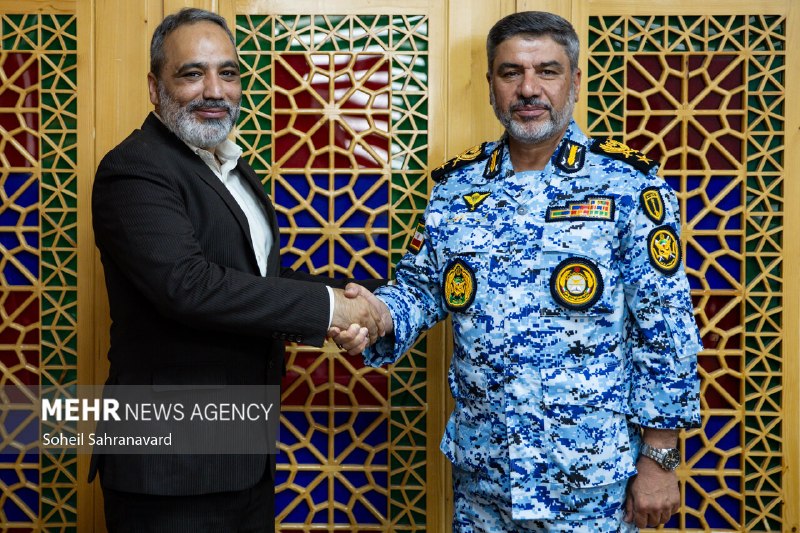
At 18:50 UTC on 16 August 2026, Iran's parliament speaker Mohammad-Bagher Ghalibaf used a Correspondents' Day ceremony in Tehran to deliver a categorical assessment of the war. "We won in the military and political aspect of the war," he said, according to a post published by Tasnim News in English. The declaration placed closure at the centre of Tehran's message.
Less than 48 minutes later, another Tasnim post asked, "How has Iran changed its defensive strategy to an offensive one?" The sequence matters. A victory declaration and a question about moving towards an offensive posture are not formally contradictory: Iran's leaders can claim to have won while arguing that its strategy must now become more proactive. But the pairing leaves unresolved whether Tehran is closing a conflict or preparing a different phase of it.
Two messages, one news cycle
Tasnim followed the initial victory claim at 18:53 UTC with a second post from the ceremony. In that item, Ghalibaf described Iran's "hard core" as 90 million people of every ethnicity who, he said, had stood by Iran "in every sense." The number functions as an assertion of national unity, but the available source item does not identify a demographic basis for calculating that total.
The repetition also shows how the message was packaged. Tasnim carried the victory claim in one post and a related claim about the breadth of domestic support in another three minutes later. Read together, the items present military success, political success and social cohesion as components of the same official account. They do not independently establish that the war is over or define what military or political victory would require.
Monexus analysis: the sequencing resembles an effort to establish a settled conclusion before introducing a more open-ended strategic question. The first two posts close the argument: Iran has won, and its population is the foundation of that outcome. The later question opens it again, by asking how a defensive approach has become offensive. That contrast should be understood as messaging by Iran's state-aligned outlet, not as evidence that either proposition is settled.
The question after victory
The offensive-strategy post appeared in Tasnim's English-language feed at 19:38 UTC on the same date as Ghalibaf's declaration, 48 minutes after the 18:50 UTC post. Its wording presents a change as something requiring explanation, rather than describing a completed shift in a formal doctrine.
That distinction is important. An interview question can be narrower than an adopted policy. It may invite an answer, preview an argument or frame a future discussion without announcing a government decision. The available post does not identify the interviewee, reproduce the answer, or specify the military instruments involved. It is therefore evidence of a question being raised, not proof of a strategic order.
There is a plausible alternative reading to the idea of contradiction. Tehran can claim victory in a particular military and political contest while still seeking an offensive capability for deterrence or future bargaining. In that reading, the later question does not negate Ghalibaf's declaration. It extends the narrative: Iran says it prevailed, but its approach is becoming more proactive.
The limits of the source record favour caution. Tasnim is Iranian state-affiliated, and the question comes from that outlet's framing. No item in the available record sets out the war's objectives, the conditions that would count as victory, or the operational meaning of an offensive strategy. The sequence supports an assessment about messaging, not a conclusion about battlefield outcomes or future attacks.
The trust argument
At 19:43 UTC, a separate post on the IR Iran Military Telegram channel challenged an unnamed foreign interlocutor: "He can't even keep the promises he makes to his own people! How do you expect Iran to trust his word?" The post does not identify the person, the promises, the forum or the subject of the alleged commitments.
Its language nevertheless serves a clear rhetorical function. It casts Iran as the party judging another government's reliability, rather than accepting responsibility for uncertainty in its own strategic position. Trust becomes the test: Iran's willingness to believe a counterpart is said to depend on whether that counterpart keeps promises to "his own people."
The available source item does not specify whom the channel had in mind. Nor does it provide the relevant promise or show that the unnamed person made it. The post is best read as a short, state-aligned counter-framing exercise, not as evidence of a failed diplomatic undertaking. Its significance lies in the posture it adopts, confident and aggrieved, within the same evening as the victory claim.
What remains outside the record
The four source items come from two Telegram channels associated with Iran's state media or military messaging environment. Together, they document claims, questions and rhetoric published on 16 August 2026. They do not provide the underlying evidence needed to assess whether Iran achieved a military and political victory, whether its strategy is officially moving from defence to offence, or what capabilities such a shift would entail.
They also do not specify whether Ghalibaf's declaration referred to a war with defined antagonists, a bounded campaign, or a broader state of conflict. The 19:43 post does not identify the foreign leader or official targeted by its challenge. These omissions do not disprove the claims. They narrow what can responsibly be said about them.
The sharper conclusion is about sequence rather than substance. On 16 August 2026, Tasnim presented Ghalibaf's victory claim, amplified it with an appeal to national unity, and then raised the prospect of a more offensive strategy less than 48 minutes later. The result is a message that seeks both closure and continued strategic agency. Whether that message becomes policy will depend on evidence beyond these four posts.
Desk note
This article treated the four posts as a tightly timed account of Iranian state-aligned messaging, while keeping the claimed military outcome and doctrinal shift explicitly unverified.
Wire provenance
This editorial synthesis draws on the following public wire/social posts:
- https://t.me/tasnimnews_en/31322
- https://t.me/tasnimnews_en/31323
- https://t.me/tasnimnews_en/31340
- https://t.me/IRIran_Military/9628