Erdogan pins blame on Israel across four fronts in a single Ankara press window
Speaking in Ankara on 16 August 2026, Recep Tayyip Erdogan held Israel responsible for a war he said was imposed on Iran, framed continued Israeli strikes on Lebanon as a serious concern, reiterated Turkish commitment to Gaza, and addressed Sudan, in remarks carried across Turkish, Arabic and English-language feeds between 19:29 and 20:50 UTC.
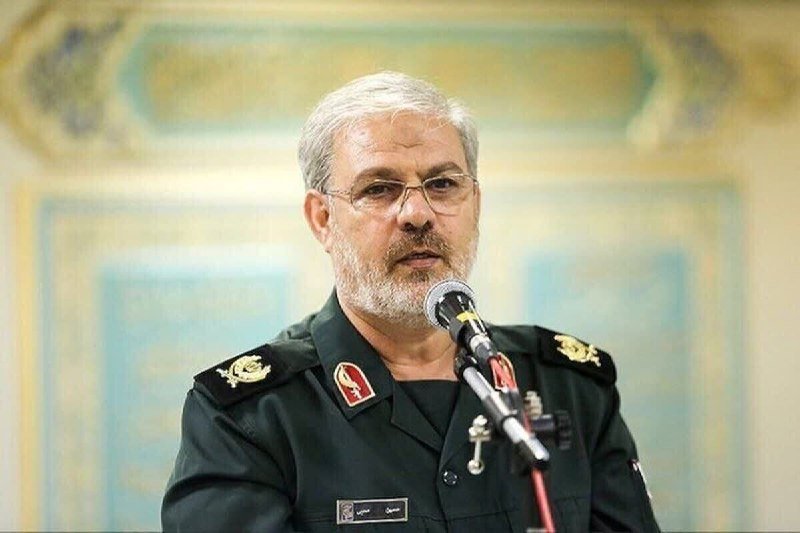
Recep Tayyip Erdogan used a single afternoon of public remarks on 16 August 2026 to stake out Ankara's most expansive Middle East posture in months: blaming Israel, by name and repeatedly, for a war "imposed on Iran," for the Gaza campaign that Türkiye says it cannot abandon, and for Israeli strikes on Lebanon that he framed as a serious concern. He also weighed in on Sudan, praising the country's leader and reaffirming Turkish support. The remarks, carried across Turkish, Arabic and English-language wires between 19:29 and 20:50 UTC, mark a rhetorical consolidation. What is notable is the simultaneity: a single press window that connects Tehran, Gaza, Beirut and Khartoum under one framing of Israeli responsibility.
The cumulative effect, reading the day's wires in order, is that Ankara intends to treat the Iran war, Gaza, and Lebanon as one connected theatre rather than separate files. The Sudan passage, easy to overlook, sits alongside the rest of the day's messaging. The day's evidence is unusually rich on what one man said and unusually thin on what anyone else plans to do about it.
Four fronts, one press window
The comments ran in roughly chronological order. Al Jazeera English's newsfeed reported at 19:29 UTC on 16 August 2026 that Erdogan had told reporters that continued Israeli attacks on Lebanon are "a source of serious concern," language the broadcaster used to characterise Turkish concern about Israeli operations on Israel's northern border.
Less than an hour later, the Clash Report wire relayed a separate set of remarks in which Erdogan declared Türkiye "absolutely not in favor of war in these regions," for peace, but insisted that "Israel is the principal instigator of this war." The same outlet carried, at 20:17 UTC, a passage explicitly framed as a deterrence message: "We are not talking about war, we are talking about peace. But if someone is going to attack Türkiye for war and not peace, Türkiye will not hesitate."
At 20:19 UTC, the same wire relayed Erdogan's Gaza remarks: "We cannot leave Gaza alone. Everything that falls on our shoulders as a duty toward Gaza, we have done until today and will continue to do," with the additional claim that "Hamas is showing all the sincere solidarity it can" in the moment.
Two minutes later, Sudan: Erdogan said he did "not see developments in Sudan as good" but that Turkish support continues, describing Sudan's leader as "a president and commander worthy of Sudan in this phase." The day's closing headline, carried by Al Alam Arabic's feed at 20:50 UTC, returned to the framing that opened the press window: "Israel" is, in Erdogan's words, "an entity that prefers wars and chaos and is the one who started this war and because of that many countries paid heavy prices."
The deterrence line
The deterrence passage is the most consequential single sentence of the day. Asked about a possible Turkish war with Israel, Erdogan answered, per Clash Report at 20:17 UTC: "We are not talking about war, we are talking about peace. But if someone is going to attack Türkiye for war and not peace, Türkiye will not hesitate." Read alongside the day's broader framing, it functions as a conditional message aimed at any state, Israeli or otherwise, that might contemplate military action against Turkish territory or forces.
The conditional form matters. Erdogan is preserving a narrow lane: criticism without casus belli, solidarity with the framing of regional states including Tehran, without crossing into a Turkish declaration of war or a specific threat directed at Israel by name. The day's other quotes do the rest of the work, locating Israel at the centre of a regional war that has drawn in Iran, while Türkiye positions itself as a peace-seeking actor inside that same conflict.
What stays the same, what is new
Monexus analysis: the simultaneity is the story. Erdogan has criticised Israeli military action for years; what changes today is the clustering. Four separate foreign-policy files, Iran, Gaza, Lebanon and Sudan, addressed in the same press window, each tied back to a common theme of Turkish engagement and, in three of the four cases, to a direct attribution of responsibility to Israel. The most natural reading is that Ankara is signalling it wants to be read as a convening power across the Muslim-majority world's response to the Iran war and to Gaza, rather than as a bilateral interlocutor on any one of them.
The plausible counter-read is more prosaic. The day's reporting contains no new diplomatic initiative, sanctions decision, military movement, or third-party response. The wires carry Erdogan's words; they do not carry an Israeli reaction, an Iranian reaction, a Sudanese response, or a Lebanese response. A sceptical reader might note that rhetoric has oscillated between sharp anti-Israeli framing and pragmatic de-escalation across multiple Turkish governments, and that the absence of any operational follow-up in the cited posts leaves open whether the day's framing will harden into policy or dissipate by the next press cycle.
What remains unresolved
The cited posts do not specify new diplomatic initiatives, sanctions decisions, military movements, or any reaction from Israel, Iran, Lebanon or Sudan to Erdogan's remarks. This publication has not independently established whether the day's framing will translate into Turkish votes at the UN General Assembly, into new mediation offers, or into movement on any of the four files named. The wires also do not specify the venue of the press appearance: Al Jazeera and Clash Report relay the remarks; the available source items do not identify a specific Ankara location, audience, or format. That gap is the story to watch in the days that follow 16 August 2026: whether the words buy Ankara convening power across the four theatres Erdogan named, or whether the press window closes with the same diplomatic posture intact and nothing further heard.
Desk note: Monexus carried the day's Turkish presidential remarks as one connected press window rather than four separate stories, reflecting the simultaneity of the Iran, Gaza, Lebanon and Sudan framings. The wire-flavoured outlets cited above were treated as relay sources for an Ankara press appearance; primary verification of the full transcript, beyond the passages reproduced here, is pending.
Wire provenance
This editorial synthesis draws on the following public wire/social posts:
- https://www.aljazeera.com/video/newsfeed/2026/8/16/erdogan-says-israeli-attacks-on-lebanon-are-a-serious-concern-for-turkiye?traffic_source=rss
- https://t.me/ClashReport/92707
- https://t.me/ClashReport/92709
- https://t.me/ClashReport/92711
- https://t.me/ClashReport/92713
- https://t.me/alalamarabic/495238