Polymarket puts a Hormuz deal at 12% as Tehran widens its option set
Traders on Polymarket priced a US-Iran Strait of Hormuz deal at 12% for August, as Iran separately signalled a near-finalised Oman shipping arrangement and warned of offensive action if diplomacy with Washington fails.
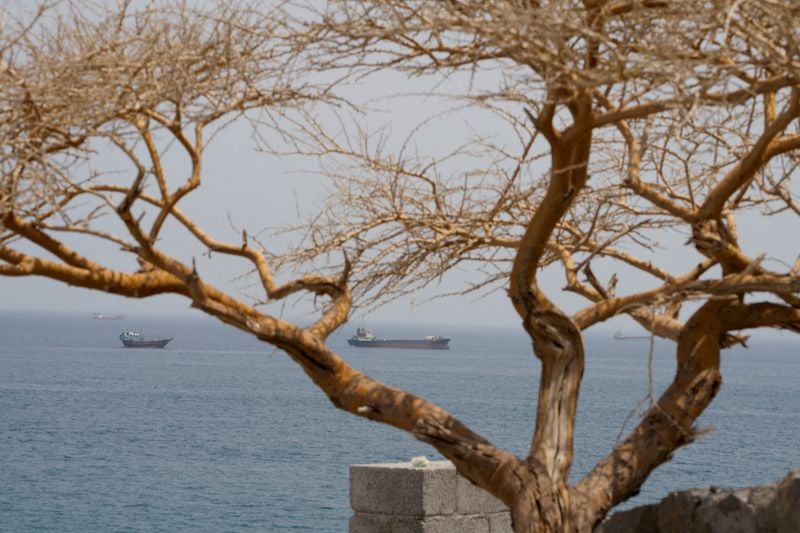
On 17 August 2026, prediction-market traders on Polymarket priced a US-Iran deal on the Strait of Hormuz by month-end at 12%, and a separate contract on broader US-Iran peace talks at 10%. Two Polymarket posts that day, timestamped 14:34 UTC and 18:13 UTC, both carried the 12% print on the Hormuz contract; the 10% print on the peace-talks contract was timestamped 18:27 UTC. The thin odds sit between two public signals from Tehran released the same day: a near-finalised arrangement with Oman on shipping through the strait, and an explicit warning that Iran would escalate in the waterway if diplomacy with Washington fails.
Reading the contradiction in plain editorial terms: the cited Polymarket posts put traders' price on the US-Iran track near one-in-eight, while Tehran is running two tracks in parallel. The cited posts do not specify the resolution criteria for either contract, including what would qualify as a "Hormuz agreement" or as a "peace talk". Monexus analysis: a near-finalised Oman track, as relayed by Unusual Whales, would be a separate bilateral between Iran and a third Gulf state; whether it would translate into leverage, a precedent, or a template for any later US-Iran negotiation is a matter of inference, and the cited posts do not establish that link. The market price reflects where traders sat on the US-Iran dyad specifically, not on the regional picture as a whole.
What the market is pricing
Two Polymarket posts on 17 August 2026 put the contract on a US-Iran Hormuz agreement by month-end at 12% (14:34 UTC and 18:13 UTC), and a third put a separate contract on US-Iran peace talks by month-end at 10% (18:27 UTC). The cited posts do not specify what would qualify as a "Hormuz agreement" or as a "peace talk", and they do not specify the contract resolution criteria or the volume traded at each price level. The available evidence supports only the headline price level on each contract and the contract subject, not the legal test for resolution.
Monexus analysis: when those headline prices sit low while public statements intensify, the most economical read of the disagreement is that headline diplomacy and deal-making are not the same product. The Polymarket posts themselves do not characterise the order book, the trader base, or the information content of the price; any inference about what the price "reflects" beyond its printed level is this publication's reading rather than a claim sourced from the cited posts.
The Oman channel
The counter-signal came at 15:17 UTC on 17 August, when an X post by Unusual Whales reported that Iran says an agreement with Oman on shipping through the Strait of Hormuz is nearly finalised. The cited post is a relay of an Iranian statement; the primary Iranian state-media release is not present in the cited source items. The wording reported is that the agreement is "nearly finalised". The cited posts do not specify the text of the proposed arrangement, which parties are named in it, what shipping or transit provisions it would set, or its legal status relative to existing international conventions on the strait.
Two things can be said without overreaching. The Oman track is reported as a bilateral arrangement between Iran and a third Gulf state. It is structurally a separate instrument from a US-Iran Hormuz deal, which would resolve on the US-Iran dyad specifically. Monexus analysis: a near-finalised Oman track, as relayed, would not by itself constitute a US-Iran Hormuz agreement; whether it would translate into leverage, a precedent, or a template for any later US-Iran negotiation is a matter of inference, and the cited posts do not establish it. This publication has not independently corroborated the Iranian statement on Oman against a first-party Iranian state-media release.
The escalation card
At 13:48 UTC on 17 August, Iranian officials threatened to go on the offensive in the Strait of Hormuz if diplomacy with the US fails, according to Investing.com. CNBC reported the same day that oil prices rose as Iran ruled out an interim-deal extension and threatened to escalate the conflict. The CNBC piece tied the price move to a specific diplomatic structure: a US-Iran deal was supposed to open the Strait of Hormuz while the two sides negotiated a final nuclear agreement inside 60 days. The cited CNBC report uses the present-tense framing that the deal was supposed to open the strait within that 60-day window; it does not itself set out the precise start date of that window, the number of days remaining as of 17 August, or the magnitude of the reported oil-price move.
The Investing.com and CNBC reports do not specify which Iranian officials made the public statements, the size of the oil-price move, or the precise current state of the 60-day interim window. The cited evidence establishes only the headline level of the threat and the headline level of the price response. Monexus analysis: read narrowly, the public reporting points in the direction of escalation as the articulated alternative if diplomacy fails. Whether the cited Polymarket prints incorporate that articulated alternative is consistent with the direction but not directly demonstrated by the cited evidence.
Analysis: three signals, one consolidated number
Monexus analysis: when three signals from the same day point in three directions, the Polymarket prints are the only consolidated number in the cited source items that prices the US-Iran outcome specifically. The Iranian statement on Oman, as relayed by Unusual Whales, is a confidence move in a regional channel. The threat of offensive action, as reported by Investing.com and CNBC, is an articulated alternative if diplomacy fails. The Polymarket prints are the market's read on whether either signal converts into a signed US-Iran instrument before the contract cut-off. Treating the three as one consolidated set rather than three independent inputs is this publication's reading; a reader who prefers to weight them separately can do so.
The cited source items do not establish the share of seaborne oil that passes through the Strait of Hormuz, the magnitude of the reported oil-price move, or the legal text of any proposed Oman-Iran arrangement. What the cited evidence does support is that the strait is being negotiated about actively, that Iran has framed an offensive as an alternative if diplomacy fails, and that oil prices moved in response.
Stakes and the clock
Two horizons sit in the cited evidence. The first is the 60-day nuclear interim that CNBC describes, on which Iran's reported refusal to extend puts the negotiation onto a deadline tempo. The second is the end-of-month cut-off on the Polymarket contracts, which the cited posts do not specify beyond the contract title. The CNBC report flags the price action as the immediate consequence; the Investing.com piece flags the offensive threat as the articulated alternative; the Unusual Whales relay flags the Oman track as a parallel channel.
For oil-importing economies, the salient question the cited evidence supports is whether the next month produces a signed US-Iran instrument, an Oman-Iran instrument, an escalation in the strait, or some combination. The cited evidence establishes only that each of those is consistent with what was reported on 17 August 2026; this publication has not independently established which combination prevails. The Polymarket traders priced a US-Iran signed instrument at twelve cents on the dollar in the cited posts; that price is a data point, not a verdict.
What the sources do not specify
The cited source items do not specify the identity of the Iranian officials making the public statements, the text of any proposed Oman-Iran shipping arrangement, the magnitude of the reported oil-price move, the precise current state of the 60-day clock, or the resolution criteria for either Polymarket contract. This publication has not independently corroborated the Iranian statement on Oman against a first-party Iranian state-media release; the Unusual Whales X post is a relay rather than a primary source. Each of those gaps is a limit on what can be asserted from the cited evidence.
Desk note: This publication read the cited Polymarket posts and the Unusual Whales, Investing.com and CNBC wires as one consolidated set of same-day signals. The prediction-market price is treated as the consolidated market read of the disagreement between the diplomatic and the escalation signals on the US-Iran dyad, with the Oman track held separately as a parallel channel. The 12% level is a data point, not a forecast of whether a deal will or will not land before month-end.
Wire provenance
This editorial synthesis draws on the following public wire/social posts:
- https://x.com/Polymarket/status/2089415228387737642
- https://x.com/Polymarket/status/2089360117422502080
- https://x.com/Polymarket/status/2089418957845307765
- https://x.com/unusual_whales/status/2089370918523191579
- https://www.investing.com/news/economic-indicators/iran-threatens-to-go-on-offensive-in-strait-of-hormuz-if-diplomacy-with-us-fails-4863392
- https://www.cnbc.com/2026/08/17/oil-prices-iran-war-strait-hormuz.html
- https://poly.market/If6Hpuq
- https://poly.market/LlKYMfn
- https://x.com/Polymarket/status/2089415228387737642
- https://x.com/Polymarket/status/2089360117422502080
- https://x.com/Polymarket/status/2089418957845307765
- https://x.com/unusual_whales/status/2089370918523191579
- https://www.investing.com/news/economic-indicators/iran-threatens-to-go-on-offensive-in-strait-of-hormuz-if-diplomacy-with-us-fails-4863392
- https://www.cnbc.com/2026/08/17/oil-prices-iran-war-strait-hormuz.html
- https://poly.market/If6Hpuq
- https://poly.market/LlKYMfn