Two signals, one morning in Beirut
On 17 August 2026, President Joseph Aoun promulgated Law No. 68 abolishing Lebanon's death penalty while his office accused Israel of pressing Beirut to withdraw UNIFIL. Monexus reads one morning, two signals.
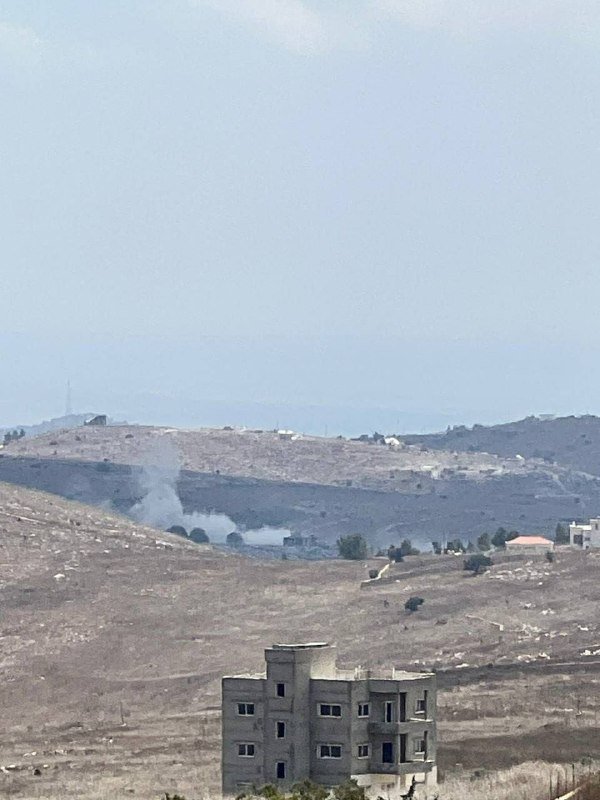
Beirut's presidency moved twice on the morning of 17 August 2026, and reading the sequence carefully matters. The first item on the cited wire sits at 09:08 UTC: wfwitness carries President Joseph Aoun saying Israel rejects the presence of UNIFIL forces in south Lebanon and has been pressing Beirut in that direction for nearly a year. At 09:27 UTC, The Cradle Media relays the same statement from the president's office, with the Israeli rejection and the Lebanese call for UNIFIL to stay. At 09:42 UTC, wfwitness repeats the Aoun quote with additional context on the dispute. At 09:51 UTC, The Cradle Media reports the promulgation of Law No. 68, formally abolishing the death penalty in Lebanon following parliamentary approval. At 10:01 UTC, wfwitness bundles the same news: parliament approved the draft after amendments, and the death penalty, suspended in Lebanon for more than twenty years, has now been retired by statute (The Cradle Media; wfwitness).
Read narrowly, the morning is a coincidence of filing times. Read for intent, it is a state signalling both its preferred human-rights posture and its position on an active security file in the same news cycle. The UNIFIL allegation came first on the wire; the abolition law followed it by less than an hour. Monexus analysis: the timing reads as deliberate. Two presidential messages, one morning, both directed outward, and a sympathetic relay ecosystem that put the UNIFIL framing on the timeline before the promulgation closed.
The mechanics, with the gaps left in
The text cleared parliament, then the presidency. The Cradle's 09:51 UTC item carries the promulgation of Law No. 68 by President Aoun, with the parliamentary vote cited as the immediate antecedent. The wfwitness bulletin at 10:01 UTC carries both the chamber's approval of the draft after amendments and the multi-decade moratorium now formalised. The Cradle and wfwitness are not independent wires; both are relay channels drawing on the same Lebanese governmental source material, and both arrive at the same news from the same direction.
The published sources establish that the law now exists. They do not specify which amendments were introduced in committee, how the vote margin broke down, or whether any bloc in the chamber opposed the final text. They do not specify the chamber's size. Those details will live in the parliamentary record; this article reads only what is on the wire.
Monexus analysis: treat the morning as a single news beat with two component acts. The cited bulletins place the abolition news on the wire between 09:51 UTC and 10:01 UTC, and the UNIFIL allegation on the wire between 09:08 UTC and 09:42 UTC. Until a primary source anchors the parliamentary vote date to a day other than 17 August, this publication treats the chamber approval and the presidential promulgation as the same-day pair the cited bulletins describe.
What the law displaces
Monexus analysis: read the move as a deliberate exit from a category of punishment that Lebanese legal-academic and civil-society currents have spent two decades delegitimising. Death-penalty cases are rare, appeals glacial, and the political cost of carrying out an execution had become, in practice, prohibitive. Abolition aligns Lebanese statute with the global majority position. The available source items do not specify Lebanon's reporting position to UN human rights bodies on this question, nor whether promulgation triggers any update to those filings, nor whether existing death sentences are commuted by operation of law or by case-by-case review.
What the UNIFIL framing costs
The harder reading sits on the parallel track. At 09:08 UTC, 09:27 UTC, and again at 09:42 UTC, the cited wire carried the Lebanese presidency saying Israel is rejecting UNIFIL's presence in south Lebanon and pressing Beirut toward withdrawal for nearly a year, with Lebanon calling for the force to remain. The convergence reads as signalling: the government is putting its civil-rights posture on the wire on the day it contests what it characterises as an Israeli push to remove an international monitor. The two acts reinforce one another. The available source items do not specify whether Israel has publicly disputed Aoun's characterisation of its posture toward UNIFIL; no Israeli response is on the cited wire as of the items in this thread.
Counter-narrative: the UNIFIL framing is sourced entirely to a Lebanese presidential statement relayed by outlets aligned with the Lebanese government's line. The Israeli government has not, in the cited material, responded. The available source items do not specify whether Israel has issued any statement disputing Aoun's framing, or whether the UN has commented on the Lebanese characterisation of Israeli pressure. The picture is therefore one of a serious Lebanese claim, repeated by sympathetic outlets, with the counter-party's voice not yet on the cited wire.
A second uncertainty sits on the legal effect. The available source items do not specify the positions of Hezbollah, the Amal Movement, the Lebanese Forces, or the Kataeb Party on Law No. 68, nor whether the text as promulgated binds future prosecutions only, or also commutes existing sentences. Those gaps will matter when the next politically charged case moves through the courts.
What to watch next
Three dates will determine whether Law No. 68 is a marker or a milestone. First, publication in the Official Gazette: until then, promulgation is a presidential act, not yet enforceable text. Second, any executive-decree implementation order specifying whether existing sentences are commuted by operation of law or by review. Third, Lebanon's next universal periodic review cycle at the UN Human Rights Council, where abolition will have to be defended in writing, not just proclaimed.
On the UNIFIL track, the operative question is whether Aoun's statement is the opening bid of a public Lebanese diplomatic campaign or a one-day flash. The UN Security Council mandate for UNIFIL comes up for renewal later in 2026; if Beirut is now on record calling for retention against what it characterises as an Israeli push to leave, the renewal debate in New York will be the test of whether Sunday's dual signals travel together or apart. Lebanon has, for one news cycle, managed to do something most states its size cannot: legislate a human-rights milestone and contest a much larger neighbour's posture in the same morning. The harder question is whether either act has a follow-through.
Desk note: Monexus treated the two Lebanese presidential acts of 17 August as a single beat, on the view that law reform and war footing are no longer separable stories in south Beirut. Wire coverage as of the latest cited items leads on the abolition; the UNIFIL allegation is at this stage sourced to Lebanese-aligned channels and is flagged accordingly. The thread sources do not specify the parliamentary chamber size, the duration of the moratorium in years beyond "more than twenty," or any Israeli government response to the UNIFIL framing.
Wire provenance
This editorial synthesis draws on the following public wire/social posts:
- https://t.me/wfwitness/107299
- https://t.me/thecradlemedia/66293
- https://t.me/TheCradleMedia/66293
- https://t.me/wfwitness/107298
- https://t.me/thecradlemedia/66287
- https://t.me/TheCradleMedia/66287
- https://t.me/wfwitness/107296