Ghalibaf's Hormuz demands widen the bargaining table
Mohammad Bagher Ghalibaf says the Strait of Hormuz will remain closed until five demands are met, linking access to global energy routes with sanctions, frozen assets and a wider regional settlement.
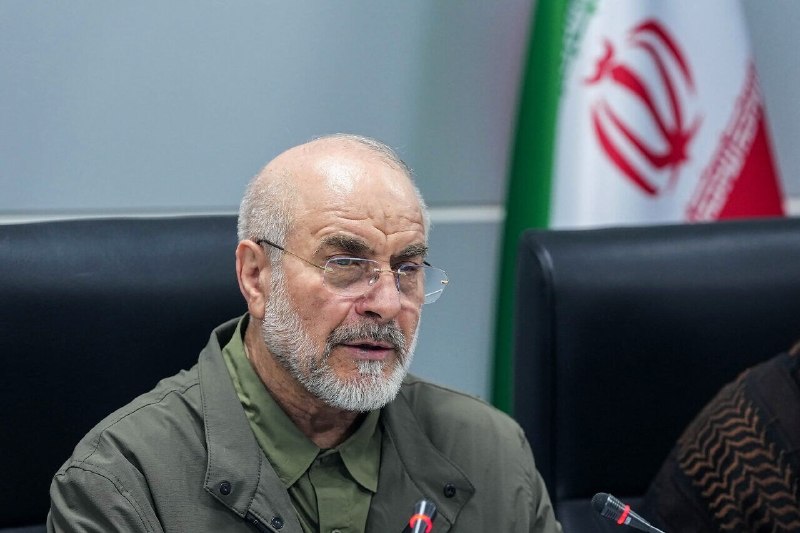
At 10:37 UTC on 18 August 2026, an account identifying itself as englishabuali carried a statement attributed to Mohammad Bagher Ghalibaf, Speaker of the Iranian Parliament and head of Iran's negotiation delegation. The Strait of Hormuz, he said, would not reopen until the US blockade was lifted, frozen Iranian assets were released, oil sanctions were lifted, military operations and threats ceased across several regional fronts, and the remaining terms of a memorandum of understanding were fulfilled.
That is a bargaining position, not a technical timetable for restoring navigation. It joins the fate of a critical energy corridor to financial relief and to a wider regional security question. It also shows that Tehran's demand is not confined to the immediate dispute around the waterway. The closure of Hormuz, in this telling, is leverage across several negotiating files at once.
The five demands
The fullest available statement in the supplied material is the 10:37 UTC post, which lists the conditions in sequence: lifting the blockade, releasing frozen assets, lifting oil sanctions, ending military operations and threats on all fronts, including Lebanon, Gaza, Iraq and Yemen, and fulfilling the remaining MoU terms.
The ordering matters. The first three items concern the immediate economic and financial architecture surrounding Iran's oil trade. The fourth expands the demand beyond Iran to theatres of conflict across the region. The fifth refers to an MoU, but the supplied source items do not identify the document or specify the outstanding terms. Any attempt to treat the fifth condition as a settled contractual exchange would go beyond the evidence.
Monexus analysis: the demand is best read as a linkage strategy. Ghalibaf is not merely offering a condition for reopening a strait. He is presenting access to a central transit route as part of a package involving money, sanctions policy, regional military activity and an unspecified prior arrangement. The consequence is that a narrow shipping accommodation may be difficult to separate from the larger political and security questions in Tehran's formulation.
The public language is tighter
At 09:33 UTC, PressTV posted a more compressed headline: the Strait would not reopen before oil sanctions were lifted, frozen assets released and the US blockade ended. That three-item version captures the economic spine of the position. It omits the regional and MoU language that appears in the fuller statement.
The difference is partly editorial compression, not necessarily a contradiction. A headline can reduce a five-part position to its three most legible components. But the fuller list changes the scope of the demand. It places Lebanon, Gaza, Iraq and Yemen inside the same package as the strait, and it makes fulfilment of an unspecified MoU a condition of reopening.
A separate PressTV post at 10:26 UTC supplied a harder political frame. It reported that Ghalibaf told Iranian MPs they would not forsake the blood of the country's martyred leader, the martyred children of Minab and other martyrs of the war. The same post, according to the supplied account, carried his warning that Iran was ready to impose a heavier defeat on its enemies. That language should not be mistaken for one of the five conditions. It is the rhetoric surrounding the negotiating demand, and its placement in the sequence of posts is significant.
The martyrdom language also narrows the room available to Iranian officials. Monexus analysis: by invoking loss and wartime resolve, Ghalibaf is making a visible concession look politically costly. A partial arrangement may therefore be easier to present as compliance with the larger national narrative than as a simple reopening of the waterway. That is an interpretation of the rhetoric, not evidence of Iran's internal decision-making.
Why the MoU is unresolved
The fifth condition is the least defined part of the statement. The supplied items use the term "MoU" but do not identify the parties, date, subject or precise obligations involved. They also do not establish whether the document is still in force, expired, or being used as shorthand for a broader negotiating understanding.
That uncertainty matters because a memorandum can describe different kinds of commitments. It might record a political understanding, a procedural arrangement or a specific set of concessions. The available posts do not permit a firm conclusion. The most defensible description is therefore the one supplied by the source itself: fulfilment of the remaining terms of an MoU.
The omission also limits the usefulness of the five-part list as a negotiating roadmap. A party can respond concretely to a demand to lift sanctions or release assets, but cannot evaluate a demand to fulfil unspecified terms without the underlying text. In practical terms, the MoU condition may function as a reference back to an earlier negotiating track, but the supplied evidence does not establish that interpretation.
Monexus assessment: this is a substantive weakness in the public position as presented by the cited items. The demand is broad enough to signal linkage, but not precise enough to show how compliance would be measured. The distinction is important. A public negotiating position can be expansive even when implementation would require a narrower and more technical agreement.
The leverage behind the strait
The conditions connect to the commercial importance of the Strait of Hormuz, but the supplied source items do not provide a figure for the share of global seaborne oil normally passing through it. They establish the political linkage, not its volume. Any assessment of shipping, price or supply effects therefore requires additional evidence beyond this thread.
The economic logic is nevertheless clear from the wording. Ghalibaf places sanctions relief and the release of frozen assets ahead of a regional military condition, then adds the outstanding MoU terms. The sequence presents financial relief as part of the price of reopening, while the wider demand makes that price inseparable from events in several other countries.
There is an alternative reading. The broader regional items may be intended for a separate diplomatic track rather than as literal conditions for navigation. Under that interpretation, the list could be a maximal public statement, with the first three items forming the operational core. Monexus analysis: the evidence does not resolve that question. The source posts report Ghalibaf's wording as a single set of conditions, but do not show how he distinguishes the first three from the last two in private negotiations.
That ambiguity leaves two commercial scenarios. In one, reopening is treated as the first step in a wider settlement. In the other, shipping and sanctions discussions proceed through a narrower arrangement while the regional and MoU questions remain elsewhere. The supplied material does not identify which path is being pursued.
What the available record can support
The available source items establish the timing, the speaker's institutional roles, the five-part list and the additional language in the 10:26 UTC PressTV post. They do not establish the contents of the referenced MoU, the reaction of the United States or European governments, or the operational status of shipping through the Strait. They also do not provide an independent verification of Ghalibaf's remarks beyond the cited relays.
The five demands should therefore be reported as Ghalibaf's stated conditions, not as agreed terms or as proof that every demand has equal weight. The distinction is central when a political statement is being read through a business lens. A chokepoint can carry extraordinary economic weight, but the commercial consequences depend on enforcement, negotiations and physical access, none of which is documented in the supplied items.
The immediate watchpoint is not a forecast of a settlement within a fixed period. It is whether subsequent official statements identify the MoU, separate the five conditions or connect them to a named negotiating document. Until then, the strongest conclusion is narrow but consequential: Ghalibaf has publicly linked the reopening of the Strait of Hormuz to sanctions relief, frozen assets, a wider regional demand and an unidentified set of MoU terms.
Desk note: Monexus treated the cited Telegram items as relays of Iranian political messaging, not as independent confirmation of the underlying negotiations, and kept the MoU unidentified rather than assigning it a date or legal status.
Wire provenance
This editorial synthesis draws on the following public wire/social posts:
- https://t.me/englishabuali/77923
- https://t.me/presstv/203219
- https://t.me/TheCradleMedia/66346
- https://t.me/presstv/203223
- https://t.me/thecradlemedia/66346