Trump calls Hormuz "open," Iran says it stays shut: the most-watched waterway in the world is in two places at once
On 18 August 2026 the US president and Iranian-aligned channels issued contradictory readings of the same strait within hours, leaving shippers, insurers, and the oil market to pick a side.
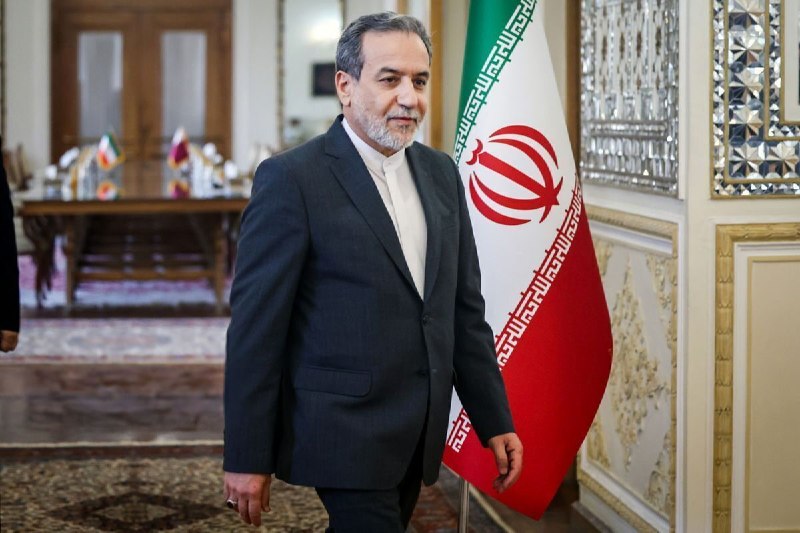
At 13:48 UTC on 18 August 2026, a Polymarket dispatch carried a two-line claim that set the agenda for the rest of the trading day: the sitting US president had declared the Strait of Hormuz "open and operating," and that all water mines laid across the choke point had been removed or detonated. Three hours later, at 15:38 UTC, an account tracking Iran's security posture posted the opposite line in almost the same syntax: "The Strait of Hormuz will remain closed." By 16:16 UTC, a Telegram channel describing itself as Iranian-military affiliated was asking whether the memorandum of understanding between Tehran and Washington was on the verge of collapse. Between those three timestamps, the world's most critical oil corridor was, depending on whose statement you trusted, either back to business or being strangled.
The contradiction is the story. Whoever is right, the duration of the dispute is itself a price event. The available source items do not specify the precise share of seaborne crude or LNG that moves through Hormuz, but when the two governments that police the corridor disagree on whether it is open, underwriters reprice war risk, charterers add days of bunker fuel, and refineries downstream pay for the ambiguity. The market's job, in the meantime, is to price which statement will hold up.
The two statements, side by side
The US-side claim is the simpler one. According to Polymarket's wire at 13:48 UTC on 18 August, the US president publicly characterised the strait as "open and operating" and asserted that all water mines had been "removed or detonated." Polymarket's companion market on the same afternoon, timestamped 13:49 UTC, gave traffic in Hormuz a 36% chance of returning to normal flows by year-end. The price is a read of the same question Tehran answered differently: low, not because anyone expects a permanent closure, but because the path back to normal is now political, not technical.
The Iranian-side answer came in two registers. The first was a blunt, declarative statement, distributed via the unusual_whales account at 15:38 UTC: the strait would remain closed. The second came thirty-eight minutes later from a Telegram channel describing itself as Iranian-military affiliated, which framed the situation as a memorandum teetering on the edge of collapse after a week of Iranian action against vessels and tankers attempting to transit. That channel also carried the US president's claim that Washington had "obliterated" Iran's mining capability, and treated it as a contested claim rather than a confirmed battlefield outcome.
What the disagreement is actually about
The simplest reading is that the two sides are describing two different facts. Washington is reporting a kinetic result: the mines are gone. Tehran is reporting a political decision: the strait stays closed, with or without mines. If that reading is right, the dispute is not about whether the seabed is clear, but about Iran's right to declare the corridor restricted on its own terms even after the ordnance has been cleared. The MoU framing pushed by the Iranian-affiliated Telegram channel supports this: the talks are not only about de-mining, but about the terms under which Iran accepts foreign traffic.
The less simple reading is that one side is bluffing. A declaration that the strait is "open" carries weight only if commercial shipping believes it. Insurers read the Iranian denial; they read the MoU warning; they read, separately, the Middle East Eye feed at 15:44 UTC reporting that the US president has labelled the strait "US territory" and that Iran has named Israel as the principal obstacle to negotiations. The territorial label, in particular, suggests Washington is not merely claiming a kinetic outcome but asserting jurisdiction over a waterway most legal scholars treat as international. A claim that strong, made the same day Iranian vessels were reported to be targeting transits, is not the kind of statement that lowers war-risk premia overnight.
The energy angle: who pays while the argument runs
The plain cost of the stalemate is borne by whichever side has to keep the oil moving. The available source items do not specify the bypass capacity of Saudi Arabia's East-West pipeline, the UAE's Habshan-Fujairah route, or Iraq's northern pipelines, nor the precise share of Qatari LNG that moves through Hormuz. What the sources do support is a directional read: while the corridor is contested, buyers in Asia pay the option value of disruption rather than the spot price of barrels, and that cost is most visible in freight and insurance line items that compound over weeks of contested transits. The LNG book is thinner and more brittle than crude, and the premium for flexible contracts widens each day the dispute drags.
The Strait of Hormuz is, in other words, a place where the price of ambiguity compounds faster than the price of outright closure, because the market is being asked to choose between two official narratives inside the same news cycle.
The political track, and what is at stake in Geneva
The Middle East Eye feed at 15:44 UTC placed the disagreement inside a wider frame: the US and Iran are reported to be confirming a peace-accord signing set for Friday in Geneva, with Iran naming Israel as the biggest obstacle to negotiations. That sequencing matters. If the Friday event goes ahead and produces a signed instrument, the strait reopens on a political track and the kinetically cleared mines become a footnote. If the Friday event does not go ahead, or goes ahead with ambiguous language, the strait remains contested and the question of who controls it becomes the test of whether the agreement has any substance at all.
The structural read: when two governments issue contradictory statements about the same square mile of water within a single afternoon, the question is no longer what the seabed looks like. It is which government owns the right to define the corridor in the first place. Whatever the mines have done, the strait itself is the prize.
The Monexus desk files this as a fast-moving story with two official narratives and one physical waterway. The numbers above are drawn from the cited posts; deeper oil-flow and insurance data will follow when public filings corroborate them. The available source items do not specify the exact text of the MoU under negotiation, nor the type or number of vessels reported targeted.
Wire provenance
This editorial synthesis draws on the following public wire/social posts:
- https://x.com/Polymarket/status/2089710993785889066
- https://poly.market/pqX3cI6
- https://x.com/unusual_whales/status/2089738591278662005
- https://t.me/IRIran_Military/9675
- https://x.com/MiddleEastEye/status/2089740205687234684