Hormuz stays shut: Iran says blockade must lift before any deal, and Hormuz's fishing fleet is going broke
Tehran declared on 18 August 2026 that the Strait of Hormuz will stay closed until the US meets interim deal terms, while SCMP reports Iranian fishing communities off Hormuz can no longer absorb the weeks of disruption US strikes have caused.
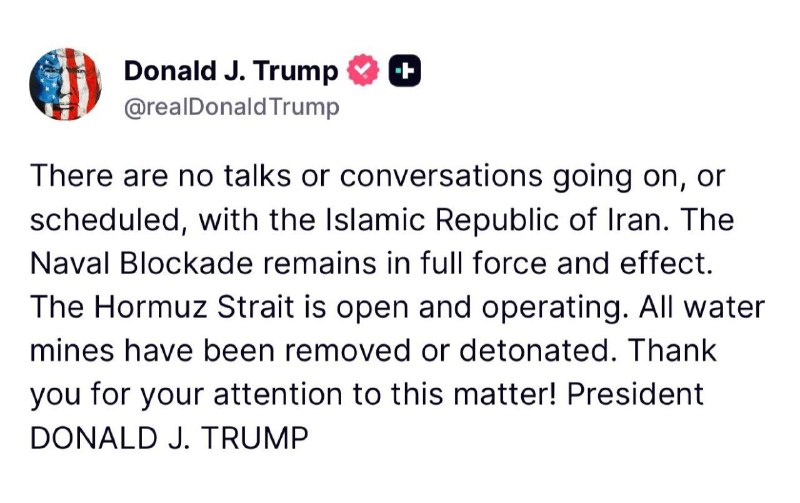
Hours after US President Donald Trump posted that the Strait of Hormuz is "open and operating" and that the US naval blockade remains "in full force and effect," Tehran issued a flat counter-position: the waterway will not reopen for general transit until Washington meets the conditions Iran has set for an interim arrangement. The Reuters bulletin, timestamped 14:50 UTC on 18 August 2026, ran under the headline "Hormuz Strait to remain shut until U.S. meets interim deal conditions, Iran says." That posture is the legal and diplomatic mirror-image of Trump's morning statement: each side is now publicly holding the other responsible for the continued closure of the world's most important oil transit lane, and the contradiction is being priced into both crude and the regional shipping insurance market in real time.
The Iranian statement also lands on top of a quieter, slower-moving crisis running underneath the naval standoff. The South China Morning Post reported at 15:06 UTC on 18 August 2026 that the fishing communities who have worked Hormuz and its approaches for generations are now functionally unable to operate. US strikes and the maritime-security posture that has followed them have kept Iran's small-craft fleet tied up for long stretches since the operation began; the boats that do go out face fuel costs and insurance surcharges that the catch no longer covers. The strait is not just a chokepoint for crude: it is a working fishery, and the working fishery is going broke.
The Iranian counter-position
Reuters reports that Tehran is conditioning any reopening on the US meeting the terms of what it has described as an interim arrangement. The cited items do not specify the exact text of Iran's conditions, who delivered the statement, or the venue in which it was made; the Reuters bulletin presents Iran's position as a stated condition rather than as a negotiated document. That distinction matters for markets. A reopening "when the US meets our conditions" is a diplomatic signal that there is a deal to be had, but not yet one that has been had.
The most natural reading of the timeline is that Iran's statement was issued in direct response to Trump's morning post. Trump's text said, in sequence, that there are "no talks or conversations going on, or scheduled," that the naval blockade remains in force, that the strait is "open and operating," and that all water mines have been "removed or detonated." Iran's response, in effect, is: we are the relevant party to whether the strait is open, and we say it is not. Monexus analysis: the contradiction is no longer internal to the US statement, it is now bilateral. The two governments are publicly disagreeing about the legal status of the same stretch of water on the same day.
The fishing economy underneath the standoff
The South China Morning Post's reporting adds the human and economic subtext the wire bulletins omit. SCMP's headline is unambiguous: "US strikes kept Iran's fishermen off Hormuz. They can no longer afford to stay idle." The story describes a fishing sector that has lost working days, faces higher fuel and insurance costs on the days it can go out, and is running down savings accumulated before the crisis. SCMP's framing positions the Hormuz fishing fleet as a downstream casualty of a military operation nominally directed at Iranian state assets and nuclear infrastructure.
Monexus assessment: this is the underreported cost of the standoff and it is the one most likely to outlast the headlines. Insurance markets reprice within hours; fishing economies reprice over seasons. A fleet that misses the late-summer fishing window does not make it back in the autumn; it makes it back in the following year, if at all. The Iranian government has multiple reasons, fiscal and political, to keep that cost invisible; SCMP has done the reporting that makes it not invisible. The structural frame is plain: an energy chokepoint under military pressure distributes costs down the chain, and the smallest vessels at the bottom of that chain have the least margin to absorb them.
Why the contradiction holds
Two facts, publicly stated, both true within their own framing. Trump says the strait is "open and operating" because the mine threat has been cleared and because non-Iranian commercial traffic is not being turned back. Iran says the strait is shut because Iranian-flagged and Iranian-linked traffic is the load-bearing case, and the naval blockade language Trump reaffirmed is, in Tehran's framing, the operative closure. Both can be true at once. The legal term of art is the same in both cases: what matters is whether any given vessel is, in fact, allowed to transit safely today. The cited items do not specify which vessels, if any, have actually attempted to transit since Trump's post, or what happened to them.
Monexus analysis: the contradiction is being held open deliberately by both sides. For the US, "open" lowers insurance premia and freight surcharges on Asia- and Europe-bound crude without conceding the pressure on Tehran. For Iran, "shut until our conditions are met" preserves the negotiating leverage that closing the strait gives Tehran in the first place. Each side benefits from the other side's framing being the operative one for its own audience: oil markets hear "open," Tehran's partners hear "shut." That bifurcation will hold until either the first non-Iranian commercial vessel is actually stopped or the first Iranian-flagged vessel is actually let through without incident.
What to watch in the next 48 to 72 hours
The contradiction resolves one of three ways, and the signals are concrete. First, watch for any public third-party government read on the legal status of the blockade, from France, India, China, Japan, or the Gulf Cooperation Council secretariat; the cited source items do not specify whether any such read has been issued. Second, watch for the first verified interdiction or diversion of a commercial vessel under the blockade language; if it happens, the "open" declaration is exposed and freight rates through Hormuz reprice sharply higher within the trading session. Third, watch Iranian Revolutionary Guard Corps Navy fast-boat activity in the strait; a return to the pre-crisis tempo would suggest Tehran has tacitly accepted the new arrangement, a continued pause would suggest it has not. Fourth, watch for any official Iranian read on the fishing sector's status; the SCMP piece is the only public-facing accounting so far, and Tehran has political reasons to address or suppress it. Monexus analysis: the window for a quiet equilibrium is narrow, and the first vessel stopped, not the next presidential post, will define it.
The next 48 to 72 hours will tell whether the contradiction is a negotiating posture or a stable equilibrium. The cited source items do not specify whether any third-party government has formally recognised either the "open" status or the blockade, whether the UN Security Council has been notified, or whether the International Maritime Organization has issued any advisory on the changed risk profile. Underwriters and flag-state registries will price the next 72 hours off formal advisories and confirmed vessel movements, not presidential social-media posts.
Desk note: the wire ran Iran's response as a single counter-event and SCMP's piece as a separate human-interest story; we joined them because the standoff's downstream cost is part of the standoff itself, not a sidebar to it. Where the source items did not specify a detail (the text of Iran's conditions, the venue of Iran's statement, third-party recognitions), we said so plainly rather than infer.
Wire provenance
This editorial synthesis draws on the following public wire/social posts:
- https://reut.rs/4x5F4uF
- https://x.com/Reuters/status/2089726534072328645
- https://www.scmp.com/news/world/middle-east/article/3364408/us-strikes-kept-irans-fishermen-hormuz-they-can-no-longer-afford-stay-idle
- https://t.me/SCMPNews/109356
- https://t.me/ClashReport/92877
- https://t.me/disclosetv/21726
- https://t.me/osintlive/565051
- https://t.me/thecradlemedia/66376
- https://t.me/wfwitness/107418
- https://x.com/MiddleEastEye/status/2089710681926865153
- https://reut.rs/4x5F4uF
- https://x.com/Reuters/status/2089726534072328645
- https://www.scmp.com/news/world/middle-east/article/3364408/us-strikes-kept-irans-fishermen-hormuz-they-can-no-longer-afford-stay-idle
- https://t.me/SCMPNews/109356
- https://t.me/ClashReport/92877
- https://t.me/disclosetv/21726
- https://t.me/osintlive/565051
- https://t.me/thecradlemedia/66376
- https://t.me/wfwitness/107418
- https://x.com/MiddleEastEye/status/2089710681926865153